
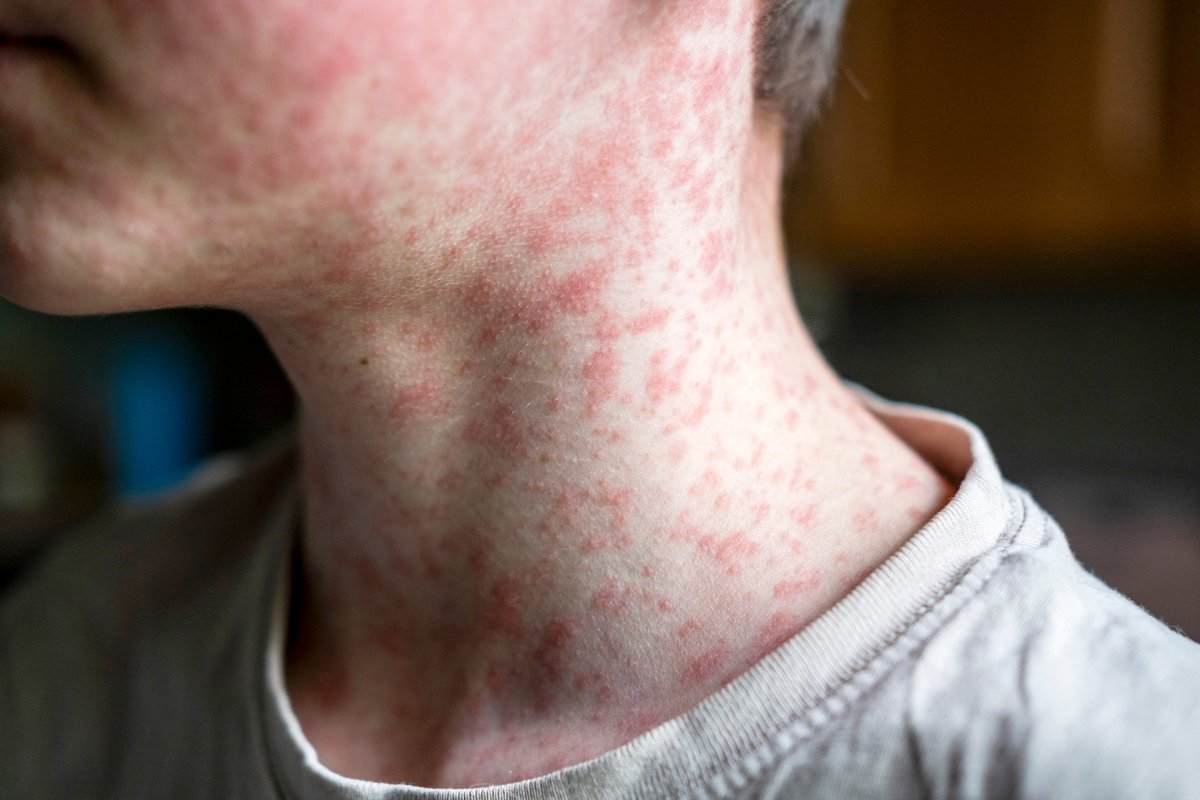
The number is stark. More than 5,400 measles cases in the United States so far in 2026, ten people dead, and now an official verdict from the Pan American Health Organization: the country that declared measles eliminated in 2000 has lost that status entirely.
PAHO director Jarbas Barbosa announced the decision at a press briefing on Tuesday, formalizing what public health researchers had been warning about for months. The U.S. can no longer contain the highly contagious disease. Cases are spreading, communities are vulnerable, and the public health infrastructure built over decades to prevent exactly this outcome has been allowed to erode.
A Milestone Undone in a Generation
Twenty-six years. That is how long the United States held measles elimination status, a designation that meant the country could consistently isolate and stop transmission of the virus before it took hold. For most of the period between 2000 and 2024, the country recorded fewer than 100 cases per year. In 2025, that number climbed to 2,289. This year, it has already more than doubled that figure.
The driver is not a mystery. Childhood vaccination rates have fallen below the threshold needed to protect communities. Only 92.4 percent of kindergarteners received the mumps, measles and rubella vaccine during the 2025-2026 school year, well short of the 95 percent required for herd immunity. In some states, coverage dropped as low as 75 percent. Within those states, specific communities have fallen even further, creating concentrated pockets where the virus spreads unchecked.
“Losing measles elimination status has broader implications than losing a public health designation,” Barbosa said. “It means the virus has circulated for a prolonged period of time, putting families and communities at risk of preventable illness.”
The Cost of Declining Trust in Vaccines
The American Medical Association’s president, Willie Underwood III, called the resurgence “a sobering reminder of what happens when vaccination rates decline and decades of public health progress are reversed.” His statement was measured but direct: preventable hospitalizations and deaths have already occurred, and the country must treat the current outbreaks as an urgent call to rebuild trust in science-based public health recommendations.
That trust did not collapse on its own. Vaccine skepticism has been actively cultivated and amplified, and critics have pointed squarely at Robert F. Kennedy Jr., the Secretary of Health and Human Services, whose long record of undermining confidence in vaccines now shadows his tenure at the agency responsible for the nation’s health. Kennedy has repeatedly and falsely linked the MMR vaccine to autism, a claim that has been thoroughly discredited by scientific evidence. He has held that position for more than a decade.
Gregg Gonsalves, a Yale School of Public Health researcher and member of the health advocacy group Defend Public Health, did not mince words. “RFK Jr. has spent over a decade trying to destroy disease prevention, the last two as HHS secretary, and his public health malpractice is coming home to roost,” he said in a statement. “Congress can no longer sit back and twiddle its thumbs.”
A Department of Health and Human Services spokesperson pushed back, telling Scientific American that Kennedy’s leadership had directed $100 million in federal funding to states to combat measles outbreaks. Critics counter that the money has not been matched with coordinated national action. The CDC, they argue, has failed to mount a unified vaccination campaign or to meaningfully challenge the spread of vaccine misinformation through official channels.
What Comes Next
PAHO’s framework requires the U.S. to submit a corrective action plan detailing how it intends to fight the outbreaks before the process toward regaining elimination status can begin. Daniel Salas, PAHO’s executive manager for immunizations, said the organization expects that plan within weeks. It will need to address surveillance, rapid outbreak response and targeted vaccination of at-risk populations. “This necessitates the deployment of teams and adequate laboratory support, and these things require funding,” said PAHO assistant director Rhonda Sealey-Thomas.
The path back is not impossible. Canada offers a recent precedent. PAHO revoked Canada’s elimination status last year after an outbreak that produced more than 5,000 cases and two deaths. The Canadian government responded with a targeted vaccination campaign in communities with historically low immunization rates and declared the outbreak over in October. Canada must now go a full year without measles spreading before its status can be restored; it recently reached the 60-day mark. Brazil and Venezuela both lost and later regained their elimination status in 2018 and 2019 respectively.
The U.S. is not uniquely embarrassed in this moment. The United Kingdom, Mexico, Bolivia, Spain, Austria, Armenia, Azerbaijan and Uzbekistan have all lost their measles elimination status this year. But the United States, with its enormous public health infrastructure, its federal resources and its history of leading global disease eradication efforts, carries a particular weight of expectation, and a particular burden of accountability for how it arrived here.
PAHO’s Barbosa acknowledged the difficulty of quantifying misinformation’s precise role in the outbreaks but said the organization is working with member countries to better equip health care workers to address it. “It’s very well known that the main source that families take into account to make their decision to vaccinate is the information provided by nurses and physicians,” he said. Health ministries, he added, need to be prepared to counter false claims with “clear, transparent information” so families can make informed choices.
The families who have already lost children to a vaccine-preventable disease did not get that chance. The question now is whether the political will exists to ensure others do. As case counts continue to climb across the country, the answer cannot wait for another milestone to fall.