
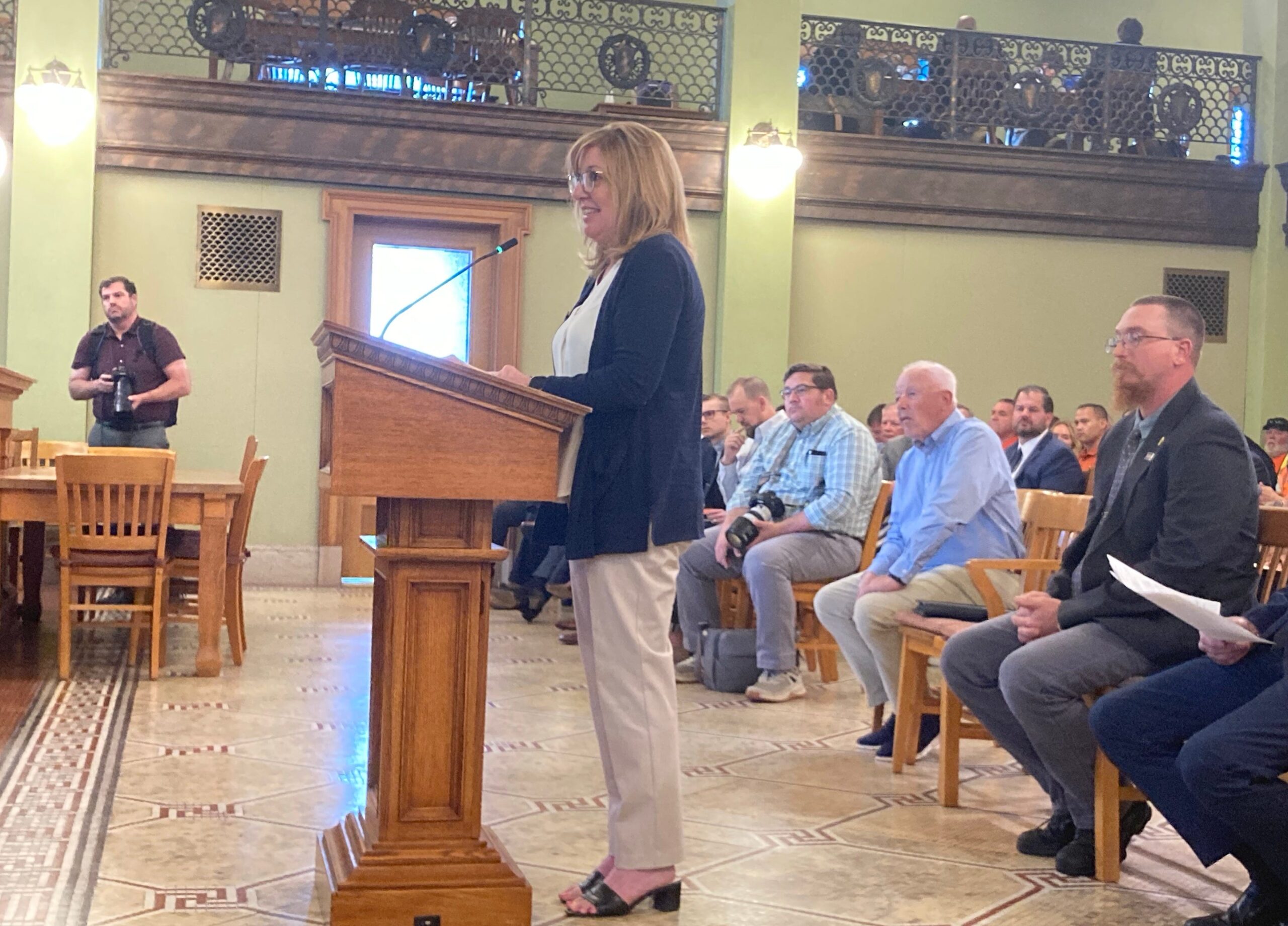
New Albany Officials Champion Data Center Industry Before State Committee as Statewide Resistance Mounts
New Albany, Ohio’s community development director spent more than an hour on June 8 defending the data center industry before a bipartisan Ohio legislative committee — touting 25,000 daily construction jobs and millions in tax revenue — even as residents across the state demand moratoriums and a grassroots campaign pushes for a constitutional ban on large facilities.
The testimony came as scrutiny of the industry intensifies. Gov. Mike DeWine paused a controversial sales tax break for data centers on May 27 — a subsidy that cost Ohio taxpayers nearly $1.6 billion last year alone.
New Albany’s Case: Jobs, Revenue, and Unlocked Development
Jennifer Chrysler, New Albany’s Community Development Director, told the Select Committee on Data Centers that the northeast Columbus suburb is now home to 40 data centers from 15 companies, with roughly 28 more under development. Central Ohio hosts 137 of the state’s 232 total data centers, according to the global directory Data Center Map.
The construction workforce numbers are significant. Chrysler cited more than 25,000 daily construction jobs tied to data center projects in New Albany, including 9,000 workers on Meta’s expanding 766-acre Beech Road campus alone.
On the revenue side, Chrysler said a single hyperscale data center generated $3.9 million in tax revenue for New Albany in 2024, calculated through a city-developed formula that standardizes economic development incentives. The city then reinvests those funds in infrastructure to attract other industries, including international biotech firms like Amgen and Pharmavite.
“We were able to unlock thousands of acres within the business that wouldn’t otherwise be available for development,” Chrysler said.
Trades Group: Don’t Believe the Critics
Matt Szollosi, executive director of Affiliated Construction Trades, backed Chrysler’s jobs argument, saying the industry has created thousands of middle-class positions with wages, health insurance, and retirement benefits. He said construction apprenticeships have grown 68% over the last decade, with four times as many women enrolled compared to 2016 — much of it driven by data center demand.
“Our message is don’t fall prey to the false reality being perpetuated by social media influencers that data centers don’t create jobs,” Szollosi said.
The jobs argument is real, but it exists alongside legitimate concerns the committee has not dismissed: data centers are infrastructure for the artificial intelligence boom, and they carry substantial costs — in power consumption, water use, and community disruption — that fall disproportionately on local residents rather than the corporations that profit from them.
NDA Debate: Transparency vs. Negotiating Power
The committee has also been examining the role of nondisclosure agreements in the data center development process. On June 1, residents testified that NDAs have left communities in the dark about projects being built in their own backyards, prompting some state lawmakers to propose legislation barring local officials from signing them.
Chrysler said New Albany never signs NDAs provided by companies or site selectors. Instead, the city uses its own NDA template that outlines Ohio law and specifies what information will be publicly disclosed. Elected officials do not sign NDAs; the city manager signs on behalf of staff.
Still, Chrysler warned that eliminating NDAs entirely would “severely hinder” economic development by removing local officials from the negotiating table. “We don’t want other people negotiating on our behalf with companies,” she said.
The NDA landscape is already shifting. Last week, Microsoft told the committee it will no longer use NDAs — or seek local property tax abatements — when developing data centers in Ohio. Representatives from Google, Amazon, and Meta made no such commitments.
Where the Committee Stands
June 8 marked the fourth meeting of the legislature’s Select Committee on Data Centers. Previous sessions heard from state agencies including the Ohio EPA and Department of Natural Resources; dozens of Ohio residents urging a statewide moratorium; and executives from Meta, Google, Amazon, and Microsoft.
The committee was scheduled to meet again on June 11, when additional companies associated with the data center industry were set to testify.
The broader political question — whether Ohio will continue subsidizing one of the most capital-intensive and resource-hungry industries in the country while shifting costs onto local communities and ratepayers — remains unresolved.