
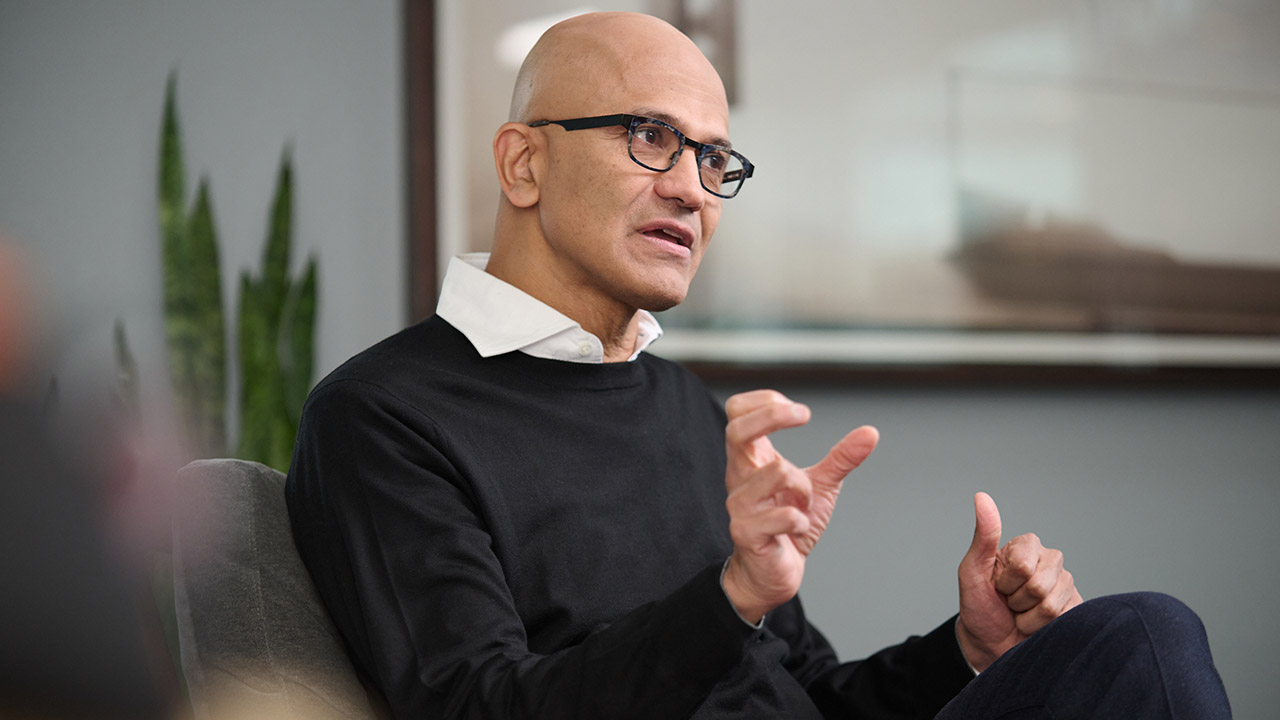
The Microsoft CEO urged tech leaders to stop treating AI as a job-cutting tool and start proving the technology benefits workers and society
Microsoft CEO Satya Nadella issued a stark warning to the AI industry this week: tech giants cannot simultaneously eliminate white-collar jobs, raise safety concerns, and demand massive public resources — and expect the public to simply go along with it.
Speaking to The Wall Street Journal, Nadella argued that the handful of companies dominating the AI race are failing to make a compelling case to ordinary people, particularly as fears mount about workforce displacement and the unchecked power of a few corporations to shape global technology.
“You can’t say, hey, all white-collar jobs are gone and this could even be a weapon and we will use all the power to build data centers,” Nadella told the Journal.
Reorganize Jobs, Don’t Eliminate Them
Nadella pushed back against the dominant corporate framing of AI as primarily a cost-cutting instrument. Leaders who view the technology through that lens are, in his words, looking at it wrong.
Instead, he argued, companies should focus on “reorganizing the job” — restructuring work to better leverage human capabilities alongside AI tools, rather than simply replacing workers with automation.
He described a model in which firms maintain both human capital and what he called “token capital” — in-house AI capabilities — as a recipe for sustainable, economy-wide adoption of the technology.
“It’s a lot of change management, it’s a lot of displacement, but there is a path,” Nadella acknowledged.
Social Permission Cannot Be Assumed
Nadella was explicit that the industry cannot talk its way into public acceptance. Concrete action, he said, is now required.
“No amount of just narrative is going to do it because where we are now, we have to sort of walk the walk,” he said. “We now have to do the hard work in earning the social permission.”
He also warned against a scenario in which a small number of AI models and companies end up “doing all of the learning for the world” — a concentration of power he suggested the public will not tolerate.
Microsoft’s Own Strategic Shift
The comments come as Microsoft itself has pivoted its AI strategy, moving to offer a suite of lower-cost models through its Copilot platform. The shift is designed to commoditize AI access and reduce mounting costs for business customers implementing AI tools.
Microsoft remains a major partner of OpenAI, the maker of ChatGPT, though the two companies recently renegotiated their arrangement to allow OpenAI to work more closely with other firms. Microsoft also secured a separate deal with AI company Anthropic last year.
According to a previous report by Axios, Microsoft has also been weighing whether to offer a version of the Chinese AI model DeepSeek through its Copilot platform — a move that would signal just how far the company is willing to go to diversify its AI offerings.
Why This Matters
Nadella’s warning reflects a growing tension at the heart of the AI boom: an industry that has moved faster than regulators, workers, or the public have been able to keep up with. The benefits of AI have so far flowed overwhelmingly to shareholders and executives, while the risks — job displacement, safety failures, environmental costs from data centers — are distributed far more broadly.
His call to “earn social permission” is notable, but it stops well short of endorsing the kind of robust regulatory frameworks and worker protections that would give that phrase real meaning. Voluntary corporate goodwill has rarely proven sufficient on its own — and there is little in the current US policy environment, under an administration hostile to tech regulation, to fill that gap.