
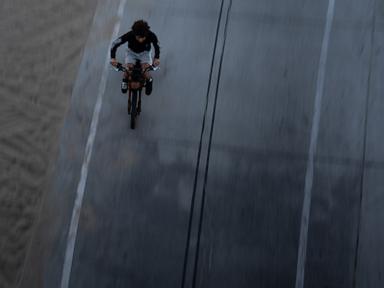
Across the United States, children are being seriously injured and killed on e-bikes and electrified two-wheelers at a rate that researchers describe as a genuine public health crisis — one that a fragmented, state-by-state regulatory landscape is failing to contain. Hospital data shows not only that e-bike-related visits have surged alongside the vehicles’ popularity, but that the injuries are becoming more severe, and that children are disproportionately bearing the worst of it. The absence of a coherent national framework has left families navigating a bewildering tangle of local rules, while officials improvise responses that advocates and parents alike say are often missing the point.
The core problem begins with how federal law categorizes these machines. Most e-bikes are classified as nonmotorized vehicles — legally equivalent to traditional pedal bicycles — which means riders face no federal requirement to hold a license, carry insurance, or even wear a helmet. Individual states have layered additional rules on top of that baseline, but the results are wildly inconsistent. New York requires riders to be at least 16 and caps speeds in New York City at 15 mph. California sets no minimum age for lower-powered models, though riders must be 16 to operate faster machines. New Jersey now mandates a license and vehicle registration for anyone 15 or older. Florida, meanwhile, moved in the opposite direction entirely: Governor Ron DeSantis vetoed a modest 10 mph speed limit in June, claiming — without credible evidence — that safety regulations would enable government surveillance of citizens. That veto is a useful reminder that the regulatory vacuum isn’t accidental; in some states, it is actively defended.
Dr. John Austin, who led a recently published statewide study at the University of California San Diego School of Medicine, put the medical picture plainly. “The big takeaway is that people are generally more severely injured than they would be if they were on a traditional, pedal bicycle,” he said. “Overall, these patients tend to be younger, they tend to be unhelmeted and, in turn, be more severely injured.” The data points to a compounding problem: younger riders, operating vehicles that travel significantly faster than conventional bikes, without the protective equipment or legal infrastructure that would accompany, say, a moped or motorcycle. The speed differential matters enormously when a child falls or collides with a car.
Part of what makes the crisis harder to address is a deliberate blurring of product categories. Advocacy group PeopleForBikes, which tracks state regulations nationally, stresses that many of the vehicles causing the most serious harm are not e-bikes in any meaningful sense — they are electronic motorcycles with heavy frames, powerful motors, and thick tires, sold online under the “e-bike” label to sidestep stricter regulations. New York City Mayor Zohran Mamdani moved against this practice earlier this month, sending cease-and-desist notices to more than 40 online retailers — including Amazon, Walmart, and Target — warning of fines up to $2,000 per sale for vehicles that exceed city standards. The action followed the death of 17-year-old Gabriel Nacato, who was killed near City Hall while riding one of these mislabeled vehicles. It is a meaningful step, but it addresses symptoms rather than the structural failure that allows predatory product labeling to flourish in the first place.
In Southern California, Orange County District Attorney Todd Spitzer has taken a sharply different approach, launching a dedicated unit to pursue criminal charges against parents whose children are involved in e-bike and e-motorcycle incidents. His office has opened more than two dozen investigations and already charged four parents, including the mother of a 14-year-old accused of killing an elderly pedestrian while riding an e-motorcycle. One defendant, Richard Eyssallenne, pleaded not guilty to child endangerment after prosecutors alleged he bought his 12-year-old son an e-motorcycle and helped him illegally modify it for higher speeds — the boy subsequently ran a red light and was struck by a car. The strategy has its defenders, but it also has a fundamental limitation: it treats the crisis as a parenting failure rather than a policy failure, placing the burden of a systemic problem on individual families while retailers, manufacturers, and legislators escape scrutiny.
Monica Stafford, a San Rafael mother whose teenage daughter fractured her skull in an e-bike crash, articulated the frustration clearly. “We’re in a total Wild West of laws,” she said. “Being for common sense laws doesn’t mean that you’re against e-bikes, just like you can be for cars but not think that it’s safe to put keys in the hands of a 10-year-old.” Her call for a unified national standard reflects what many public health advocates have argued for years: that safety regulation works best when it is consistent, enforceable, and not subject to the political whims of individual governors. The analogy to automobile safety is apt — federal vehicle safety standards, seatbelt laws, and graduated licensing requirements did not emerge from a patchwork of county ordinances, and neither should e-bike regulation.
Cycling advocates raise a legitimate concern that deserves serious engagement rather than dismissal. Chloé Lauer, executive director of the San Diego County Bike Coalition, argues that genuinely low-powered, pedal-assisted e-bikes have operated safely on American streets for decades, serve as a meaningful alternative to car dependency, and should not be swept up in restrictions designed for far more powerful machines. “Many of the dangerous behaviors people cite — running red lights, riding on sidewalks, not wearing helmets — are already illegal,” she said. “We’d rather see those laws enforced than add new restrictions that limit mobility for kids who are riding responsibly.” The distinction between a pedal-assist commuter bike and a 40-mph electric moped matters, and good regulation should be precise enough to honor it — cracking down on the latter without penalizing the former.
Anya Dalal, a 17-year-old high school senior from Hillsborough, California, who has been advocating for stronger safety measures, described the solution in terms that most serious policy analysts would recognize as correct: it requires action on multiple fronts simultaneously. “It should be a mix of parental accountability, accountability from the manufacturers and retailers and also education for kids to understand e-bike laws and road rules,” she said. That framing — shared responsibility distributed across parents, industry, and government — is precisely what a coherent regulatory regime would enforce. Manufacturers and retailers who deliberately misclassify powerful electric motorcycles as e-bikes to avoid safety standards should face consequences that go beyond cease-and-desist letters. Federal product labeling standards, enforced by the Consumer Product Safety Commission, would be a logical starting point — one that would remove the burden from individual cities scrambling to write their own definitions.
What is clear, from the hospital data, the grieving families, and the advocates working in this space, is that the status quo is not neutral. Every month that passes without federal minimum standards is a policy choice — one that prioritizes market convenience and regulatory inertia over the safety of children. The vehicles are not going away, and neither is the demand for them. The question is whether lawmakers at the federal level will treat this as the public health emergency the evidence shows it to be, or continue to leave families, as Stafford put it, in a Wild West of their own.