
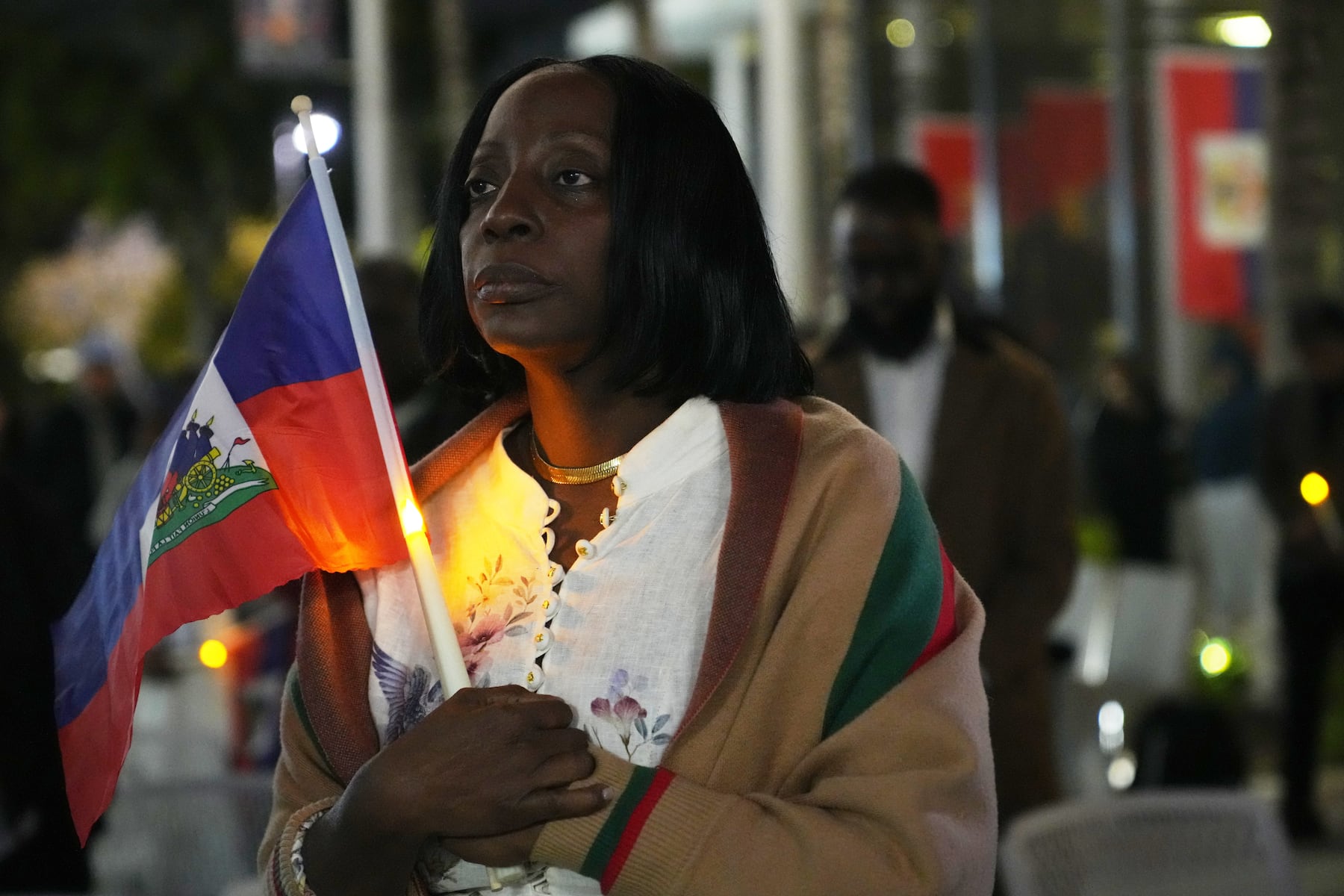
Supreme Court’s Conservative Majority Strips Deportation Protections From 350,000 Haitians and 6,000 Syrians
The Supreme Court ruled Thursday to allow the Trump administration to terminate Temporary Protected Status (TPS) for hundreds of thousands of Haitian and Syrian migrants, exposing them to deportation back to countries the U.S. State Department itself deems too dangerous for Americans to visit. The 6-3 decision split along ideological lines, with the court’s six conservative justices overriding lower court orders that had blocked the terminations.
The ruling effectively clears the way for the administration to strip TPS from approximately 350,000 Haitians and 6,000 Syrians — and signals that similar terminations targeting migrants from 11 other countries are now legally unobstructed. In total, 1.3 million people from 17 nations currently rely on TPS to live and work legally in the United States.
What the Court Decided — and What It Dismissed
Writing for the majority, Justice Samuel Alito argued that federal judges had overstepped their authority by second-guessing the Department of Homeland Security’s decisions to revoke TPS designations. Alito held that the relevant statute “expressly restricts” judicial review of DHS determinations on whether to terminate or extend protections.
The majority also rejected discrimination claims brought on behalf of Haitian plaintiffs, with Alito ruling that statements cited as evidence of racial animus were not “overtly racial” and were “insufficient to show that the termination of Haiti’s TPS designation was based on the race of the Haitian people.”
That conclusion drew a sharp rebuke from the court’s liberal minority.
Kagan’s Dissent: “The Statements Fairly Shout”
Justice Elena Kagan, writing in dissent, accused the majority of minimizing a documented record of racially charged statements by President Trump. She quoted Trump’s 2018 description of Haiti as a “shithole country” and his baseless 2024 campaign claims that Haitian immigrants in Springfield, Ohio, were eating residents’ pets.
“The statements fairly shout, in their racial undertones and overtones alike, that race entered into the president’s resolve to remove Haitians from this country,” Kagan wrote.
The three liberal justices also argued that courts retain authority to review whether DHS followed legally required procedures before canceling TPS — a question the majority sidestepped. Plaintiffs allege those procedures were not followed.
Conditions on the Ground Remain Dangerous
The ruling comes despite widespread evidence that Haiti and Syria remain acutely dangerous. The U.S. State Department currently places both countries on its highest-level “do not travel” advisory — a direct contradiction of the administration’s claim that conditions have sufficiently improved to justify terminating protections.
Haiti has been engulfed in gang violence that has displaced more than one million people. Court documents filed by immigration attorneys cited a grim illustration of the stakes: four Haitian women deported from the U.S. in February were found beheaded and dumped in a river months later.
Attorneys for the Haitian plaintiffs said Thursday that the ruling “will directly result in thousands of innocent people dying violent, needless deaths.”
A Program With Deep Roots, Now Rapidly Dismantled
TPS was established in 1990 as a humanitarian relief mechanism for people fleeing war, natural disasters, or other catastrophes. It grants recipients legal status and work authorization for up to 18 months, subject to renewal.
The U.S. first extended TPS to Haitians in 2010 following a catastrophic earthquake, renewing protections repeatedly as gang violence worsened. Syrians received TPS in 2012 amid a brutal civil war that lasted more than a decade.
Since Trump returned to office in January 2025, DHS has terminated TPS for people from 13 countries, dismantling protections that in some cases had been in place for more than a decade. Thursday’s ruling effectively gives the administration legal cover to complete that sweep.
Political and Legislative Context
The White House celebrated the decision. “Today, the Supreme Court affirmed what President Trump has always maintained: temporary protected status is, by definition, temporary,” said White House spokeswoman Abigail Jackson.
Congress has done little to intervene. The House passed legislation in April — with a rare bipartisan majority — that would extend protections for Haitians, but the bill has stalled in the Senate.
The ruling follows two Supreme Court decisions last year that allowed the Trump administration to revoke TPS from 600,000 Venezuelans. The administration argued those rulings set a precedent that lower courts should have applied to Haitians and Syrians — a position the Supreme Court has now validated.
What Comes Next for Those Affected
Without TPS, affected individuals become subject to deportation through standard legal proceedings. Some may pursue alternative protections — including asylum claims — but immigration attorneys warn that pathways are narrow, processing is slow, and the administration has aggressively curtailed asylum access.
Advocates say the human cost of Thursday’s decision will be severe. For hundreds of thousands of people who have built lives, families, and careers in the United States — many for over a decade — the ruling marks the beginning of an uncertain and potentially deadly legal limbo.