
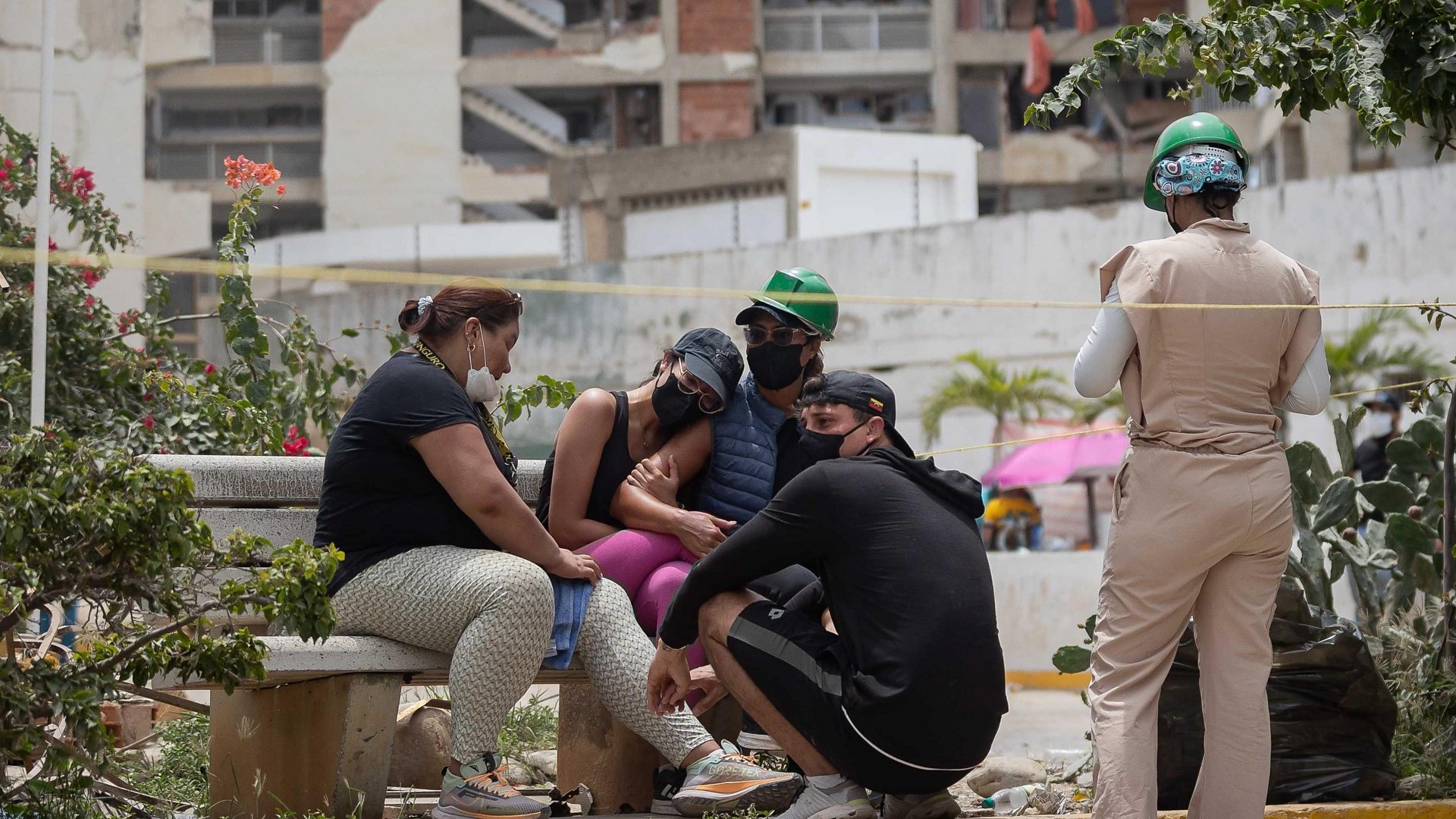
In Catia la Mar, a coastal city in northern Venezuela, the ground has stopped shaking — but the anger has not. Residents of this earthquake-battered community have turned their fury toward the state, which they say has been conspicuously, painfully absent in the critical hours and days since the disaster struck. While survivors remain potentially trapped beneath collapsed buildings, it is ordinary citizens and volunteers, not government rescue teams, who are clawing through the rubble in search of the living.
The earthquake tore through Venezuela’s northern coast with devastating force, reducing homes and apartment blocks to cascading piles of concrete and twisted steel. Families were separated. Neighborhoods were swallowed. And in the immediate aftermath, when the machinery of a functioning state should have mobilized — emergency services, heavy equipment, coordinated rescue operations — residents of Catia la Mar say it simply did not arrive in any meaningful way. The state, they felt, had abandoned them.
BBC correspondent Orla Guerin, reporting from the scenes of destruction in Catia la Mar, captured the raw frustration of a community left to fend for itself. The volunteers working the rubble are not professionals equipped with sonar detection gear or hydraulic rescue tools — they are neighbors, friends, and strangers united by urgency and the knowledge that every hour counts when someone is buried alive. Their efforts are extraordinary. The circumstances that made those efforts necessary are a damning indictment of institutional failure.
Venezuela’s government, under President Nicolás Maduro, has long faced credible and well-documented criticism for its hollowing out of public institutions, its mismanagement of the country’s vast oil revenues, and its systematic neglect of infrastructure and emergency services. This earthquake has not created a new crisis so much as it has exposed, in the most visceral and immediate terms, the consequences of years of state decay. When a government fails to invest in the capacity to protect its own people, it is ordinary citizens — the poorest and most vulnerable among them — who pay the price in rubble and grief.
The anger in Catia la Mar is not simply the raw emotion of shock. It is something harder and more considered: the fury of people who have watched their country’s institutions erode for years and now find themselves, in their most desperate hour, entirely on their own. That fury deserves to be heard, amplified, and taken seriously — not as a political talking point, but as a human reckoning with what governments owe the people they claim to serve.