
The Democratic Party’s internal tensions have broken into open view, with Representative Pramila Jayapal of Washington publicly rebuking colleagues who have greeted the party’s growing socialist wing with condescension rather than curiosity. Speaking to CNN, Jayapal described the treatment of progressive and democratic socialist candidates — and the voters who elect them — as “disrespectful,” a pointed word choice that signals just how strained relations have become between the party’s establishment center and its energized left flank. The confrontation is not merely rhetorical. It is rooted in a string of concrete electoral results that the party’s moderates have struggled to explain away.
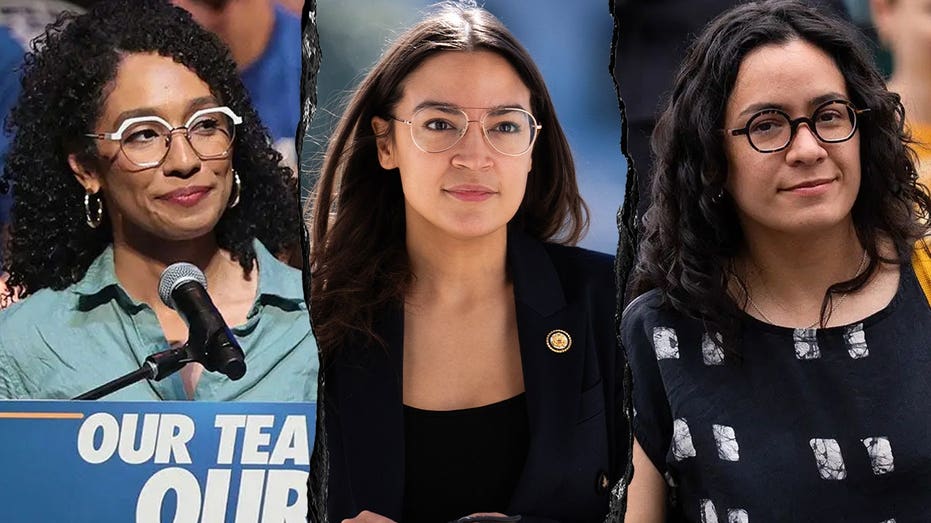
The immediate backdrop is a wave of primary victories by candidates aligned with democratic socialist politics. All three congressional candidates endorsed by New York City Mayor Zohran Mamdani — Brad Lander, Claire Valdez, and Darializa Avila Chevalier — won their Democratic primaries, a sweep that underscores the organizational strength and voter appeal of the party’s left. Jayapal, who serves as chair emerita of the Congressional Progressive Caucus, argued these results are not anomalies but signals: voters are exhausted by cautious, triangulating politics and are actively seeking something bolder and more direct in its commitments to working people.
What makes Jayapal’s critique particularly sharp is the double standard she identifies in how the party interprets its own electoral data. When a moderate candidate wins a primary, the conventional wisdom among Democratic strategists quickly hardens into a universal lesson — a new blueprint, a proof of concept for the whole party. When a democratic socialist wins, the same strategists reach for alarm rather than analysis. Jayapal put the contradiction bluntly: “Why is it that every time a moderate wins an election, people are like, ‘That’s the new blueprint for the Democratic Party.’ But if a progressive or a Democratic socialist wins, ‘Oh, the whole party’s falling to hell in a handbasket.'” That asymmetry is not neutral — it reflects a structural bias within party institutions toward a political center that has demonstrably failed to retain the coalition Democrats need.
Jayapal directed specific criticism at Pennsylvania Governor Josh Shapiro, a rising figure in the moderate wing, who has argued that some democratic socialists engage in performative politics rather than substantive governance. She called him flatly “wrong” and rejected the framing as both condescending and strategically counterproductive. Her broader point deserves to be taken seriously: dismissing socialist candidates as noise-makers ignores the very real policy demands — on housing, healthcare, labor rights, and economic redistribution — that animate their campaigns and draw voters who had previously disengaged from electoral politics entirely.
The deeper question Jayapal raises is one the Democratic Party cannot afford to defer indefinitely. If democratic socialist candidates are winning primaries in competitive environments, and doing so by bringing disaffected voters back into the fold, then the establishment’s instinct to marginalize them is not just philosophically inconsistent — it is electorally self-defeating. A genuinely big-tent party does not demand ideological conformity from its left while treating centrism as the default and only legitimate position. It grapples honestly with why so many of its former voters felt abandoned, and it asks whether bolder commitments on economic justice and structural reform might be a path back rather than a liability. Jayapal is not asking Democrats to abandon pragmatism. She is asking them to stop mistaking timidity for wisdom.