
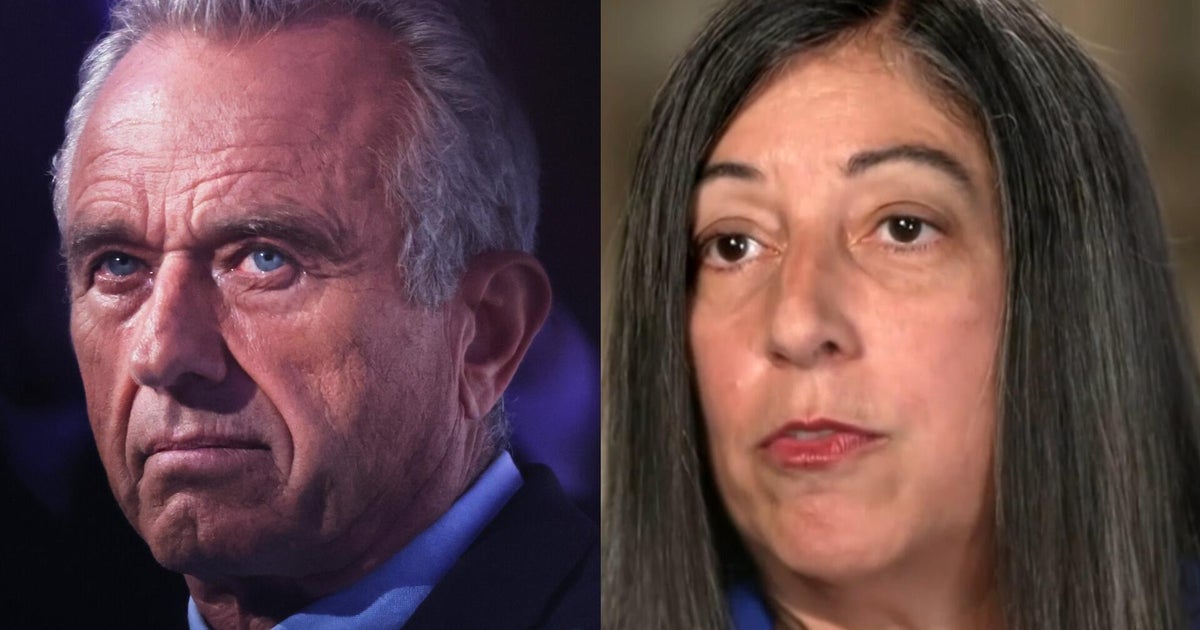
The United States Centers for Disease Control and Prevention, long regarded as the backbone of American public health infrastructure, is facing what former insiders describe as a systematic erosion of its scientific mission under Robert F. Kennedy Jr. Dr. Debra Houry, who served as the CDC’s chief medical officer, has gone on record with serious allegations about the agency’s transformation since Kennedy assumed leadership — and what she describes points to something far more troubling than routine bureaucratic reshuffling.
The thesis is straightforward, even if its implications are not: when a federal health agency is led by someone with a documented record of spreading medical misinformation, the damage is not merely ideological — it is institutional, structural, and ultimately measurable in human lives. Houry’s testimony, delivered to CBS News’ Face the Nation and reported with additional context by Dr. Celine Gounder, provides the kind of firsthand credibility that demands serious attention.
Kennedy’s skepticism toward vaccines and mainstream epidemiology is not a fringe quirk — it is a governing philosophy, and that distinction matters enormously. Career scientists at the CDC built their professional lives around evidence-based policymaking; an agency director who treats that evidence as negotiable does not simply create tension, he dismantles the conditions under which rigorous public health work is possible at all.
What Institutional Damage Actually Looks Like
The CDC’s authority rests not just on legal mandate but on public trust, and that trust is painstakingly constructed through transparency, peer review, and consistent adherence to scientific consensus. When senior officials like Houry feel compelled to speak publicly about internal dysfunction, it signals that normal channels of accountability have failed. Her willingness to go on record is itself a measure of how serious the situation has become.
The consequences of weakening the CDC extend well beyond Washington policy circles. The agency coordinates disease surveillance, guides state and local health departments, and shapes the clinical guidance that physicians rely on daily. Disrupting those functions — whether through personnel purges, budget cuts, or the elevation of fringe scientific views — produces downstream harm that is diffuse, delayed, and therefore easy for political actors to deny.
It is worth being precise about what this moment represents. This is not a case of reasonable people disagreeing about regulatory philosophy or the appropriate scope of government. Kennedy’s stewardship of the CDC reflects a pattern of empirically contested claims being granted institutional authority, and the public health community’s alarm is not partisan anxiety — it is a professional assessment grounded in evidence. Dismissing that alarm as mere opposition politics would be a failure of journalistic and civic responsibility alike. The allegations emerging from within the CDC deserve sustained scrutiny, and the American public deserves a health agency that answers to science rather than to ideology.