
America broke its promise to Gen Z. The question now is whether that betrayal has hardened into something that no economic recovery can easily undo.
Last year, the “Gen Z stare” became a cultural shorthand — a label for the flat, unreadable affect that young adults increasingly project in workplaces, on camera, and in everyday interactions. Researchers spent much of 2025 explaining it, largely as a freeze response rooted in anxiety. That framing was generous, and probably correct, as far as it went. But something has shifted. What’s emerging now looks less like a freeze and more like a sneer: a settled worldview expressing itself without effort, without doubt, and without any particular interest in being challenged.
That distinction matters enormously. A freeze is a wound. A sneer is a conclusion.
How did we get here?
The oldest members of Gen Z were between 8 and 13 years old during the 2008–2010 foreclosure crisis, when 3.8 million American families lost their homes at the peak of the collapse. These were not abstract statistics for children watching parents open envelopes at the kitchen table, changing schools mid-year, returning to neighborhoods where a house simply wasn’t there anymore. The foundational promise of American middle-class life — work hard, the system holds — was revealed to be revocable. Not as a political lesson. As a lived experience.
The economic conditions Gen Z inherited as adults have done nothing but confirm that early lesson. Starter home prices are up 87% since 2019. The average new car now costs $49,000, a 27% increase since 2020. A SignalFire analysis of hiring data between 2019 and 2024 found that entry-level hiring had fallen more than 50% across all sectors, even as mid- and senior-level positions recovered. Over 70% of Gen Z respondents describe “survival spending” as their financial norm. Fifty-seven percent believe their generation was structurally set up for financial failure. Only 32% think the American Dream remains attainable.
Kaelyn, 24, wrote to Fortune after reading coverage of the Gen Z stare. She and her partner did everything the system asked: skipped college, obtained GEDs, lived with family until age 21, saved aggressively, and eventually bought a home — a transaction she describes as arriving “with extreme caveats.” She now works as an administrator at a high-volume tax firm while pursuing an enrolled agent certification. By almost any measure, she beat the odds. Her read on the system is unsparing anyway.
“Everywhere I turn — healthcare, employment, even housing — those who provide the ‘opportunities’ are exploitative and slowly but surely drilling further into a broken system,” she said. “We were jaded about employment before we ever entered the workforce.”
Beyond jaded, she added, Gen Z is simply angry. She grew up watching her parents come home exhausted from jobs that barely covered dinners of ramen noodles or orzo with onions. That anger now has a clinical name: the World Economic Forum calls it financial nihilism — the conclusion that the system no longer rewards prudence, pushing a cohort toward crypto bets, prediction markets, and raided retirement accounts.
The empirical record supports their pessimism. Dartmouth economist David Blanchflower and UCL’s Alex Bryson have spent two years documenting the disappearance of the so-called U-curve — the long-established pattern by which happiness dips in middle age and recovers later in life. Drawing on datasets spanning dozens of countries, they confirm that ill-being is no longer hump-shaped across age groups. Young people are now the most miserable cohort globally. In subsequent NBER working papers currently under review, they sharpen the finding further: the deterioration is concentrated specifically among young workers, and the trend began not with COVID but in 2010 — the year the foreclosure crisis ended.
The stare, in that context, was the correct emotional response to an ambush.
When a wound becomes a posture
Here is where the analysis has to get uncomfortable, because the stare and the sneer are not the same thing, and conflating them does Gen Z no favors.
The developmental psychologist James Marcia, building on Erik Erikson, identified defensive foreclosure as the preemptive closing off of identity exploration in response to anxiety — adopting a fixed identity defined primarily by refusal, shutting the process down before it can hurt you. The person who forecloses defensively never goes through the crisis of questioning and exploring. They’ve already decided. If you don’t expect too much, you won’t be let down.
Calling a film “boomer-coded” without engaging with it is defensive foreclosure in action — a categorical ruling issued before entry, doors shut from the inside. And the data suggest this posture is spreading. Sixty percent of companies report letting Gen Z hires go within the first few months of 2026, citing lack of motivation; Gen Z has largely responded not with reflection but with viral mockery of the employers. Fourteen-and-a-half percent of Gen Z now describe themselves as ideologically “extreme,” compared to 2.7% of Millennials at the same age. Eighteen percent say they never trust the government — more than double the Millennial rate. More than half of Gen Z workers say their own social skills have declined, and where early commentary framed that as a wound, a significant cohort has reframed it as a badge.
The expert class bears real responsibility here. When the Gen Z stare went viral in mid-2025, the institutional response was almost uniformly defensive — researchers urged “generational empathy,” some called the phenomenon exaggerated, and few named the risk of a generation foreclosing on itself. By reflexively framing withdrawal as resistance rather than deficit, the expert class helped dismantle the very mechanism that might have interrupted the cycle. They told a generation, implicitly, that their contempt was justified — and now express surprise as it deepens.
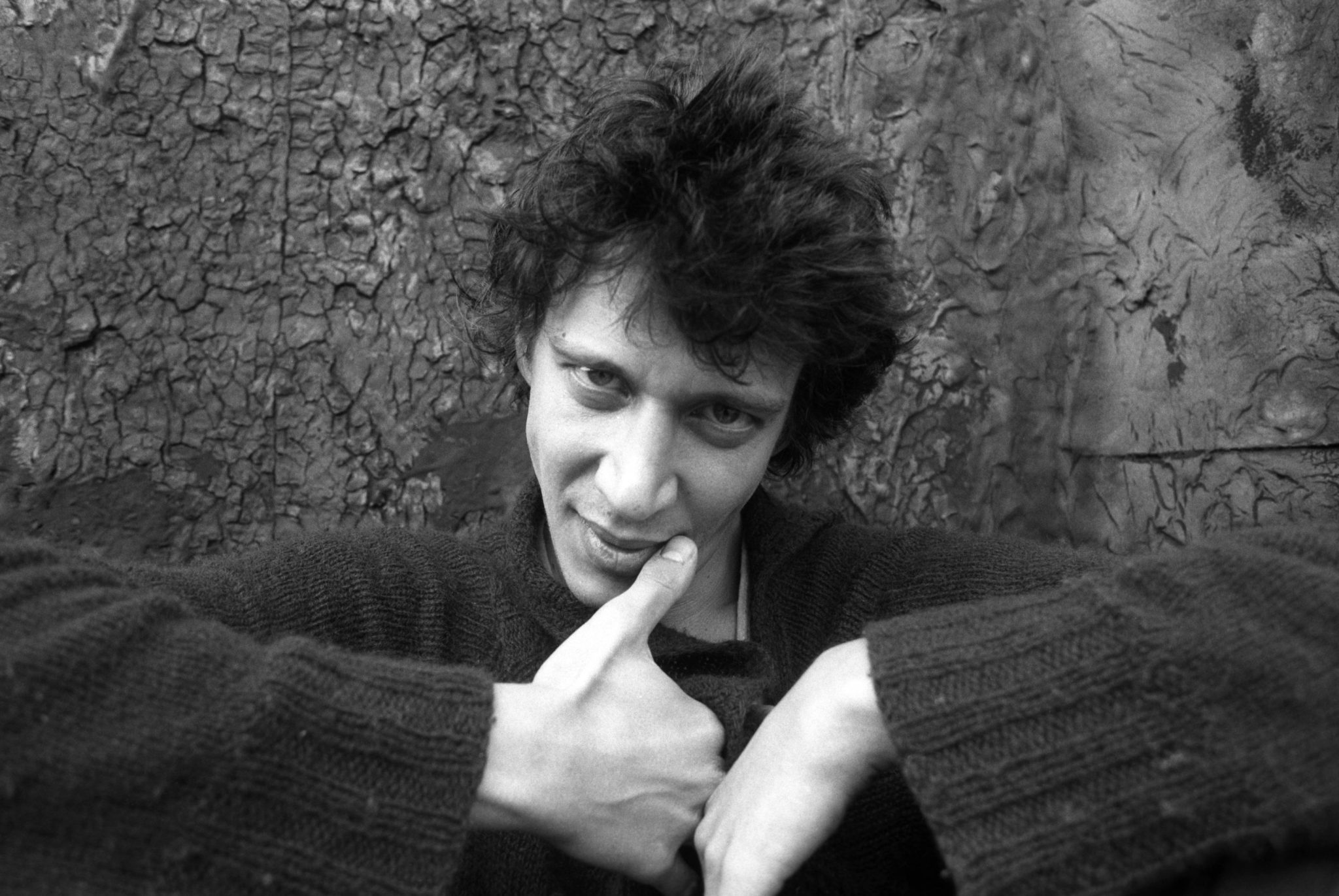
This is not a call to dismiss the structural failures that produced the anger. Those failures are real, documented, and ongoing. But there is a meaningful difference between the punk generation of the late 1970s — who sneered at authority as a provocation demanding a response — and a generation that has simply terminated the exchange. Richard Hell, who sang of a “Blank Generation,” was explicit that the blank was a space to write on, a refusal of the previous generation’s definitions rather than a refusal of meaning itself. Defensive foreclosure is something else entirely. It is a termination, not a provocation.
Kenzie, a Gen Z corrections officer who also wrote to Fortune, described navigating a world where “all the old solutions feel like a carrot being dangled in front of our faces.” Her profession is one of the least forgiving environments for disengagement — team cohesion in a corrections facility is not a corporate talking point but a physical necessity. And yet she arrived at a conclusion that cuts against the foreclosure logic:
Here is the cruel irony the data now reveal. The economic conditions that produced this psychology are, slowly, beginning to shift. Gen Z’s homeownership rate is already tracking ahead of Millennials at the same age — buying smaller homes in lower-cost metros, adapting, finding ways through. The $84 trillion Great Wealth Transfer is underway. The starter economy, however broken, is not permanently sealed.
But Blanchflower and Bryson’s data show the onset of despair among young workers beginning in 2010 — meaning the psychology of foreclosure has been hardening for fifteen years, across conditions both terrible and improved, through booms and contractions alike. It is no longer purely a response to circumstances. It has become a lens.
The door is beginning to open. The generation trained not to approach it stands at a distance, arms folded.
Kaelyn put it more plainly than any researcher has managed. “We gave up on this game before we even really understood what it was,” she wrote. “Because it was dead well before we arrived.”
The economy foreclosed on Gen Z first. That was a structural failure, a policy failure, and a moral failure by institutions and a political class that chose asset-holders over everyone else. The risk now is that Gen Z finishes the job — and forecloses on itself.