
A Slice of Pizza, Then Handcuffs
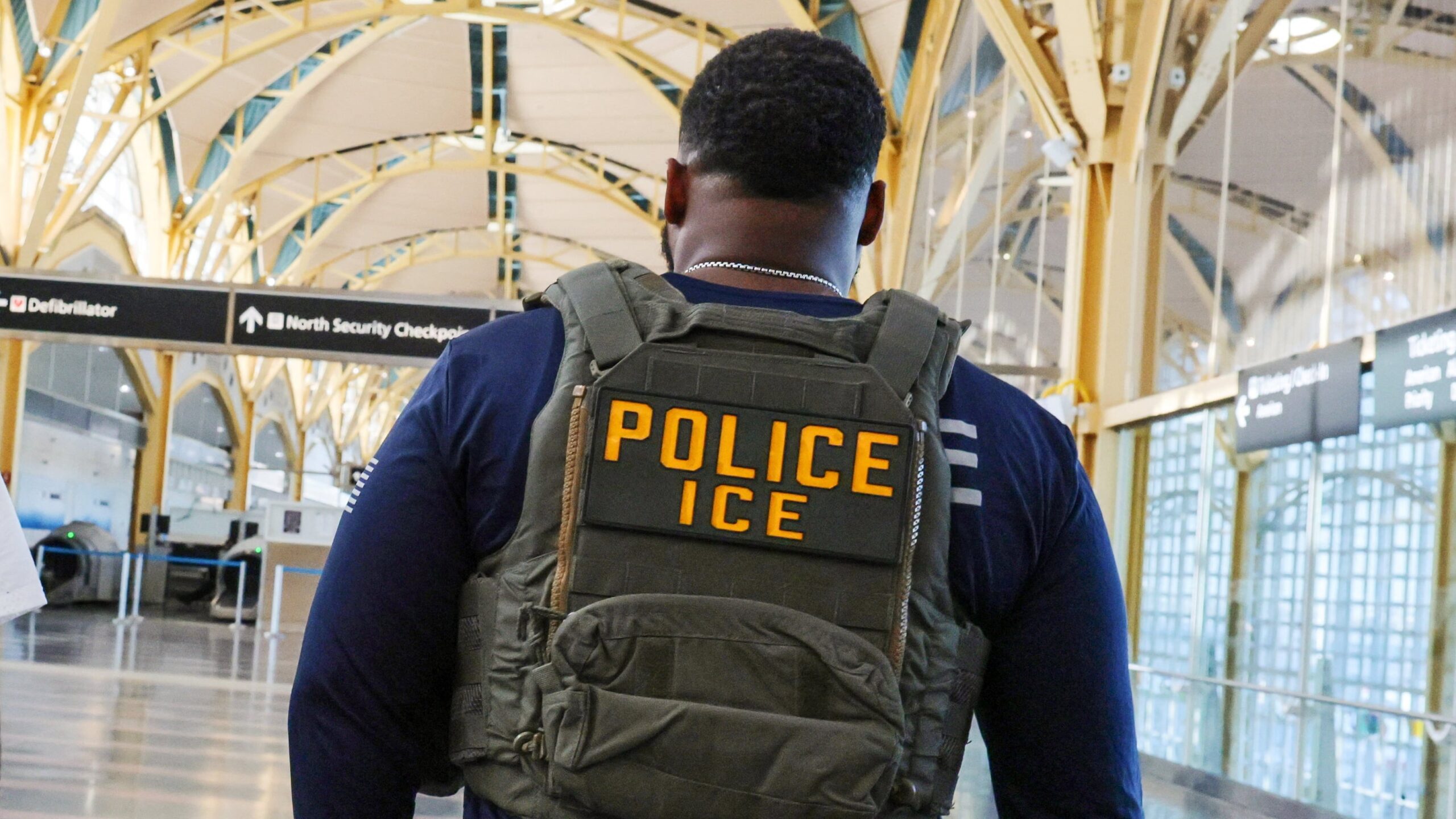
He was sitting at a table in Fort Lauderdale-Hollywood International Airport, eating a slice of pizza with his teammates, when the agents moved in. Matías Pourrain, a 26-year-old Argentinian midfielder for Miami United Football Club, had every reason to believe the afternoon was ordinary: a domestic flight to Los Angeles, a championship match, the kind of moment a semiprofessional soccer player works years to reach. Instead, Immigration and Customs Enforcement officers detained him on the spot, in full view of his teammates, and led him away before the team ever boarded their plane. The team flew to Los Angeles without him. They lost the United Premier Soccer League championship game. Pourrain was transported to the Glades County Detention Center, where he remains, according to the ICE detainee database.
The arrest, which took place as Miami United prepared to compete in the fourth tier of American soccer, immediately drew attention not only for its timing and its setting — a public airport terminal, a team meal interrupted — but for the unresolved and contested facts surrounding Pourrain’s immigration status. Those facts matter enormously, and the gap between what the government says and what his family says is wide enough to raise serious questions about the process that put him in a detention cell rather than on a soccer pitch.
What the Government Claims, and What the Family Says
A Department of Homeland Security spokesperson told Newsweek that Pourrain had overstayed his visa, having been admitted legally to the United States in 2019. That framing — a simple overstay, a technical violation — is the kind of characterization that the current enforcement apparatus deploys with regularity to justify detentions that, in practice, upend lives built over years in this country. But Pourrain’s brother, Juan, offered a sharply different account to the Argentinian television outlet Todo Noticias, stating that Matías held asylum status, possessed a Social Security number, and had a pending appointment with immigration authorities already scheduled — the ordinary, bureaucratic machinery of a legal process still in motion.
These two accounts are not merely different in emphasis; they describe fundamentally different legal realities. A person with a pending asylum claim and an active Social Security number occupies a categorically distinct position from someone who has simply ignored the terms of a tourist or work visa. Whether Pourrain’s case falls into one category or the other has enormous consequences for the legitimacy of his detention — and the government’s terse statement does nothing to resolve that ambiguity. In the current climate, where ICE has dramatically expanded both the scope and the theatricality of its enforcement operations, the burden of proof increasingly seems to fall on the detained rather than on the state doing the detaining.
A Club Left to Speak Into the Void
Miami United Football Club responded with a statement posted to Instagram before their match, one that read less like a routine press release and more like a dispatch from an organization genuinely blindsided and scrambling to respond with dignity. “The club has been fully at Matías and his family’s side,” the statement read, “providing legal support, making an attorney available, and remaining in constant contact with his family.” The team played the championship game anyway — what else could they do? — and lost. The absence of their midfielder was presumably felt on the field, though the deeper absence, the one that lingers, is the absence of any coherent explanation from the government about why this arrest needed to happen in this way, at this moment, in this place.
There is something deliberately visible about arresting a man in an airport terminal, among his teammates, before a championship match. ICE under the current administration has made no secret of its preference for high-profile, public enforcement actions — the optics of power, the message sent not just to the individual detained but to the broader community watching. Whether that message is one of law and order or one of intimidation depends heavily on the facts of the underlying case, and those facts, here, remain genuinely disputed.
The Broader Pattern Behind One Arrest
Pourrain’s case sits within a much larger enforcement surge that has reshaped daily life for immigrant communities across the United States. The current administration has explicitly abandoned the prosecutorial discretion frameworks that previously guided ICE toward prioritizing individuals with serious criminal histories, instead pursuing a strategy of broad, high-visibility arrests that treat immigration status as the primary — and often sole — criterion for detention. The result has been a wave of cases like Pourrain’s: individuals with deep community ties, pending legal proceedings, or contested status claims swept up in operations that make little distinction between a genuine public safety concern and a soccer player eating pizza before a flight.
The human stakes of that policy are not abstract. They look like a team sitting on a plane to Los Angeles, staring at an empty seat. They look like a family in Argentina watching their son’s name appear in an ICE detainee database. They look like an attorney scrambling to understand what, exactly, the government believes it has the right to do — and why it chose to do it here, now, in front of everyone.
What Comes Next
Pourrain remains in detention at the Glades County Detention Center as his legal situation continues to unfold. Miami United has committed to supporting him and his family through the process, and his brother’s account suggests that the legal arguments available to him are not trivial — asylum claims and pending appointments represent real procedural safeguards, if the system allows them to function as intended. Whether those safeguards hold in an enforcement environment that has grown increasingly hostile to procedural nuance is the question that will determine what happens to Matías Pourrain next.
For now, he waits in a detention center in Glades County, Florida, while somewhere in Los Angeles, a championship trophy sits with a team that beat his. The pizza went cold a long time ago.