
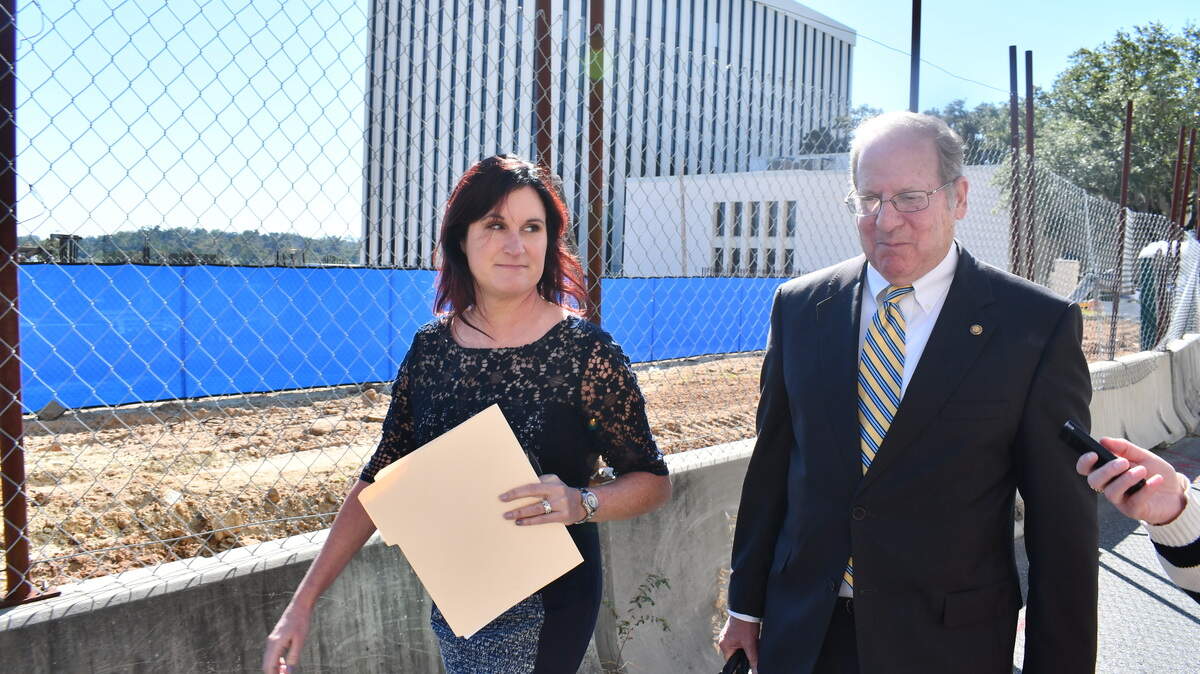
A Leon County grand jury investigating the diversion of $10 million in taxpayer funds through the Hope Florida Foundation has closed its inquiry without criminal charges — and without, critics say, doing nearly enough to find out who was responsible. Legal experts and former federal prosecutors are now raising pointed questions about the scope and rigor of the investigation, arguing that a scheme of this magnitude demanded far more scrutiny than it received.
A Scheme That Benefited the DeSantis Political Machine
The grand jury confirmed what earlier state House hearings had first uncovered: that $10 million originally intended to help low-income, seriously ill children was redirected into a pair of dark money political action committees with ties to the DeSantis administration. The foundation, presented publicly as a charitable initiative championed by First Lady Casey DeSantis, became the vehicle through which those funds moved out of the public welfare system and into political coffers.
State Attorney Jack Campbell empaneled the grand jury after Republican state representative Alex Andrade forwarded the findings of two state House hearings that had first exposed the diversion. CBS News Miami subsequently reported the grand jury’s determination that the administration had misappropriated the funds — a finding that prompted an immediate and urgent question: why is no one being held to account?
The grand jury’s answer was, in effect, that no one would admit to authorizing the scheme. Jurors concluded they lacked sufficient evidence to bring criminal charges because the operation was structured in a way that obscured individual decision-making — what the grand jury itself described as a sophisticated scheme to fund political activities.
Former Prosecutors Push Back Hard
That explanation has not satisfied legal veterans familiar with complex public corruption cases. Bruce Udolf, who formerly led the public corruption unit at the U.S. Attorney’s Office in Miami, delivered a direct assessment of the investigation’s shortcomings.
“Any prosecutor worth their salt would not walk away from this case with just a grand jury recommendation that we have insufficient evidence to proceed,” Udolf said. “The only excuse for saying we have insufficient evidence is to do a thorough investigation. And this, sad to say, this investigation was not thorough by any means.”
Udolf’s critique cuts to the heart of the matter. A finding of insufficient evidence is only as credible as the investigation behind it. When experienced prosecutors describe the inquiry as incomplete, the conclusion that no charges can be filed becomes far less a statement about the facts than a statement about how hard investigators chose to look.
What the Grand Jury Did — and Did Not — Pursue
Critics note that sophisticated financial schemes are precisely the kind of cases that demand more investigative resources, not less. The complexity of the arrangement, rather than serving as a reason to close the case, should have triggered a more expansive inquiry involving forensic accountants and federal coordination.
The Broader Stakes
The Hope Florida case is not an isolated governance failure. It sits within a broader pattern in which public funds, ostensibly directed toward vulnerable populations, are structured in ways that blur the line between state resources and political war chests. The $10 million was earmarked to assist poor, sick children — one of the most sympathetic categories of public expenditure imaginable. Its alleged redirection into anonymous political spending represents a serious breach of public trust, regardless of whether prosecutors ultimately secure a conviction.
The absence of criminal charges does not mean the absence of wrongdoing. It means, at minimum, that the investigation did not go far enough to prove it. For the families the Hope Florida Foundation was supposed to serve, that distinction offers little comfort.