
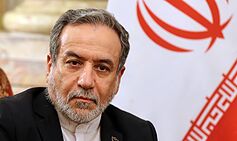
Iran’s Foreign Minister Abbas Araghchi privately indicated during talks at the United Nations General Assembly in New York that Tehran would allow nuclear inspectors access to bombed facilities in exchange for sanctions relief, according to diplomats who spoke on condition of anonymity due to the confidential nature of the deliberations. The offer, if formalized, could represent a significant diplomatic breakthrough in a conflict that has ground into a seven-month standstill, with neither Washington nor Tehran demonstrating meaningful willingness to compromise. The disclosure comes as Iran’s economy buckles under the combined weight of military strikes and international sanctions, and as the Trump administration faces mounting political pressure at home over the costs of the war.
The signal from Araghchi aligns with remarks made publicly last week by Iranian President Masoud Pezeshkian, who told CBS’s Face the Nation that Iran was prepared to allow inspectors to return, confirming the position with an unambiguous “That is absolutely correct” when pressed on the matter. What had remained unclear until now were the specific conditions Araghchi attached to such a concession during his private diplomatic engagements — namely, the demand for tangible sanctions relief in return. That demand puts the ball squarely in the Trump administration’s court, and President Trump complicated the picture this week by publicly denying reports that he would be willing to offer any such relief to Iran, leaving the diplomatic path forward deeply uncertain.
The economic context surrounding Iran’s offer is impossible to separate from its strategic calculus. Since the United States and Israel launched joint military strikes in February, Iran’s economy has deteriorated at a pace that diplomats describe as a reflection of genuine national distress — inflation has surged to nearly 90 percent year over year, according to the Economic Times, while the Iranian rial has shed 30 percent of its value against the dollar. According to the diplomats briefed on the talks, any willingness by Tehran to grant inspector access in return for sanctions relief is a direct measure of how severe that economic pain has become, rather than a sign of ideological capitulation.
During the same private sessions at the General Assembly, Araghchi reportedly pressed European leaders to reverse a United Nations decision taken last year to reimpose broad sanctions on Iran, adding another layer to Tehran’s diplomatic offensive. The question of inspector access has long been a fault line in negotiations: the United States previously claimed that Iran had agreed to such access following a June memorandum of understanding, a claim Iranian officials flatly rejected at the time, insisting no such provision existed in the text of the agreement. That earlier deal ultimately collapsed, and the dispute over what was or was not agreed upon has poisoned subsequent rounds of talks.
Bloomberg reported last week that discussions in New York produced little measurable progress, and that Iranian officials had grown convinced a deal was highly unlikely before the U.S. midterm elections in November. Those elections loom as a consequential inflection point for the Trump administration, whose approval ratings have fallen steadily, with a notable share of his own base expressing frustration over the war’s economic toll on American households. Whether the administration treats that political pressure as an incentive to pursue a diplomatic off-ramp — or doubles down on maximalist demands — will likely determine whether Araghchi’s private overture ever becomes the foundation of a real agreement.