
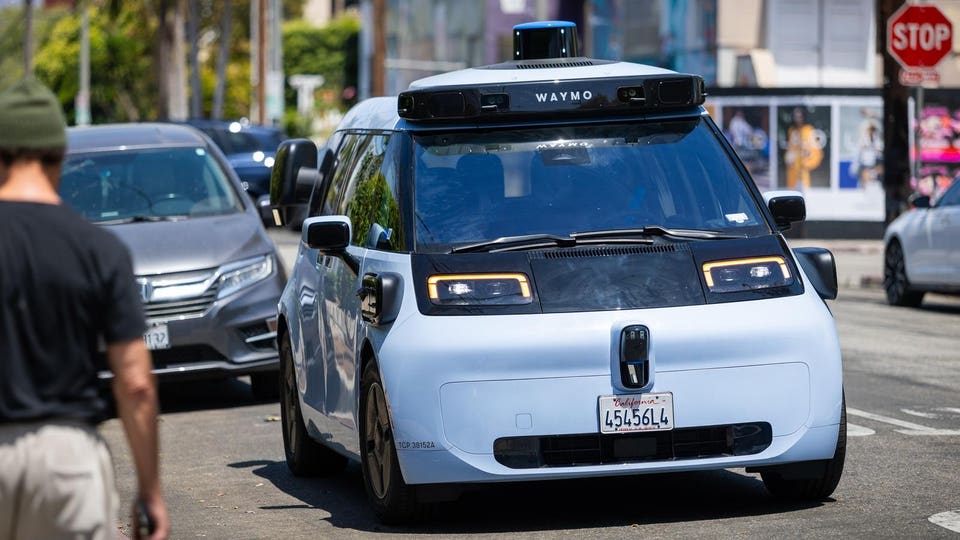
There is something quietly revealing about the fact that Waymo, the autonomous vehicle subsidiary of one of America’s most powerful technology corporations, is doing what no ordinary American consumer can: importing thousands of Chinese-built electric vehicles at scale, tariffs and all, while those same vehicles remain effectively locked out of the consumer market by a wall of import fees that now hover at 127.5%. The contradiction is not merely ironic. It illuminates the selective, often arbitrary nature of trade policy — and the way large, well-capitalized corporations can absorb costs that policy architects designed to be prohibitive.
Chinese automakers have, by most credible measures, become the de facto global standard-setters for affordable electric vehicles. BYD is now outselling Tesla on volume. Xiaomi is rolling out sedans and SUVs with in-cabin technology that makes American offerings look dated. Yet staggeringly high tariffs — layered from a 100% punitive duty on Chinese EVs, a standard 2.5% import fee, and a 25% levy on “strategic” goods including automobiles — have kept those vehicles out of American driveways. The political logic, embraced across both parties in Washington, is that protecting domestic manufacturing justifies the cost to consumers who might otherwise access cheaper, cleaner transportation.
Waymo, it turns out, has decided the math still works — at least for a company that has raised more than $20 billion since it began as the Google Self-Driving Car Project in 2009.
Since 2024, Zeekr — an EV brand owned by China’s Geely Auto — has shipped more than 3,200 units of its CM1e van through the Port of Los Angeles, including over 2,600 so far this year, according to Bills of Lading data compiled by research firm ImportGenius. Waymo is not formally identified as the recipient in those documents, but Zeekr has no other U.S. partner. Waymo markets the vehicle as the “Waymo Ojai,” a friendly-faced, periwinkle-colored minivan that began appearing in Los Angeles and San Francisco in late May. The company’s spokesman, Chris Bonelli, confirmed only that Waymo has “over 300 Ojais” serving early-access riders across San Francisco, Los Angeles, and Phoenix, and described the vehicle as central to the company’s scaling ambitions across dozens of cities.
The scale of the imports surprised even close industry observers. “The market assumes Waymo’s future with the Ojai is a dead-end due to tariffs on Chinese auto imports; so did we,” Michael Morton, a research analyst at MoffettNathanson, wrote in a recent investment note. “To be frank, we were surprised by what we found.” His firm estimates Waymo is importing an average of 300 Zeekr vans per month — a pace described as “materially higher” than investor assumptions. William George, director of research at ImportGenius, cautioned that 3,200 is an “at least” figure drawn from U.S. Customs documents identifying either the Zeekr brand or the specific vehicle model, and that declared values are not included in those records.
If imported at the CM1e’s Chinese market price of $39,000, the tariff burden alone would push the cost of each vehicle to nearly $89,000 — before factoring in Waymo’s autonomous driving hardware, which industry estimates suggest adds at least $10,000 more per unit. That is a staggering per-vehicle cost, and it complicates Waymo’s stated goal of achieving profitability. The company currently books more than 500,000 paid rides per week and is targeting one million weekly rides by year-end; if it reaches that threshold, analysts project annual revenue could exceed $1 billion by 2027, based on an estimated average fare of $20 per ride. To get there, it needs a dramatically larger fleet — and the Ojai, it appears, is central to that plan.
There is reason to believe Waymo is not actually paying anywhere near $39,000 per van. Tu Le, managing director of the consultancy Sino Auto Insights, argues that Zeekr — and its parent Geely — have strong incentives to offer deep discounts. “My guess is they’re getting it super cheap from Zeekr — at a big discount,” Le told Forbes. “Also, Geely could be eating some of that tariff since Waymo’s kind of stuck. Their AV stack was designed specifically for Ojai prior to all these tariffs and connected vehicle restrictions.” China’s EV industry is operating with significant excess production capacity, and a high-profile U.S. partnership with Alphabet’s flagship autonomous driving unit carries obvious prestige value that Geely would be reluctant to surrender.
The partnership itself dates to late 2021, when Waymo announced plans to add Zeekr vans to its fleet, noting that the model had been styled in Sweden with input from Geely-backed Volvo Cars. That was before the punitive tariff regime took full effect. By the time the economic landscape shifted dramatically, Waymo had already built its sixth-generation autonomous driving hardware system around the Ojai’s architecture — its flat floor, sliding doors on both sides, and roomier passenger cabin. Switching to a comparable Western vehicle, Le estimates, could cost the company something like $100,000 per vehicle once redesign and retooling costs are factored in. “That’s a heavy lift,” he said simply. The sunk cost of engineering integration is, in this case, a more powerful force than the tariff wall.
To comply with U.S. security laws targeting Chinese technology companies, Zeekr units arrive stripped of all sensors and computing systems. Waymo installs its autonomous driving stack — software, sensors, and processors — at its own manufacturing facility in Mesa, Arizona. “The technology that collects data and makes our vehicles autonomous is developed in the U.S.,” spokeswoman Sandy Karp confirmed. Every vehicle also undergoes crash testing to meet federal safety standards before deployment. The arrangement is, in a narrow technical sense, consistent with the letter of connected-vehicle restrictions aimed at Chinese firms. Whether it satisfies the spirit of those rules is a question worth asking.
The Ojai fleet is also becoming a platform for Alphabet’s broader AI ambitions. Last week, Waymo announced it is integrating Google’s Gemini AI assistant into rear-seat screens in the Ojai, allowing riders to control cabin temperature, ask questions about their surroundings, or request a stop — all by voice. The van runs on Waymo’s sixth-generation hardware, which the company says delivers improved sensing and computing power at 50% lower cost than the fifth-generation system used in its now-discontinued Jaguar I-Pace SUVs. The Ojai is not merely a stopgap; it is being built into the company’s long-term identity.
Waymo’s fleet currently totals roughly 3,900 units, including test vehicles, and the company is operating commercially in 11 U.S. cities while preparing to launch in four more, with international testing underway in Tokyo and London. Adding 3,200-plus Zeekr vans would more than double its operational capacity. Competition is arriving: Amazon’s Zoox just received federal permission to operate its purpose-built, steering-wheel-free robotaxis on public roads and will soon begin carrying paying passengers in Las Vegas, with other cities to follow. Zoox builds its vehicles domestically, in a small Silicon Valley factory — a fact that will not be lost on policymakers watching this space.
What the Waymo-Zeekr story ultimately exposes is the gap between trade policy as political performance and trade policy as functional economic reality. A 127.5% tariff is supposed to make Chinese EVs uncompetitive in the American market. For a family trying to buy an affordable electric car, it does exactly that. For a corporation with Alphabet’s balance sheet, a long-term engineering commitment, and a partner willing to absorb part of the cost, it is an obstacle — but a manageable one. The tariff wall, in other words, is high enough to hurt ordinary consumers and low enough for the powerful to climb over. That asymmetry deserves more scrutiny than it has so far received.