
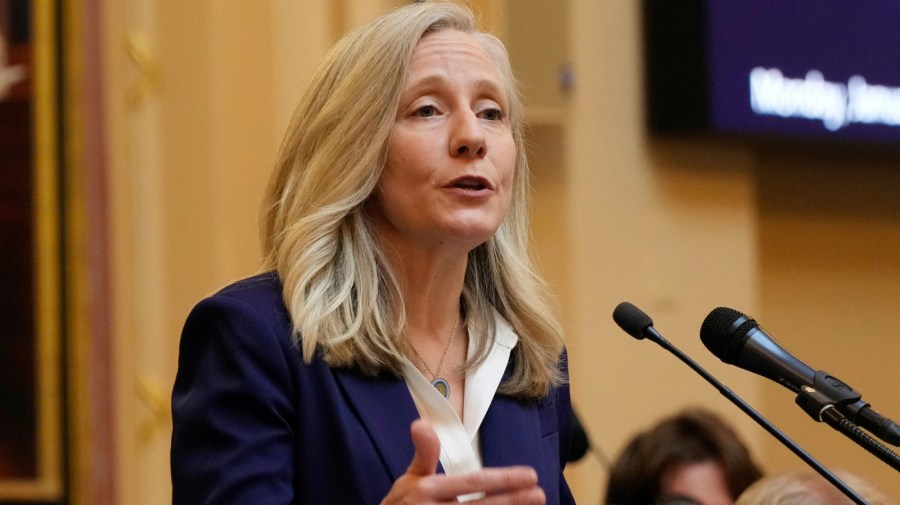
Virginia Governor Abigail Spanberger is drawing a hard line on a proposed $67 billion merger between Dominion Energy and NextEra Energy, filing expert testimony with the State Corporation Commission this week that sets consumer protections as a non-negotiable precondition for approval. Her demands are substantial — and they put the interests of ordinary ratepayers squarely at the center of a deal that would reshape Virginia’s energy landscape for decades.
What Spanberger Is Demanding
The governor’s filing is not a suggestion. It is a structured set of conditions that, if unmet, would lead her to call on the SCC to reject the merger outright.
Critically, Spanberger clarified that her proposal is not a blanket rate freeze. “While rate freeze is a pretty straightforward way to talk about it, it’s actually a rate-hike freeze,” she said. The SCC would retain full authority to lower rates during the six-year window. That distinction matters: it is consumer protection, not regulatory paralysis.
Why the SCC Staff Is Also Pushing Back
Spanberger is not alone in her skepticism. SCC staff have independently recommended that regulators deny the deal as currently proposed — a significant signal from the body that will ultimately decide the merger’s fate. Staff are also calling for a separate regulatory review seven to eight years after the merger closes to assess whether Dominion continues to provide adequate service at just and reasonable rates. That provision would function as a long-term accountability mechanism, not just a one-time approval stamp.
The attorney general’s office has filed its own conditions as well. The convergence of the governor’s office, SCC staff, and the attorney general around the need for stronger protections reflects a broad institutional consensus that the companies’ current offer falls short. NextEra spokesperson Neil Nissan countered that the deal delivers “more than $2.1 billion in near-term direct customer and community benefits” — a claim that regulators and the governor’s office are clearly treating with appropriate scrutiny rather than accepting at face value.
The Stakes for Virginia Ratepayers
Base electricity rates are only one component of a monthly bill. A freeze on base rates would not prevent other charges — including fuel adjustments and infrastructure riders — from rising. That limitation is real, and it means Spanberger’s proposal, while meaningful, is not a complete shield against cost increases. The governor acknowledged as much, which is precisely why she also demanded that bill credits not be swallowed by simultaneous rate hikes in other categories.
Virginia’s electricity market is under pressure. Data center growth has accelerated demand in ways that existing infrastructure was not built to handle, and the costs of that expansion have historically been socialized across all ratepayers rather than borne by the corporations driving the demand. Spanberger’s insistence that data centers pay for their own energy needs represents a direct challenge to that model — and a meaningful progressive intervention in how utility costs get distributed.
What Comes Next
The SCC evidentiary hearing is scheduled to begin November 17. If the commission does not issue a ruling by January 15, 2027, state law treats the silence as automatic approval — a provision that creates real urgency around a rigorous and timely process. Should all federal and state regulators clear the deal, Dominion and NextEra expect the merger to close in the second half of 2027.
Dominion and NextEra responded to Monday’s filings with a statement noting that the testimony “reflects a wide range of viewpoints and interests” and pledging to address the issues through the commission’s established process. That is a holding pattern, not a concession. The pressure is now on the companies to move toward the governor’s conditions — or face a serious regulatory fight in November.