
In the Peoria area of central Illinois, a quiet crisis has been building for years. Working people — and increasingly, older residents on fixed incomes — have found themselves caught between stagnant wages, rising rents, and utility bills that keep climbing. The breaking point, for many, arrived this year.
The pressure has been accumulating for some time. Across Illinois, the cost of electricity has risen steadily, driven by a combination of grid transitions, surging demand, and the pricing power of dominant regional utilities. In Peoria, where average rents now run roughly $1,200 a month, the math has become impossible for a growing share of residents. Representatives from Tazwood Community Services, one of the area’s main assistance providers, told a local roundtable this week that people simply cannot afford to live on minimum wage — a statement that should register as an indictment, not a footnote.
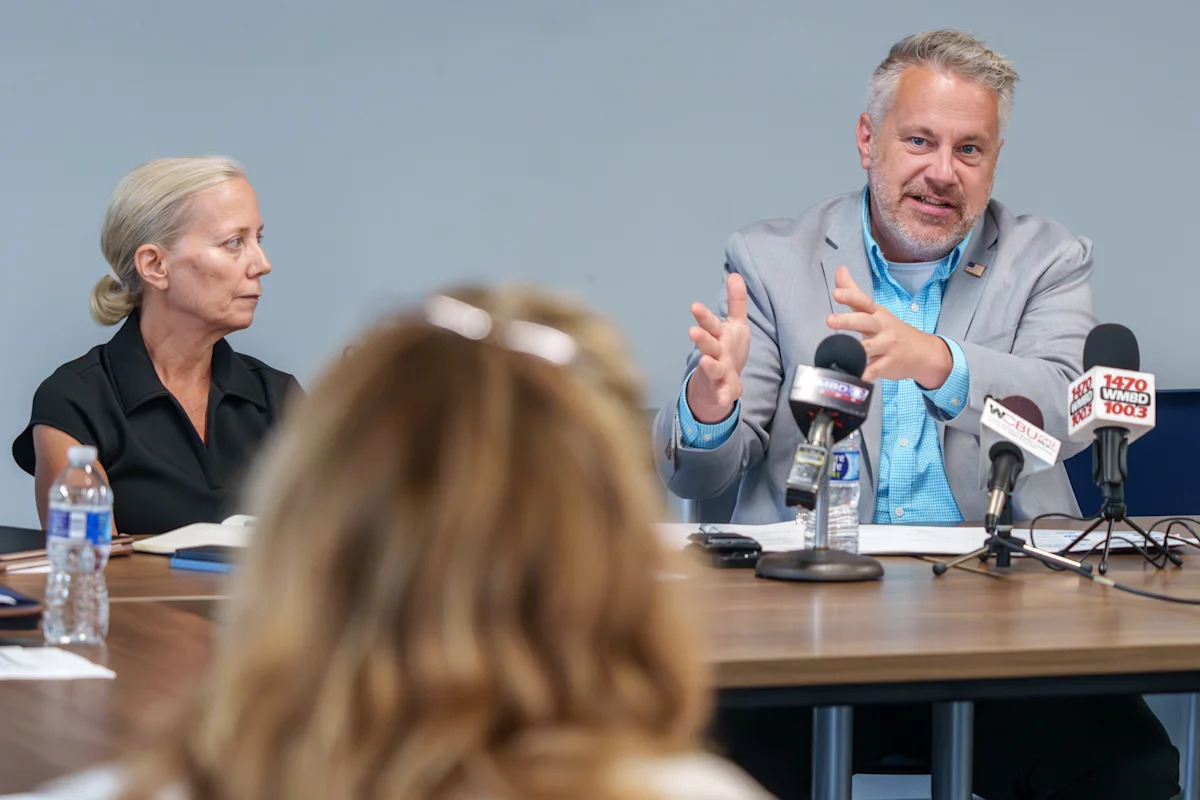
It was against that backdrop that U.S. Rep. Eric Sorensen, a Democrat representing the Peoria district, convened an energy roundtable on Wednesday, inviting community organizations to describe what they are seeing on the ground. The picture they painted was consistent and damning.
Peoria Township Supervisor LaTrina Leary told Sorensen that residents face a cascade of rising costs — healthcare, childcare, groceries — that have eroded household budgets to the point where utility bills become the bill that breaks them. She identified the sharpest growth in people seeking help as coming from residents over the age of 62, a demographic that disproportionately depends on fixed incomes and has little room to absorb rate increases.
Tazwood Community Services reported that its applications for energy assistance more than doubled this year, jumping from 11,000 to 26,000, after it absorbed the Low Income Home Energy Assistance Program (LIHEAP) caseload previously handled by the Peoria Citizens Committee for Economic Opportunity. The numbers alone tell the story of a system under severe stress.
St. Vincent de Paul Society echoed the same message. Fewer and fewer people with jobs are earning enough to cover all of their essential expenses, let alone absorb the cost of keeping the lights on.
What the roundtable did not discuss, at least not until reporters pressed the question, was the role of the utilities themselves.
ComEd, a subsidiary of Exelon, and Ameren, which serves most of Peoria, both posted profits exceeding one billion dollars last year. Exelon reported an operating income of $5.27 billion in 2025. Ameren reported a net income of $1.4 billion. These are not companies scraping by in a difficult energy market. These are companies extracting substantial wealth from the same communities whose residents are lining up for emergency bill assistance.
That contrast deserves to be stated plainly: while Peoria residents sought help paying utility bills in record numbers, the companies billing them reported billion-dollar profits.
There is a further complication. Both Ameren and Exelon have made campaign donations to Sorensen this year. So have Edison Electric, Berkshire Hathaway Energy, DTE Energy, Dominion Energy, Alliant, Xcel Energy, and Constellation Energy, according to federal campaign finance records. The congressman who convened Wednesday’s roundtable on energy affordability has accepted money from most of the major players in the energy industry.
When asked directly whether those companies are charging too much while people struggle to pay, Sorensen did not say yes. He spoke about the need for more energy on the grid, about replacing coal plants with new sources, and about making sure utilities are “good faith partners.” He said, flatly, that “electric rates cannot go up” — before pivoting almost immediately to a discussion of how data centers might affect future electricity demand.
When asked whether the donations and lobbying from Ameren and ComEd have shaped his energy positions, Sorensen said he was “especially focused on green energy” and cited the climate crisis as a driver of his thinking. These are not wrong things to say. But they are not an answer to the question of whether his largest industry donors are overcharging working-class and elderly constituents.
Sorensen’s instinct toward green energy investment is genuinely progressive, and the transition away from fossil fuels is both necessary and urgent. But a commitment to clean energy does not automatically translate into a commitment to utility accountability, rate regulation, or the kind of redistributive policy that would actually protect the Peoria residents who showed up in his roundtable data. Those are different fights, and conflating them lets the utilities off the hook.
The community organizations at Wednesday’s table — Tazwood, St. Vincent de Paul, Leary’s township office — are doing essential work. But they are filling a gap that should not exist. Assistance programs are a pressure valve, not a solution. The solution would require elected officials to confront, directly and without equivocation, whether regulated monopoly utilities are extracting too much from the public they are licensed to serve.
That question was asked on Wednesday in Peoria. It did not receive a straight answer.