
The tension between sports media and political commentary did not begin overnight. It crystallized in the summer of 2016, when San Francisco 49ers quarterback Colin Kaepernick began kneeling during the national anthem to protest police violence against Black Americans — a protest that unfolded in parallel with one of the most divisive presidential campaigns in modern memory. From that moment on, ESPN found itself caught in a relentless crossfire, criticized by conservatives for platforming social justice commentary and, at times, by progressives for not going far enough or for silencing its own talent.
Behind the on-air voices who absorbed most of that criticism stood a quieter institutional force: David Roberts, ESPN’s Executive Vice President, who spent decades inside the network pushing back against the instinct to wall sports off from the wider world. Roberts was widely regarded as one of the most influential internal advocates for covering the genuine intersection of athletics, race, power, and politics — the kind of journalism that treats sports not as an escape from society but as a mirror of it.
For years, that advocacy found a receptive audience under ESPN president John Skipper, who actively encouraged social commentary on air. Hosts like Jemele Hill, Bomani Jones, Dan Le Batard, Sarah Spain, and Will Cain became the public faces of an ESPN willing to engage with questions that extended well beyond box scores. The network’s Outside the Lines franchise embodied that ambition: rigorous, contextual, unafraid to name structural problems in sports institutions. Roberts was a key part of the architecture that made that possible.
Then the climate shifted. Jimmy Pitaro took over as ESPN chair, and the network’s editorial posture began to move deliberately away from political and social commentary. One by one, the hosts most associated with the Skipper era departed — some pushed, some pulled toward platforms where they faced fewer institutional constraints. Le Batard launched his own independent media company. Hill went to Vice and then to her own ventures. Jones built a podcast empire. Their exits were not coincidental; they reflected a changing mandate from the top.
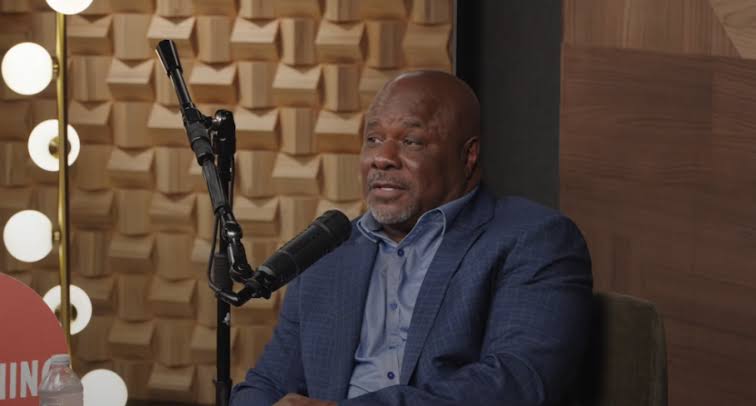
Now Roberts himself is stepping into retirement, and this week he sat down with the Higher Learning podcast to speak candidly about what he believes, what he fought for, and what he sees happening to the network he is leaving behind. His words carry the weight of someone no longer bound by institutional caution. “I was always unafraid to challenge within the organization,” he said, describing the argument that most frustrated him throughout his career. “Nothing drove me crazier than, ‘Well, you know, we don’t mix politics with sports, and covering issues like that is crossing the boundary of politics into sports.'”
Roberts was direct in placing blame not only on external critics but on the executives who, in his view, failed to protect talent willing to engage with difficult material. “It’s a problem when you have executives who want to fall behind the ‘well this is sports’ mentality,” he said. “And that’s just never been me, because that’s not reality.” That framing matters: Roberts is not describing a neutral editorial preference but a factual error — a misrepresentation of what sports actually are and always have been, deeply entangled with race, labor, nationalism, and money.
Under the current leadership of Pitaro and content head Burke Magnus, Roberts acknowledged that the operative guidance to hosts has narrowed considerably. “The edict is to make sure that there is a connection to sports,” he explained — a standard that sounds reasonable in the abstract but in practice shifts enormous discretionary power onto individual hosts while stripping away the institutional backing that once gave them cover. When hosts do speak out, even on their personal social media accounts, audiences and critics routinely attribute those views to ESPN or its parent company Disney, a dynamic Roberts acknowledged can lead to deliberate mischaracterization.
The consequences of that mischaracterization have been concrete and career-defining. In 2017, Jemele Hill was suspended after calling Donald Trump a “white supremacist” on Twitter, and later faced further punishment for encouraging a boycott of NFL sponsors — actions that, whatever one thinks of their strategic wisdom, were rooted in factual assessments of Trump’s record and the NFL’s documented history with player safety and racial equity. The institutional response to Hill’s commentary sent an unmistakable signal about the limits of acceptable speech at ESPN, regardless of the factual basis underlying it.
Roberts now counsels the talent who remain to be strategic rather than spontaneous. “You have to pick your battles,” he told the podcast. “I’ve had to learn that over the course of my 48 years in this business.” It is advice born of experience, but it also describes a media environment in which the burden of navigating institutional risk falls disproportionately on the hosts — often hosts of color — who have the most at stake in these conversations.
The interview was recorded before ESPN announced the layoff of Ryan Clark, one of the most openly political voices remaining at the network. Clark’s departure, coming so close to Roberts’ own exit, reads as more than coincidence. It suggests that the institutional tolerance Roberts spent decades cultivating is contracting further, and that the version of ESPN he helped build — one that treated the social dimensions of sport as legitimate journalism rather than unwelcome controversy — is being dismantled with some deliberateness. Whether that shift serves ESPN’s audience, or merely its desire to avoid political friction in an increasingly hostile regulatory and corporate environment, is a question the network’s remaining leadership has so far declined to answer directly.