
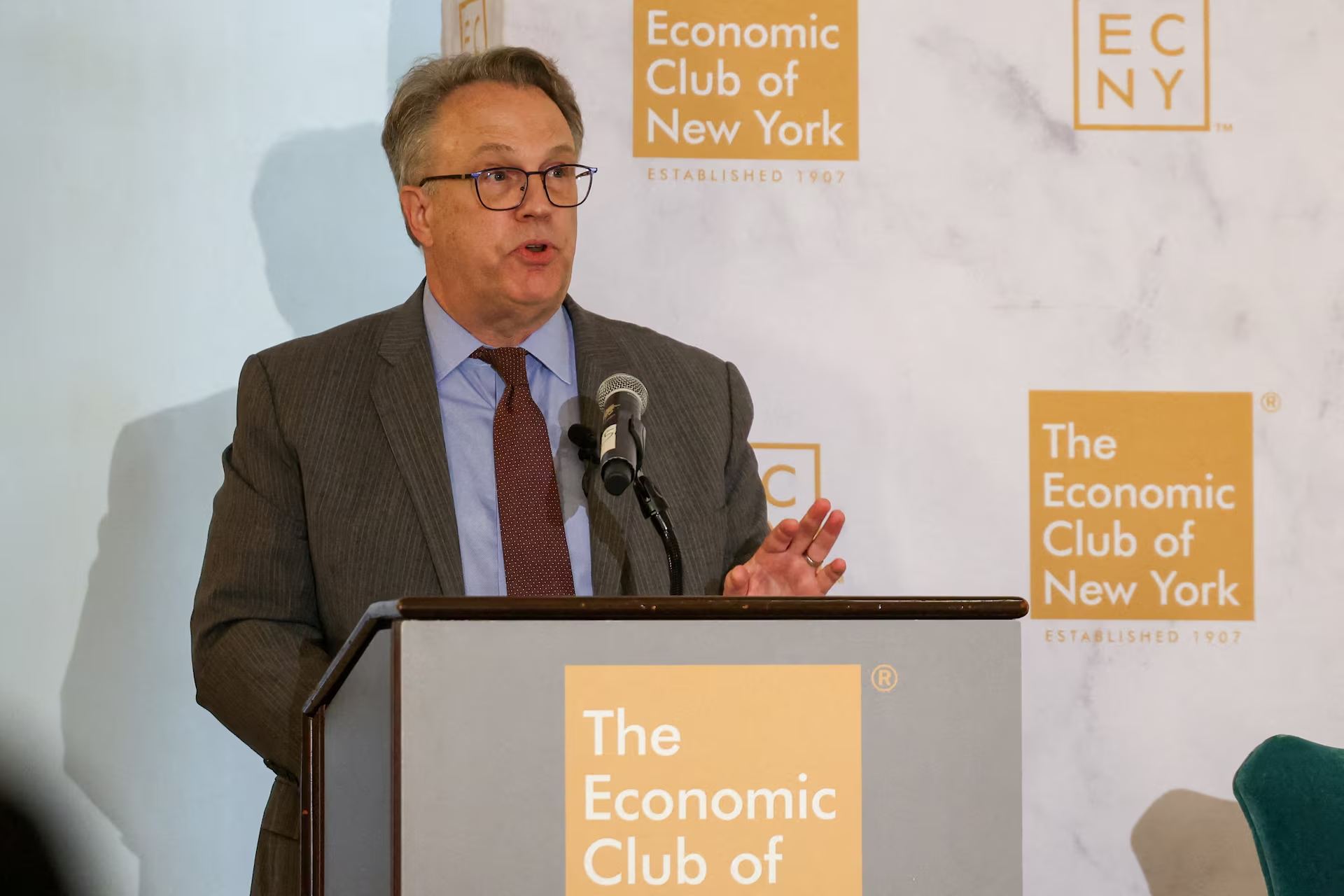
The Federal Reserve is not done tightening. That, in plain terms, is what New York Fed President John Williams made clear on Thursday.
The story of how the United States arrived at this moment of sustained monetary pressure stretches back through more than two years of aggressive rate increases designed to wrestle inflation back toward the central bank’s 2% target. For much of that period, the Fed deployed explicit forward guidance — telegraphing its intentions clearly to financial markets — as a tool of monetary management. That era, Williams indicated Thursday, is now definitively over, echoing the approach already articulated by Fed Chairman Kevin Warsh, who has made clear that the central bank will no longer signal directly to markets what it intends to do at upcoming meetings.
Speaking at the London Macro Policy Forum, Williams said investor sentiment already reflects the likely trajectory, noting that “it’s likely that another rate hike may be appropriate by the end of the year.” He added that this strikes him as “a reasonable way of thinking about it,” while carefully conditioning any expectation on incoming economic data — the same patient, evidence-dependent posture the Fed maintained between its July and September deliberations.
That posture follows a concrete decision made earlier this month, when the Federal Reserve raised its benchmark interest rate by a quarter percentage point, lifting the overnight federal funds rate to a target range of 3.75% to 4%. The move was widely anticipated, but the commentary that followed from Warsh and other senior officials quickly hardened market expectations that further tightening remained on the table.
By Thursday, those expectations had sharpened considerably. CME Group’s FedWatch tool placed the probability of an October rate increase at 77.5%, a striking jump from roughly 53% just one day earlier — a reflection of how rapidly official rhetoric can recalibrate market positioning when the Fed’s leadership speaks in consistent terms.
The hawkish signal from Williams did not arrive in isolation. On Wednesday, Boston Federal Reserve President Susan Collins warned of “an increased likelihood” that inflation would remain “notably” above the 2% target for a sustained period. That same day, Fed Governor Michael Barr stated plainly that “further policy adjustments are likely to be needed to ensure inflation comes down to target in a timely fashion.” Taken together, the three statements form a coherent and deliberate message: the Fed’s work is unfinished, and the cost of premature relief remains high.
Underlying all of this is an economy that continues to confound expectations of a slowdown. Recent data shows the United States economy holding firm even as inflation remains above 3% — a combination that gives the Fed both the justification and the political cover to keep rates elevated. For working families carrying variable-rate debt, or renters in markets where borrowing costs shape housing supply, that resilience at the macroeconomic level translates into continued financial pressure at the household level, a tension that aggregate data rarely captures but that policymakers are increasingly obliged to reckon with.
What comes next depends, as Williams himself acknowledged, on what the data shows. But the direction of travel, for now, points unmistakably upward.