
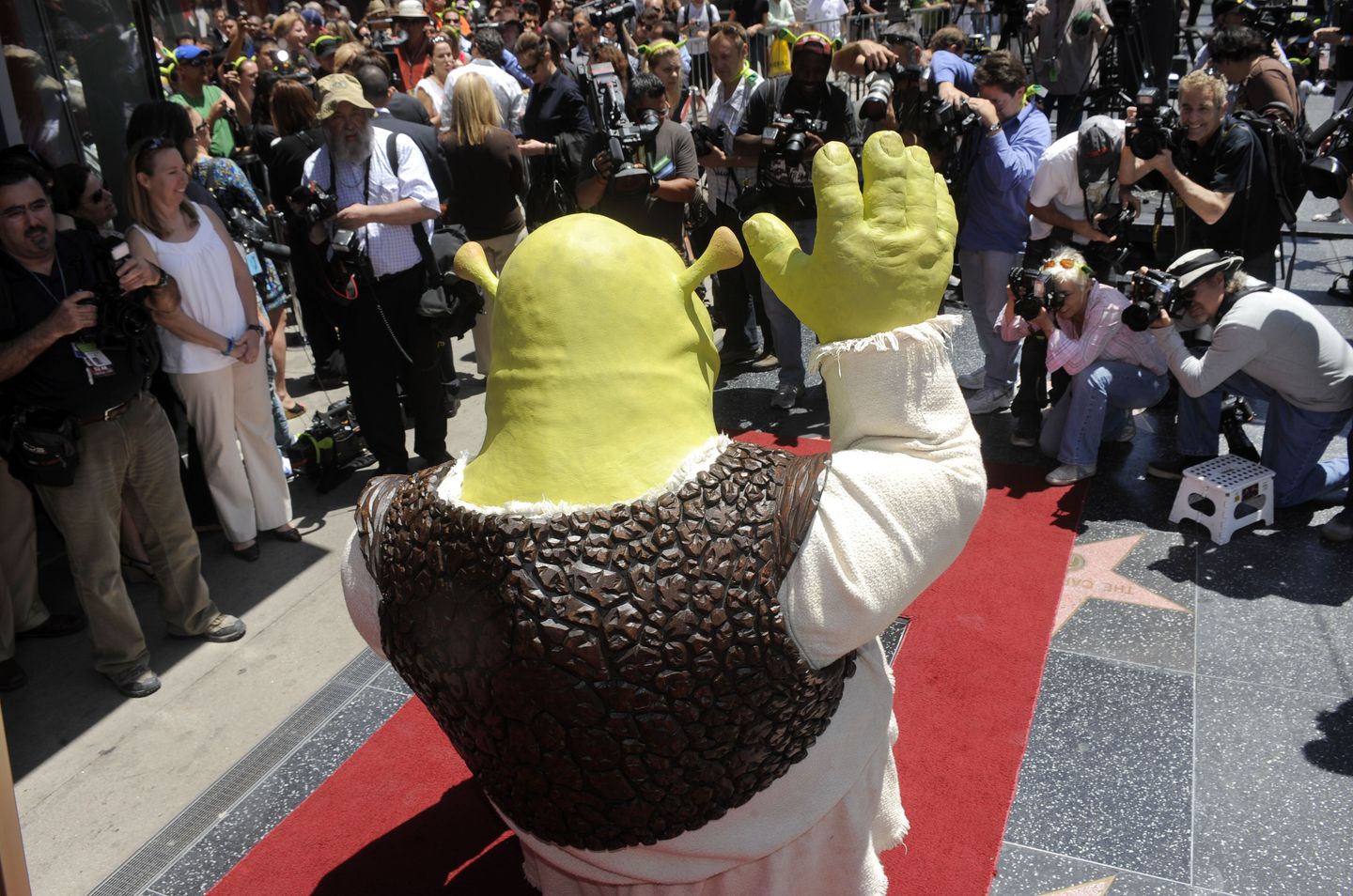
On May 6, D.J. Byrnes picked up his phone and sent three text messages to an Ohio state senator. One contained political commentary. Another deployed a nickname — “Young Mussolini” — that Byrnes had long used for the lawmaker in his progressive Substack newsletter, The Rooster. The third was a digitally altered image of the cartoon ogre Shrek, rendered in a sexually explicit pose. Within 48 hours, a police complaint had been filed. Within days, Byrnes was in handcuffs, spending 23 hours in jail on a misdemeanor harassment charge. On Thursday, a jury in Willoughby Municipal Court will decide whether those three texts constitute a crime — or constitutionally protected political speech.
The case against Byrnes, now 39, turns on a question that is neither simple nor trivial: where does crude, provocative political commentary end and criminal harassment begin? Byrnes has pleaded not guilty to a first-degree misdemeanor charge of telecommunications harassment, a conviction for which carries up to six months in prison. He has already rejected two separate plea deals that would have kept him out of jail but required him to admit guilt — a condition he has refused to accept. His position is that the messages, however vulgar, were political expression aimed at a public official, and that the First Amendment protects them.
The target of those texts, Republican state Sen. Jerry Cirino, filed his complaint with the Kirtland police chief two days after receiving the messages, emailing directly to request that charges be pursued. Cirino has since described the content as offensive and harassing, though he has declined to comment further on the case and has stated publicly that he did not specifically request Byrnes’ arrest. The timing is worth noting: Byrnes sent the messages shortly after Cirino withdrew from a race to become president of the Ohio Senate, a moment of political vulnerability that Byrnes, as a political commentator, had clear reason to address — however unorthodox his chosen medium.
The legal threshold prosecutors must clear is meaningful. To secure a conviction under Ohio’s telecommunications harassment statute, the state must prove beyond a reasonable doubt that Byrnes knowingly sent the messages with the specific purpose of harassing, intimidating, or abusing Cirino — not merely that Cirino found them offensive. Offense, even deep offense, is not a crime. The distinction matters enormously in a democracy where political speech targeting elected officials sits at the very core of First Amendment protection, and where the line between aggressive commentary and criminal conduct must be drawn carefully to avoid chilling legitimate dissent.
The Foundation for Individual Rights and Expression, known as FIRE, has weighed in on Byrnes’ behalf, arguing that the Shrek image does not meet the legal definition of obscenity as established by the Supreme Court’s three-prong test in Miller v. California. Under that standard, material is legally obscene only if it appeals to prurient interest, depicts sexual conduct in a patently offensive way and lacks serious literary, artistic, political, or scientific value — all three conditions must be satisfied simultaneously. Byrnes himself has described the Shrek image as an example of internet meme culture, a genre defined precisely by placing familiar characters in absurd or surreal contexts for satirical effect. Judge Michael Cicconetti denied Byrnes’ motion to dismiss the case on August 21, meaning the First Amendment argument will now be tested before a jury rather than resolved at the pretrial stage.
What makes this case more than a bizarre footnote in Ohio political history is what it reveals about the asymmetry of power between elected officials and the citizens who criticize them. A state senator with institutional standing emailed a police chief directly to initiate a complaint against a blogger whose newsletter mocked him. The machinery of the criminal justice system then moved — an arrest, a night in jail, a misdemeanor charge, and now a jury trial — against a private individual whose offense was, at its core, sending an unflattering and vulgar image to a politician he opposed. Whether or not one finds the Shrek meme tasteful, the spectacle of a Republican lawmaker leveraging law enforcement against a progressive critic demands scrutiny that goes beyond the question of obscenity law. The verdict Thursday will not only determine Byrnes’ fate; it will signal something about the space Ohio leaves for irreverent, sharp-elbowed political speech in the digital age.