
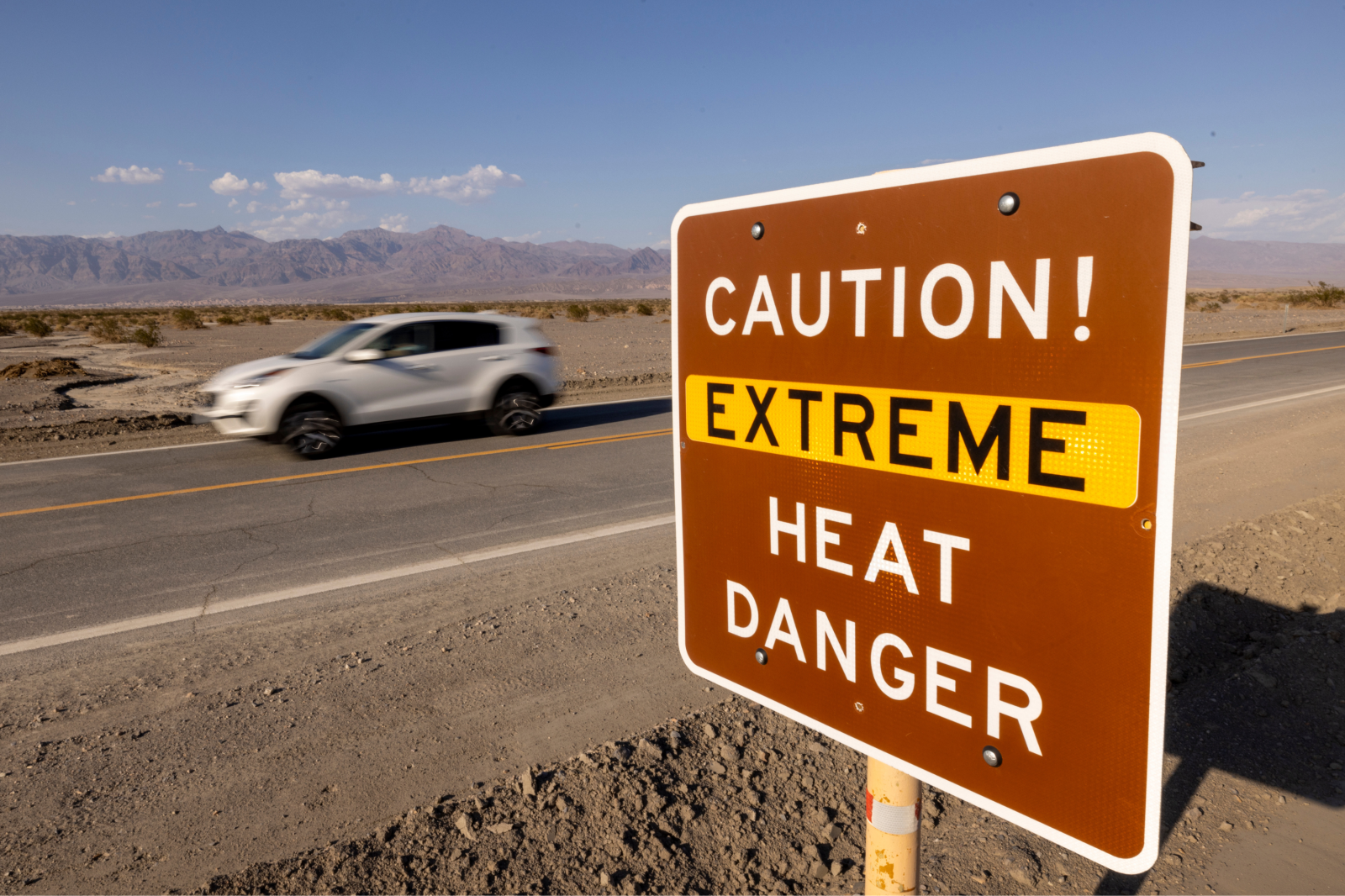
A powerful heat dome is tightening its grip across the American West, pushing tens of millions of people into conditions that federal meteorologists are calling genuinely dangerous. The National Weather Service has issued Extreme Heat Warnings across wide swaths of Arizona and California, with afternoon temperatures forecast to climb as high as 118 degrees Fahrenheit and remain dangerously elevated through at least Thursday — and into the weekend in some locations.
The Phoenix metropolitan area and surrounding south-central Arizona face highs between 109 and 116 degrees through Thursday evening. Parts of southwestern Arizona and southeastern California could see 110 to 118 degrees — temperatures that rival the interior of a parked car in direct sunlight. Tucson is forecast to hit 107 to 111 degrees, while California’s Coachella Valley, including Palm Springs, and the San Diego County deserts could reach 117 degrees through Thursday night.
Overnight temperatures compound the danger. Lows are expected to hold largely in the 80s, denying bodies the overnight recovery window that makes daytime heat survivable. For older adults, young children, outdoor workers, and the many residents who lack access to air conditioning, that relentless warmth is not an inconvenience — it is a medical threat.
The lower elevations of the Grand Canyon face some of the most severe conditions anywhere in the region. Phantom Ranch, deep in the canyon, is forecast to reach 111 to 114 degrees through Saturday evening, a stretch of terrain where rescue crews respond to heat emergencies as a matter of routine every summer.
The meteorological engine driving all of this is a heat dome — a stubborn high-pressure system that parks over a region and causes air to sink, compress, and warm. Cloud formation is suppressed, allowing maximum solar heating of the surface, while the high-pressure cap traps hot air near the ground and blocks cooler systems from moving through. AccuWeather meteorologists describe the current dome as building over the interior West before gradually shifting north and east later in the week, with temperatures running 5 to 10 degrees above historical averages across much of the region and numerous communities on track to set new seasonal records.
The health consequences of prolonged extreme heat are well-documented and serious. The NWS warns that overexposure leads progressively to dehydration, heat cramps, heat exhaustion, and — in the most severe cases — heat stroke, which is a life-threatening emergency. Warnings issued across Arizona and California explicitly flag a “major heat risk,” language the agency does not deploy lightly.
Extreme heat also strains the public infrastructure that people depend on to survive it. Power grids face surging demand as air-conditioning use spikes, raising the prospect of outages at precisely the moment residents can least afford them — a vulnerability that reflects decades of underinvestment in grid resilience and the accelerating consequences of a warming climate.
Weather officials are urging people to drink water consistently, seek air-conditioned spaces during peak heat hours, and avoid strenuous outdoor activity in the afternoon. Outdoor workers should take frequent breaks in shade and wear lightweight, loose clothing. The NWS specifically advises checking in on neighbors, relatives, and other vulnerable people who may lack the means or mobility to protect themselves — a reminder that heat mortality is not randomly distributed but falls hardest on those with the fewest resources.
Anyone showing signs of heat stroke — confusion, loss of consciousness, a body temperature that will not come down — needs emergency medical care immediately. These are not symptoms to monitor at home.
Looking ahead, AccuWeather forecasts that as the heat dome edges northward and eastward, moisture from Mexico will begin pushing into the Southwest, signaling the potential onset of the North American monsoon season. That shift could bring thunderstorms to Arizona and neighboring states, but forecasters caution that early storm activity may deliver more lightning, gusty winds, and blowing dust than actual rainfall, elevating wildfire risk before deeper moisture arrives later next week.
Officials are clear that the gradual retreat of the heat dome is not a signal to stand down. Cumulative heat exposure across consecutive days — especially when nights stay warm — can erode the body’s defenses even as peak daytime temperatures begin to ease, and the communities most exposed to that slow-burn danger are, predictably, those with the least protection against it.