
A Question of Whose Voices Belong
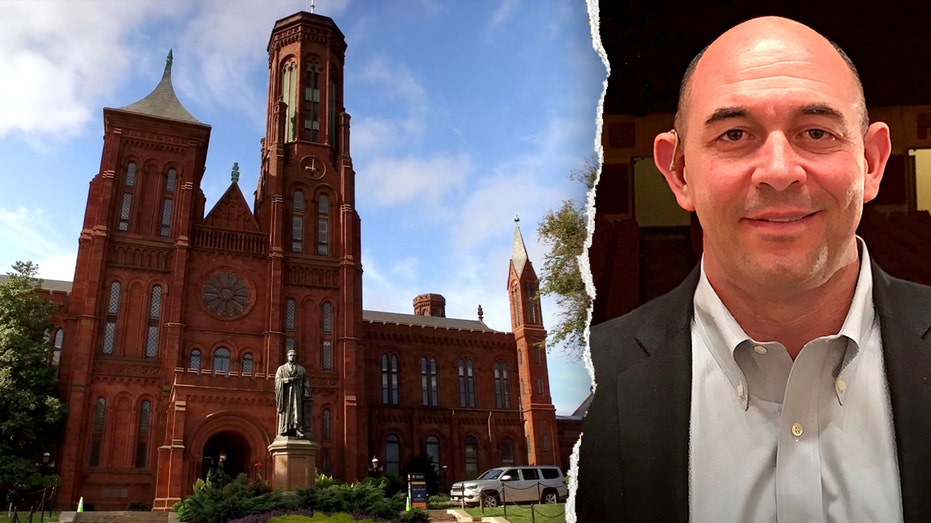
The request seemed straightforward enough. In late August, filmmaker Eli Steele and his team reached out to the Smithsonian’s National Museum of African American History and Culture — one of the most visited institutions on the National Mall — to propose a public screening of his documentary, White Guilt. They received a prompt reply directing them to an event application form, filled it out, and submitted two possible dates. Then, two weeks later, came the response: neither date was available. When they asked about alternatives, the museum quoted them $35,000 for a private rental. When they clarified they wanted a public screening and expressed flexibility on dates, they heard nothing at all. “Answering email does not take that much time,” Steele told Fox News Digital.
What followed that silence has become a genuine flashpoint in an already charged national debate about who controls the narrative of Black American history, which perspectives earn institutional legitimacy, and whether publicly funded cultural spaces genuinely serve the full breadth of the communities they claim to represent. The NMAAHC did not respond to a request for comment, leaving the questions Steele is raising conspicuously unanswered.
The Film and Its Argument
Eli Steele is not an unknown quantity. He is Black, Jewish, and deaf, and he has drawn extensively on his own layered experience of identity in his filmmaking. White Guilt is based on the 2006 book of the same name by his father, Shelby Steele, a noted Black conservative academic who was born into segregation and has spent decades writing about race, identity, and the psychology of American racial politics. The documentary argues that white guilt over America’s history of racial violence and exclusion — combined with the social terror of being labeled racist — has pushed institutions to prioritize racial group identity over individual merit and agency, in ways that the film contends ultimately harm rather than help Black Americans.
The argument is contested, and deliberately so. Glenn Loury, an African American economist at Brown University who describes himself as “conservative-leaning,” reviewed the film and called it “a well-made and powerful representation of ideas that Shelby Steele has been developing over the last 40 years.” Loury was careful to note that the film’s arguments “are not beyond questioning,” but insisted they are “invariably provocative and insightful” — and that the NMAAHC would be making appropriate use of its platform by screening the documentary as a vehicle for critical engagement across the ideological spectrum. That is not a fringe endorsement. It is a substantive intellectual case for inclusion.
The Museum’s Track Record on Screening
The NMAAHC has a well-documented history of hosting public film screenings, and the titles it has chosen reveal a clear thematic orientation. Ava DuVernay’s 13th — which argues that the exception clause in the Thirteenth Amendment enabled racial control to persist after slavery by criminalizing Black behavior — has been featured in the museum’s educational and public programming. I Am Not Your Negro, James Baldwin’s searing indictment of white America, received a public screening in 2017. Hidden Figures screened in 2016. Faith in Blackness: An Exploration of AfroLatine Spirituality was presented in 2023 in partnership with the Smithsonian Folklife Festival. Each of these films reflects a coherent progressive framework for understanding Black American experience — one centered on structural racism, systemic exclusion, and collective identity.
None of that programming is wrong or inappropriate. Structural racism is real, documented, and consequential, and a museum dedicated to African American history has every reason to engage with it seriously. The question Steele is raising is not whether those films deserve to be shown. It is whether the museum’s curatorial logic has room for a Black filmmaker whose conclusions diverge from that framework — and whether a publicly funded institution can justify a de facto ideological litmus test for public programming without accounting for it.
The Voices Raising the Question
Steele himself has been notably restrained in his characterization of what happened. He has questioned the apparent decision without accusing the museum of outright ideological discrimination, framing his concern as a question rather than a verdict. “Do we have viewpoint diversity or do we not?” he asked. “Do you have to be the right kind of Black to be shown at the Smithsonian?” It is a pointed question, and its pointedness does not make it less legitimate.
Carol Swain, a retired Black conservative professor whose academic career took her through Princeton and Vanderbilt, described the museum’s handling of the request as consistent with a pattern she has observed across American institutions over decades. “Academia is not what it was years ago when I went to graduate school, when it touted itself as a marketplace for ideas,” she told Fox News Digital. “Conservatives were tolerated less and less. And if they were Black, at some point they were not tolerated at all.” Swain added that an institution like the Smithsonian, which belongs to all Americans and is funded by all Americans, ought to be open to divergent views — and that, in her experience, it is not.
Jason Riley, a Wall Street Journal columnist and senior fellow at the Manhattan Institute, offered a sharper structural analysis. He argued that the leadership class of institutions like the Smithsonian is part of a broader liberal intelligentsia with a vested interest in advancing a particular racial narrative — and that a film like White Guilt, which takes direct aim at that worldview, may be unwelcome precisely because it hits too close. “There might be some self-interest here,” Riley said. “It might cut a little too close to these folks.” Both Riley and Swain contended that the film could serve a genuine public purpose, challenging white progressives to examine whether their preferred racial policies are actually producing better outcomes for Black Americans.
The Broader Political Context — and Why It Complicates Everything
This dispute does not exist in a vacuum. The Smithsonian is currently under sustained political pressure from the Trump administration, which has accused the institution of promoting progressive narratives and threatened to restrict federal support, including discretionary grants and cooperation from federal agencies. The White House has framed this as a battle against ideological bias in the nation’s museums. Some within the Smithsonian have pushed back, arguing that they are simply presenting the full complexity of American history — its achievements alongside its failures.
That context matters, and it cuts in multiple directions. The Trump administration’s campaign against the Smithsonian is not a good-faith effort to promote intellectual diversity — it is a politically motivated attempt to suppress inconvenient history, and it deserves to be recognized as such. The fact that bad actors are exploiting the language of viewpoint diversity does not, however, make the underlying question disappear. A publicly funded museum that screens films arguing for structural racism as the primary lens for understanding Black American life, while declining to schedule a public screening for a film that challenges that lens from within the Black community, has a real accountability question to answer — one that exists independently of whatever the Trump White House wants to do with it.
The Smithsonian can and should resist political interference from an administration that has demonstrated contempt for honest historical reckoning. It can do that while also taking seriously the question of whether its curatorial choices reflect genuine intellectual breadth or a narrower ideological consensus that excludes Black conservative thought not because it is poor quality — Loury’s endorsement alone forecloses that dismissal — but because it is inconvenient.
What Steele Is Actually Asking For
Eli Steele’s father was born into the segregated South and has spent his life examining how America has changed, how far it has come, and what still fractures it. The younger Steele made a film to bring that work to a broader audience, and he approached the museum dedicated to the very history his father lived through because he believed that conversation belonged there. “Sharing his life’s work in a museum dedicated to the history he lived would mean a great deal to both of us,” Steele said in a statement. “Our proposal remains open, and we would appreciate an answer.”
That answer has not come. The silence is itself a kind of statement — about whose version of Black experience gets to occupy the public square of the nation’s most prominent African American cultural institution, and who gets redirected toward a $35,000 private rental instead. Whether the NMAAHC’s reticence reflects a principled curatorial judgment, institutional inertia, or something more deliberate, it owes Steele — and the public — a transparent explanation. The museum’s mission is to tell the full story of African American life. That story is not monolithic. It never was.