
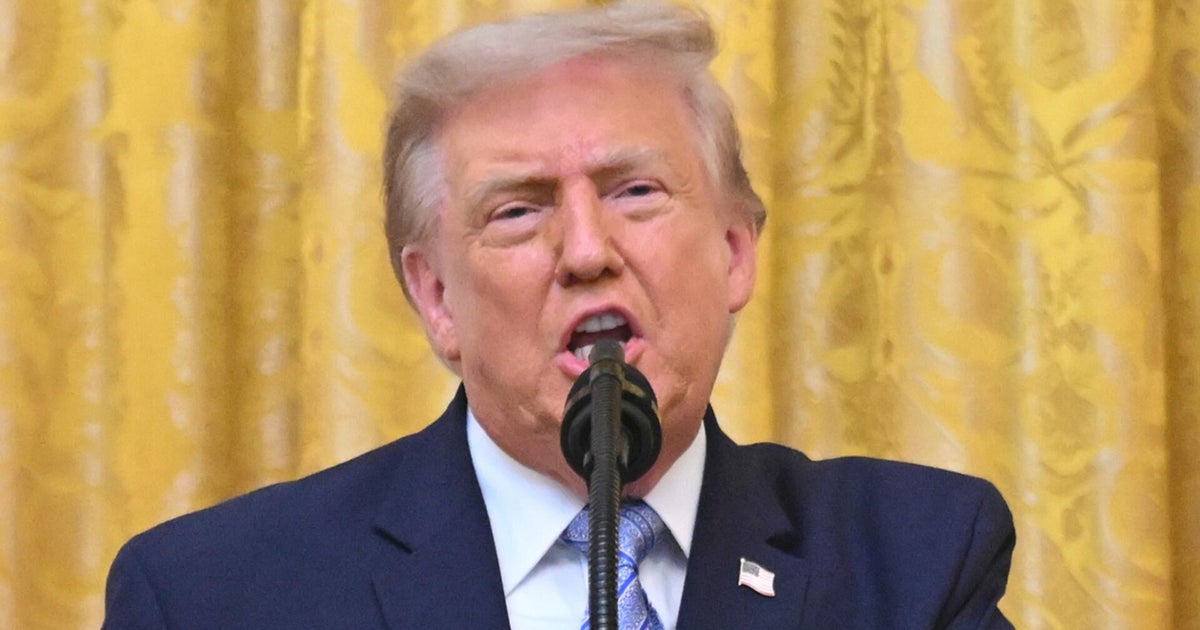
President Donald Trump used a primetime televised address on Thursday night to advance a series of unfounded claims about the integrity of American elections, asserting without evidence that the United States faces catastrophic vulnerabilities in its electoral system. The speech marked yet another escalation in a years-long campaign to cast doubt on democratic institutions — a campaign that election experts and legal authorities have repeatedly and decisively refuted.
What Trump Claimed — and Why the Evidence Doesn’t Support It
Trump’s remarks centered on the allegation that U.S. elections are riddled with systemic failures serious enough to undermine public confidence in electoral outcomes. He offered no credible documentation to support these assertions. Election security specialists, including those who served under his own administration, have consistently found that American elections are among the most scrutinized and secure in the world. Courts across the country — including judges appointed by Republican presidents — dismissed more than 60 legal challenges to the 2020 election results, finding no evidence of fraud at any scale that could have altered the outcome.
CBS News analysts Ed O’Keefe, Anthony Salvanto, and election law expert David Becker joined coverage of the speech to provide context and pushback. Becker, who has spent decades working on election administration across party lines, has been among the most prominent voices documenting the absence of widespread fraud in American elections. Their analysis made clear that Trump’s claims do not reflect the documented reality of how U.S. elections are administered and audited.
A Pattern of Deliberate Erosion
Thursday’s address did not emerge in a vacuum. Trump has systematically questioned election results since at least 2016, when he falsely claimed that millions of illegal votes had cost him the popular vote — a claim his own administration’s commission quietly abandoned after finding no supporting evidence. The January 6, 2021 attack on the U.S. Capitol was the most violent consequence of this sustained disinformation effort, and independent investigations have drawn a direct line between Trump’s rhetoric and the events of that day.
What makes the current moment distinct is that Trump is now a sitting president once again, wielding the full platform and authority of the executive branch to amplify claims that courts, election administrators, and nonpartisan researchers have thoroughly discredited. The use of primetime television — a venue traditionally reserved for matters of genuine national urgency — to spread electoral misinformation represents a significant and deliberate abuse of that platform.
Why This Matters for Democratic Participation
Research on voter behavior consistently shows that when citizens lose confidence in the fairness of elections, participation declines — particularly among communities that already face structural barriers to voting. Sustained disinformation campaigns about election integrity do not merely reflect public skepticism; they actively manufacture it, with measurable downstream effects on turnout and civic engagement. The populations most likely to be discouraged are often those whose votes have historically been suppressed or diluted through discriminatory policy.
There is no factual basis for treating Trump’s election claims and the findings of election administrators as two equally valid perspectives. One side is supported by audits, court records, and the consensus of nonpartisan experts; the other is not. Responsible coverage of this speech requires stating that plainly, rather than laundering baseless claims through the language of political disagreement.
The Stakes Going Forward
As the 2026 midterm cycle approaches and Trump’s political operation continues to shape Republican Party orthodoxy, the normalization of election denialism poses a concrete threat to democratic governance. Legislation in multiple Republican-led states has already been justified, at least in part, by the false premise that widespread fraud demands aggressive new restrictions — restrictions that independent analysts have found disproportionately burden Black, Latino, and low-income voters. A primetime presidential address amplifying those same false premises is not a neutral political act; it is an intervention with foreseeable and serious consequences for who gets to vote, and whose vote gets counted.