
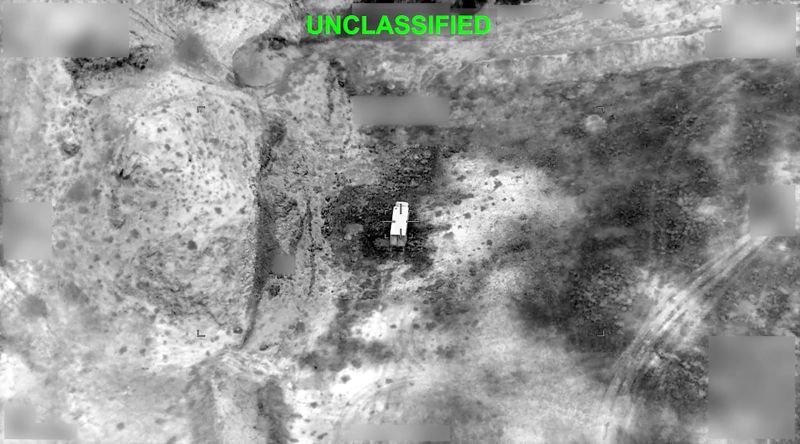
The explosions began, as they have every night this week, around 9:30 in the evening local time — a familiar, dreadful rhythm settling over southern Iran. In the port city of Bandar Abbas, residents heard three blasts tear through the western districts; in Qeshm Island, eight more shook the village of Masan. By the time US Central Command announced the conclusion of its latest “major wave” of strikes at 9:40 p.m. Eastern Time on Thursday, the sixth consecutive night of American bombardment had already carved a trail of destruction stretching from the southwestern industrial hub of Ahvaz to the far southeastern city of Iranshahr, near the Pakistani border.
This is no longer a surgical campaign against a discrete set of military targets. It is, by any honest accounting, a widening war — and its consequences are radiating outward far beyond Iran’s borders.
A Campaign That Keeps Expanding
US Central Command described Thursday’s strikes as targeting “coastal surveillance and air defense sites, military logistics infrastructure, and maritime capabilities,” framing the operation as holding Iran “accountable for recent attacks on commercial shipping.” Fighter jets, aerial drones, and warships all participated. The Pentagon has not disclosed the total number of targets struck, but Iranian state media and geolocated imagery paint a picture of significant civilian-adjacent damage: bridges linking Bandar Abbas to the city of Shiraz destroyed, a railway junction hit, power lines severed across Hormozgan province.
At least seven people were killed and nine wounded in the strikes on Bandar Khamir alone, according to multiple Iranian state media outlets — figures CNN could not independently verify. Iran’s energy ministry, meanwhile, urged citizens across the country to limit their use of air conditioning so that disrupted electricity supplies could be redirected to the south. Temperatures in that region have recently exceeded 50 degrees Celsius, or 120 degrees Fahrenheit. The ask, in other words, was to endure extraordinary heat so that others might survive it.
The Kahurestan Bridge — a critical artery connecting Bandar Abbas to Shiraz, Iran’s fifth-most populous city — was photographed in ruins, its image geolocated by CNN from footage released by state broadcaster IRIB. President Donald Trump had explicitly threatened to strike Iranian bridges and power plants if Tehran refused to return to the negotiating table. Those threats are now being carried out.
The Gulf in the Crossfire
Iran’s response has not been contained to its own territory. Qatar, Kuwait, Jordan, Bahrain, and Syria have all been drawn into a conflict that is expanding with alarming speed. Jordan’s armed forces announced on Friday that they intercepted three Iranian missiles targeting their territory, with no casualties reported. Kuwait’s Defense Ministry said it had intercepted 32 hostile drones since dawn Thursday, with falling debris causing material damage in residential areas. Bahrain activated air raid sirens twice in a single morning.
Qatar — a nation that has maintained a relatively measured relationship with Tehran and has served as a key diplomatic intermediary throughout the conflict — came under Iranian fire for the second time in a single day. A child was wounded by shrapnel from an intercepted strike, Qatar’s Interior Ministry confirmed. Loud booms rattled the capital, Doha. The government sent emergency alerts to residents’ mobile phones, first urging them to shelter in place, then declaring the threat eliminated. Iran has not claimed responsibility for the attacks on Qatar.
The Islamic Revolutionary Guard Corps claimed it struck US military assets in Bahrain and targeted American forces at al-Tanf in Syria — the latter a base that US Central Command had, in fact, vacated in February as part of a broader drawdown of American forces in the country. CNN could not independently verify either claim and has sought comment from US Central Command. The IRGC also issued a stark warning: as long as US operations in the Strait of Hormuz continue, “not a single drop of oil or gas will be exported from the region.”
The Strait and the Price at the Pump
That threat carries real economic weight. Before the war, approximately 110 ships transited the Strait of Hormuz daily; in the past 24 hours, just three have done so, according to open-source data from MarineTraffic. A US naval blockade on Iranian ports remains in effect. GPS spoofing — navigational interference that can throw a vessel’s reported position off by dozens of miles — has complicated monitoring of what little traffic remains.
The White House, confronted with these numbers and with rising prices at the pump, chose deflection. Press secretary Karoline Leavitt described the price increases as “temporary disruptions in the oil market” and credited Trump’s energy policies with preventing far worse spikes. The national average price of a gallon of gasoline now stands at $3.94, according to AAA — compared with $3.16 one year ago. The administration touted releases from the Strategic Petroleum Reserve and invocations of the Defense Production Act as evidence of responsible stewardship. The gap between that framing and the lived reality of American households is not small.
A Washington Post-Ipsos poll released Thursday found that just 29 percent of Americans approve of Trump’s handling of the war with Iran, and only 33 percent approve of his management of the economy. These are not the numbers of a public persuaded by the “winning big in Iran” formulation.
A Primetime Address That Said Almost Nothing
Trump sought a rare primetime address to speak directly to the American people on Thursday — a wartime gesture laden with historical weight. He used it to say almost nothing about the war. His only reference to the conflict was a brief assertion that the United States is “winning big in Iran, and you will see the fruits of that labor very, very shortly.” No strategy was articulated. No path to de-escalation was offered. No accounting was given for the civilian deaths, the damaged infrastructure, or the cascading regional instability.
That silence is itself a policy statement. CNN has reported that Trump is now receiving options for expanding the US military operation in Iran as he weighs next steps. A ceasefire agreement that had taken two months of painstaking negotiation to produce — a 14-point memorandum of understanding signed in June — unraveled within three weeks. Neither side has publicly signaled any willingness to return to the table.
The Risk of a War Without End
Ali Vaez, the Iran project director at the International Crisis Group, offered the most precise diagnosis of the current moment. “It took about two months to negotiate a page and a half of the memorandum of understanding,” he said. “It took only three weeks for it to unravel.” The agreement had been intended as a foundation for talks on a permanent ceasefire, Iran’s nuclear program, and the long-term governance of the Strait of Hormuz. Instead, both sides moved to enforce their own contradictory interpretations of the document, and the fragile architecture collapsed. Vaez warned plainly that the US and Iran now risk sliding into a “forever war.”
Iran’s Foreign Ministry, for its part, accused the United States of “war crimes” for targeting civilian infrastructure — pointing specifically to strikes on a mineral water production facility in Dehloran County and a maritime traffic control center in Chabahar. The ministry described its own strikes on neighboring Arab states as lawful self-defense under Article 51 of the UN Charter. It made no mention of the June 3 attack on Kuwait International Airport that killed one person, injured more than sixty others, and heavily damaged a passenger terminal, nor of strikes on residential buildings in Bahrain.
The selective invocation of international law by both sides should not obscure the underlying reality: civilian infrastructure on multiple sides is being destroyed, a child in Doha has been wounded by shrapnel, and families in southern Iran are being asked to sweat through record heat because American airstrikes severed their power lines. The human cost of this conflict is not abstract, and it is not evenly distributed. It falls, as it almost always does, on people who had no say in the decisions that brought the bombs.
In Tehran, it was just past midnight when the latest wave of strikes concluded. The city was quiet. Elsewhere in Iran, the fires were still burning.