
Record Losses, Fewer Flames: The Dangerous New Logic of Wildfire Risk
Despite burning less land than almost any year since 2002, 2025 became the deadliest and most expensive wildfire season in recorded history — a paradox that scientists say reveals a fundamental shift in how climate change is reshaping fire risk across the planet. A major new international study warns that without rapid cuts to fossil fuel emissions and serious investment in adaptation, the toll will keep rising.
The analysis, led by the University of East Anglia (UEA) and published in Nature Reviews Earth & Environment, found that 335 million hectares burned globally in 2025 — 16% below the long-term average — and total fire-related carbon emissions fell to their third-lowest level since 2002. Yet catastrophic fires in the United States, Canada, Europe, and South Korea killed more than 90 people, forced over 300,000 evacuations, and generated insured losses that dwarfed every previous year on record.
Wildfires accounted for 38% of all insured natural hazard losses globally in 2025. The January fires in Los Angeles alone caused an estimated $140 billion in total losses — ranking them the fifth most costly natural disaster in history by insured damage.
The LA Fires: A Catastrophe in a Quiet Year
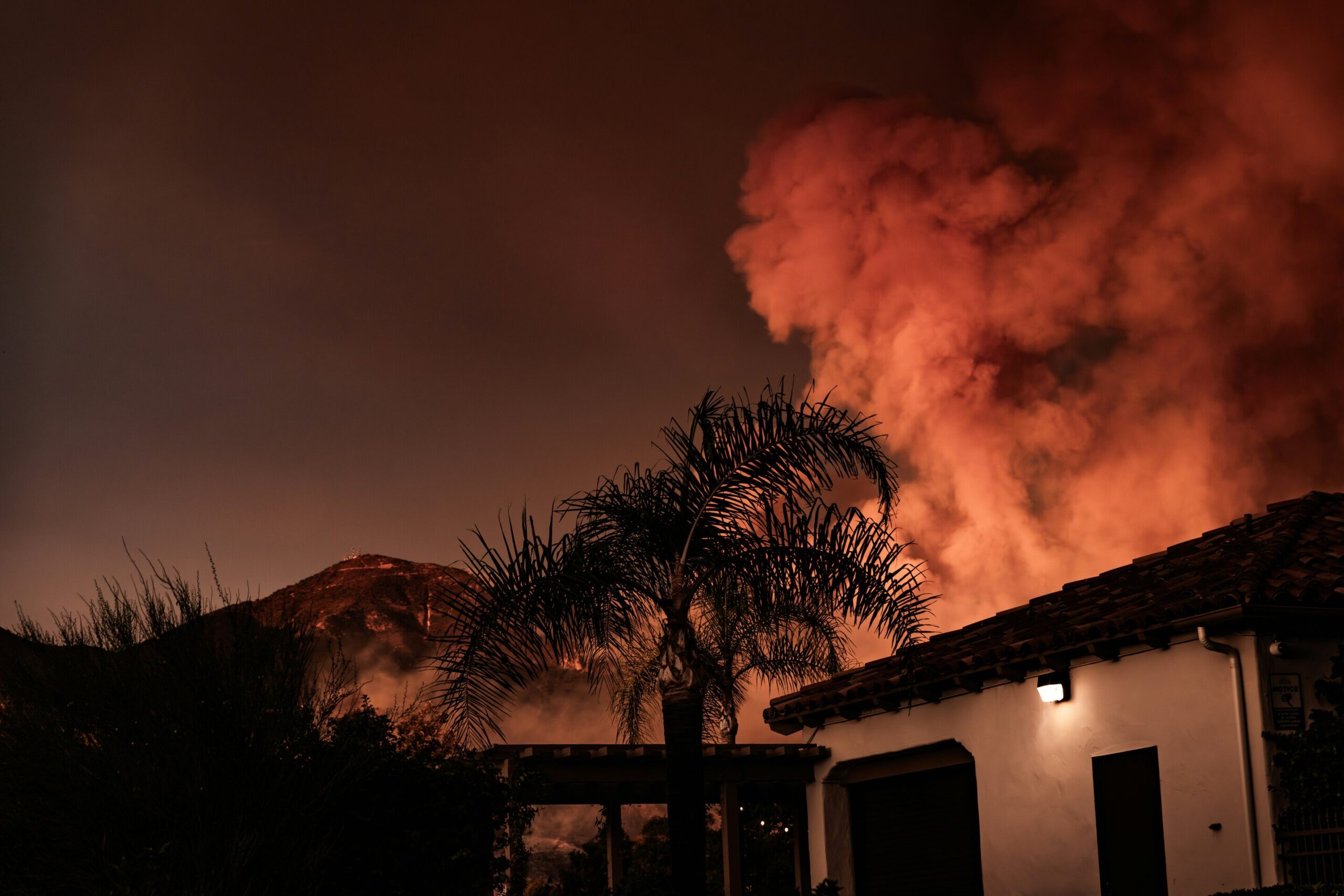
The Palisades and Eaton fires, which tore through the Los Angeles area in January, became the single most destructive wildfire event in US history. Driven by critically dry vegetation and extreme Santa Ana winds, the fires killed 31 people, destroyed nearly 12,000 homes, and forced more than 150,000 evacuations.
Hazardous air pollution from the blazes affected an estimated 10 million residents. Insured losses reached $40 billion — a figure that underscores how concentrated urban exposure at the wildland boundary can turn a single fire event into an economic catastrophe.
Canada’s Boreal Forests: Three Years of Unprecedented Burning
Canada entered a third consecutive year of extreme fire activity in 2025, with unusually high emissions centered on Saskatchewan, Manitoba, and Ontario. The research team found that between 2023 and 2025, Canadian wildfires released more CO₂ than during the entire preceding 15-year period.
These boreal ecosystems, historically adapted to infrequent fires, are now burning with a frequency that scientists say raises serious concerns about long-term carbon loss, ecosystem degradation, and weakened forest recovery. The fires are predominantly lightning-caused — but climate-driven drought and heat are creating the conditions for them to spread.
Europe and South Korea: Simultaneous Emergencies Strain Resources
Severe drought and repeated heat extremes drove major wildfire outbreaks across the Mediterranean in 2025, resulting in 28 confirmed deaths and more than 120,000 evacuations. At one point, six European nations simultaneously requested emergency firefighting resources — a logistical crisis that researchers say will become more common.
South Korea experienced its deadliest and largest wildfire outbreak on record: 32 deaths, more than 37,000 displaced residents, and over 100,000 hectares burned. Extreme winds and unusually high temperatures drove fires rapidly through mountainous wildland-urban zones.
A Growing Disconnect Between Area Burned and Human Harm
The study’s central finding challenges a common assumption: that fewer hectares burned means less danger. Dr. Matthew Jones of the Tyndall Centre for Climate Change Research at UEA put it directly: “2025 shows that a ‘quiet’ fire year globally can still be devastating. We are seeing a growing disconnect between total area burned and real-world impacts, with risk increasingly determined by fire location, intensity and exposure.”
The researchers point to a structural shift underway: as savanna fires decline globally, extreme wildfires are increasingly erupting in temperate and high-latitude regions — fuel-rich forests where climate-driven drought and heat amplify fire weather and where growing populations at the wildland-urban boundary face compounding exposure.
Prof. Crystal Kolden of the University of California, Merced, warned that the simultaneous nature of 2025’s disasters made them harder to manage: “The co-occurrence of multiple devastating fires is particularly problematic, hampering resource sharing between countries and putting more civilians at risk. Unfortunately, future fire projections show these types of outbreaks will only increase.”
What the Science Demands
The researchers are explicit about what their findings require. They call for rapid reductions in fossil fuel emissions to limit further climate warming — the underlying driver of more extreme fire weather — alongside far stronger adaptation measures including proactive vegetation management, resilient infrastructure, and robust evacuation planning.
Dr. Theodore Keeping of World Weather Attribution at Imperial College London was unambiguous about causation: “Studies clearly show that the hot, dry, windy weather conditions which drove devastating wildfires across Southern Europe have been made much more likely due to human-caused climate change.”
The analysis involved scientists from UEA, the University of California Merced, the Met Office Hadley Centre, the Canadian Forest Service, Imperial College London, and universities in Portugal and Thailand. It was published as part of the Climate Chronicles series in Nature Reviews Earth & Environment.