
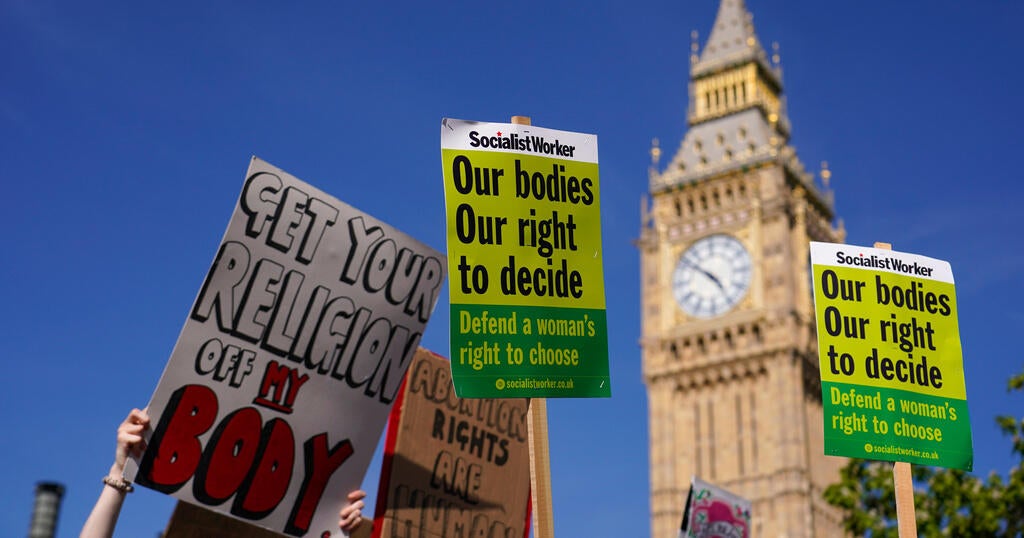
On Monday, women in the United Kingdom who were convicted, cautioned, or investigated under a Victorian-era abortion law began receiving automatic pardons, with some issued posthumously. No application required. No further humiliation demanded. The British government is, in effect, acknowledging what should have been obvious for decades: prosecuting women for ending their own pregnancies was a profound injustice, and the state bears responsibility for the harm it caused.
The pardons follow Parliament’s landmark vote last year to decriminalize abortion by repealing the relevant section of the 1861 Offences Against the Person Act, a law so old it predates the telephone. The Crime and Policing Act, which took effect this spring, means women who terminate a pregnancy at any stage will no longer face criminal charges in England, Scotland, or Wales. Northern Ireland had already decriminalized abortion in 2019.
The thesis here is straightforward. This is not simply a legal housekeeping exercise. It is a formal admission that the state weaponized criminal law against some of its most vulnerable people, and that the consequences were devastating and lasting. Criminalization did not prevent abortions. It punished women for having them, sometimes in the most harrowing circumstances imaginable.
Tonia Antoniazzi, the Labour MP who introduced the decriminalization amendment, noted that police investigated more than 100 women suspected of illegal abortions in the five years before the vote. That figure is chilling enough on its own. What makes it worse is that the category of “suspected illegal abortion” was broad enough to sweep in women who suffered natural miscarriages and stillbirths. The law did not merely target bad actors. It treated grief as evidence of crime.
Antoniazzi described women being “dragged from hospital beds to police cells” and interrogated when they should have been receiving care. This was not an abstract legal technicality. It was a pattern of institutional cruelty, carried out in the name of a statute written when women could not vote and had no legal standing to control their own bodies.
Two cases crystallized the public outrage that ultimately forced Parliament to act. Carla Foster, a mother of three, was sentenced to more than two years in prison in 2023 for medically inducing an abortion approximately eight months into her pregnancy. An appeals court freed her a month later, explicitly calling for “compassion, not punishment.” The sentence itself, and the fact that it took an appeal to undo it, exposed the law’s cruelty with unmistakable clarity.
Nicola Packer was acquitted after a charge of unlawfully self-administering a noxious substance, but acquittal did not mean escape. She had taken abortion medication at around 26 weeks, testifying she was unaware of how far along her pregnancy had progressed. Her friend Helle Tumbridge, speaking with Packer’s consent, told the BBC that the ordeal was “incredibly traumatic,” that it took five years of investigation before trial, and that “by that point the damage had been done.” Packer was found not guilty. She will still carry that trauma for the rest of her life. The law did that.
Anti-abortion groups argued the decriminalization measure would open the door to abortion on demand at any stage. That framing deserves scrutiny. The evidence from countries with more liberal abortion laws does not support the claim that removing criminal penalties produces a surge in late-stage terminations. What it does produce is a healthcare system where clinicians and patients make decisions based on medicine and circumstance, not fear of prosecution. Heidi Stewart of the British Pregnancy Advisory Service called the pardons “a meaningful step towards justice,” while acknowledging that no legal act can undo the distress these women endured.
The implication of all this extends well beyond Britain. The U.K. is demonstrating that a government can look back at the harm its laws caused, name it honestly, and take concrete steps to repair it. That is not weakness. It is what a state that takes rights seriously actually looks like. The pardons will not restore the years lost to investigation, prosecution, or imprisonment. They will not erase the trauma. But they signal, clearly and without equivocation, that the law was wrong, and that the women it targeted deserved better.