
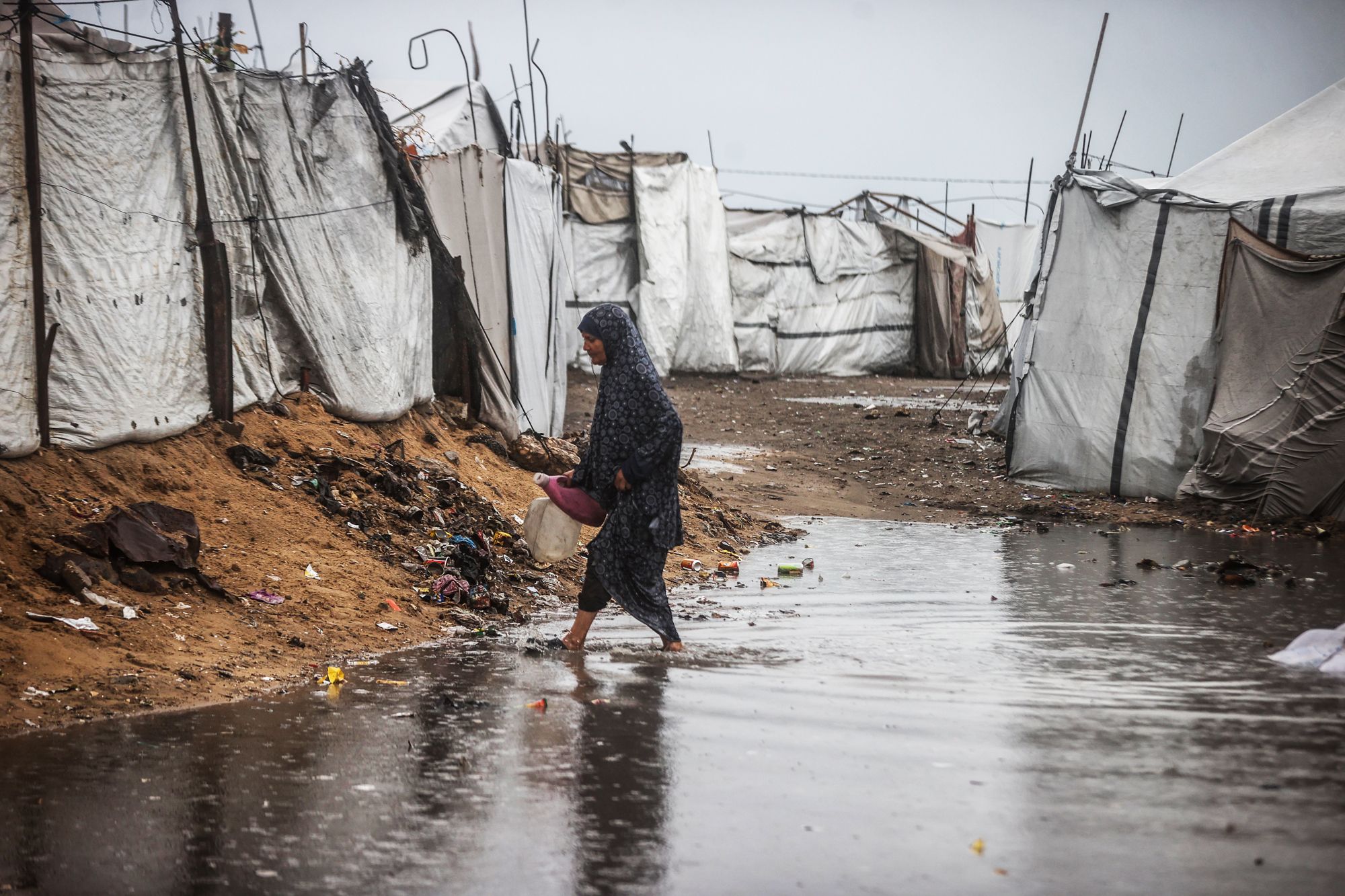
The central truth of what is happening in Gaza this winter is not simply that it flooded. It is that a population already stripped of adequate shelter, clean water, and functioning sewage systems was then forced, by the compounding pressures of siege and bombardment, to choose between two basic necessities at once. When rainstorms swept through Gaza over the weekend of November 7 and 8, municipal teams in Al Maghazi refugee camp confronted a dilemma that has no good answer: using diesel fuel to pump floodwaters out of displacement sites meant diverting the same fuel that keeps water wells running, leaving residents without drinkable water. This is not a natural disaster in any meaningful sense. It is a man-made catastrophe layered onto a natural one, and the distinction matters enormously.
Imad Abdel Jawad, a municipal engineer working in Al Maghazi, described the situation with the flat precision of someone who has long since exhausted outrage. “The diesel we use for these pumps comes from the allocation for the wells that are supposed to pump water,” he said, noting that their supply was already insufficient before the storms arrived. In some tents across Al Maghazi’s low-lying western and northern displacement sites, floodwater rose well over a foot deep. For Hanan Saied, a 46-year-old mother sheltering with her seven children in a structure of mud walls, cracked surfaces, and plastic sheeting, the storm meant soaked bedding, soaked clothing, and a night spent holding her daughter Sara, who has asthma, trying to keep her warm in the cold and damp. Her eldest son spent hours attempting to patch the shelter with basic tools. “I don’t know what to do during upcoming storms,” she said.
The scale of the flooding reflects the near-total destruction of Gaza’s housing and infrastructure over more than a year of war. A joint April assessment by the European Union, the United Nations, and the World Bank found that more than 371,888 housing units had been damaged or destroyed, and that approximately 1.9 million people had been internally displaced, many of them repeatedly. By November 8, the UN Office for the Coordination of Humanitarian Affairs estimated that 1.4 million people, representing 65 percent of Gaza’s population, were living in tents or makeshift shelters. Gaza’s Government Media Office reported that at least 70,000 of those tents had flooded within twelve hours of the storms beginning. More than 26,000 households had already filed appeals with humanitarian partners for damaged shelters or belongings. These are not abstractions; they are families without floors that drain, without roofs that hold, without the basic physical conditions that make surviving a winter storm possible.
Beneath this immediate crisis lies a structural failure that Israeli restrictions have actively deepened. Jawad explained that Israeli bombardment had damaged sewage manhole covers across Al Maghazi, while others had been stolen or had simply deteriorated, leaving open conduits through which rainwater poured into sewage networks already operating beyond capacity. Replacement covers are unavailable locally, and the materials needed to fabricate alternatives are scarce and expensive. In its November 5 report, OCHA documented that Israeli authorities had continued to impose especially tight restrictions on engine oil, lubricants, spare parts, and new generators, precisely the inputs needed to keep pumping systems functioning. Restoring any sustainable power supply, OCHA noted, depended on Israeli permission to import solar panels, reconnect the electricity grid, and restart Gaza’s power plant. The Israel Defense Forces did not respond to a request for comment on these restrictions. On November 8, Israel’s Ministry of Foreign Affairs posted on X that “contrary to popular belief, Israel does not control the weather,” a statement that, whatever its intent, read as a deflection from the far more pertinent question of what Israel does control, which is the flow of materials, fuel, and equipment into the territory.
The health consequences of these conditions are already measurable and worsening. Dr. Asma Saleh, a general practitioner at the Al Maghazi clinic run by UNRWA, reported that the clinic sees around 120 children daily, with approximately 22 presenting with influenza-like illness and 13 with gastroenteritis, figures that are rising as the rainy season intensifies. “The inhumane living conditions, collapse of infrastructure, the flowing streets contaminated with sewage, and the shortage of medical supplies are all factors that profoundly impact the health care system in Gaza,” she said. For Sara Saied, the child with asthma, the approaching winter storms represent a specific and serious danger: her attacks become more frequent in cold weather, and her family has neither a nebuliser nor electricity to power one. The logic of the situation, in which every resource is rationed to the point where each use forecloses another, is not the logic of a natural disaster. It is the logic of a population under siege, and the international community’s continued tolerance of the conditions producing it deserves far more scrutiny than it has received.