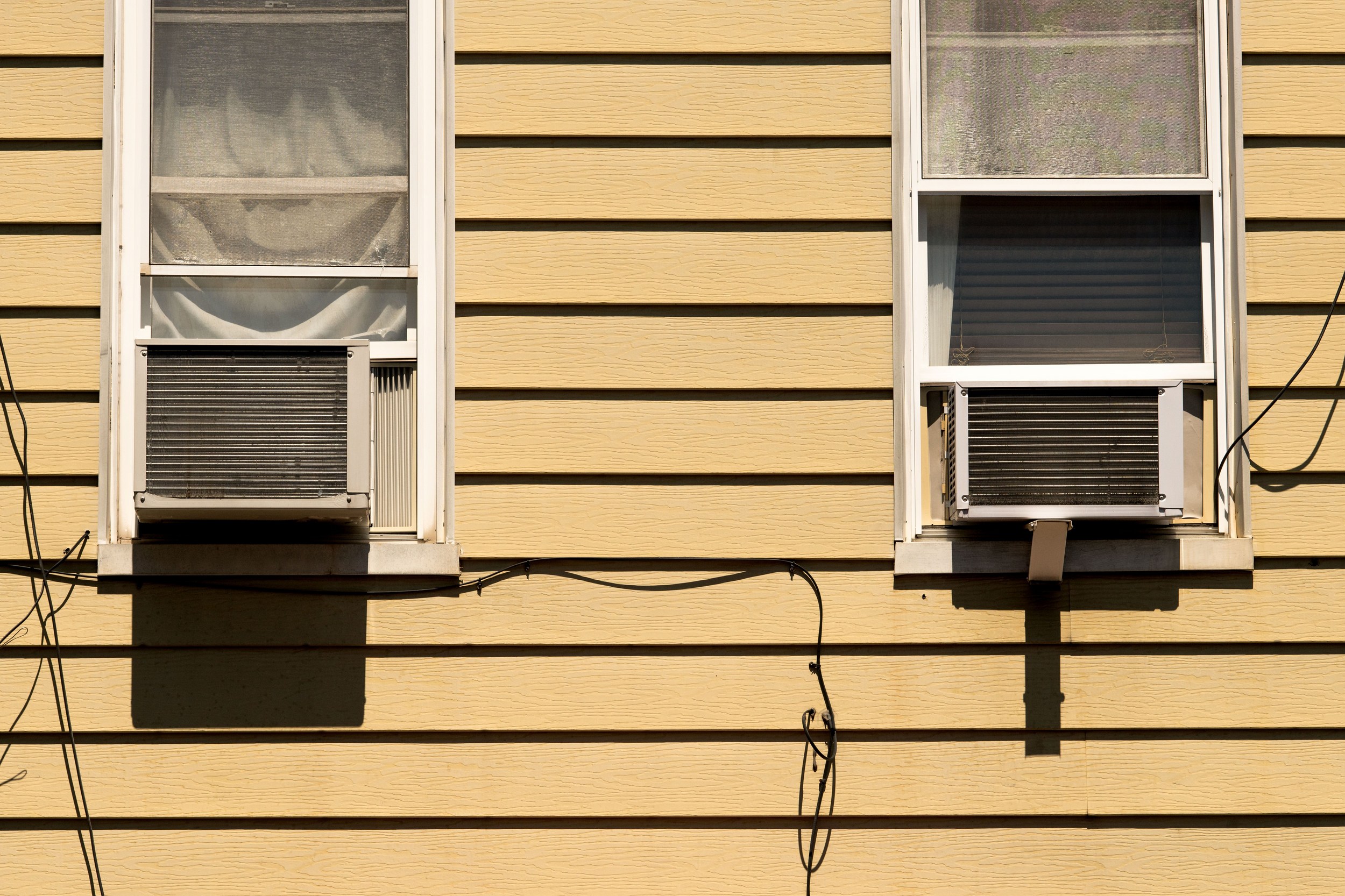
There is a quiet but consequential shift embedded in the story of American air conditioning, one that goes well beyond personal comfort or nostalgia. What was once an optional household amenity — a noisy window unit reserved for the bedroom, a treat rather than a fixture — has become, over the course of roughly two generations, something closer to a public health necessity. And yet, as that transformation has unfolded, the utilities that supply the power to run our air conditioners have not adjusted their behavior accordingly. If anything, they have moved in the opposite direction.
The numbers make the social shift undeniable. In 1975, only about 13% of homes in the Northeast had any form of air conditioning. By 2020, that figure had climbed to 89%. That is not a story about consumer preference drifting upward over time; it is a story about climate, infrastructure, and the gradual recognition that in an era of stacking heat waves, running an air conditioner is less a choice than a survival calculation. The families who once made do with a Sears fan bolted into a back window were not being stoic — they were living in a world where the summers were different, and where the consequences of heat were not yet what they have since become.
This summer sharpened that reality with particular force. Across the Northeast and mid-Atlantic, heat waves arrived in sequence, offering little relief between them, and air conditioners ran almost without interruption. For many households, the season produced only a handful of days mild enough to open a window. The result was electric bills that reflected not extravagance but necessity — bills in the range of $400 or more for a single month, paid not because anyone wanted to spend that money, but because the alternative, in extreme heat, is genuinely dangerous.
A Rate Hike Timed to Perfection — and Not in Customers’ Favor
Into this context, JCP&L, the New Jersey utility, filed a request for an 8.8% rate increase. The timing was striking in its audacity: the filing came roughly a month after widespread outages had left thousands of customers without power — and therefore without air conditioning — during a heat wave. It also arrived despite a rate freeze that Governor Sherrill had pledged on her first day in office. The utility filed anyway, apparently confident that regulators and customers alike would absorb the news and move on. That confidence is itself revealing. It reflects the structural position utilities occupy: they are, in most markets, monopolies, and they understand that customers who depend on electricity for cooling in a warming climate have nowhere else to go.
This is precisely why utility regulation exists, and why it matters. The argument for robust public oversight of essential services rests on a simple premise: when a private company controls something people cannot reasonably live without, the market cannot be trusted to protect consumers on its own. Air conditioning has crossed that threshold. It is no longer a discretionary good that households can simply forgo when prices rise. Telling people to nudge the thermostat up a degree or two is not a policy response to a structural problem — it is an instruction to accept a slow degradation of living conditions while a regulated monopoly extracts more revenue from a captive customer base.
The financial pressure does not end when summer does. Households that ran their air conditioners through July and August will carry elevated bills well into the fall, and they will do so just as attention turns to heating costs — costs that a rate hike would also affect. The squeeze is not seasonal; it is continuous. And it falls hardest on the households least equipped to absorb it: renters in older buildings with inefficient systems, families in lower income brackets who cannot invest in insulation or smart thermostats, elderly residents for whom heat is not merely uncomfortable but life-threatening.
The deeper implication is this: if air conditioning has genuinely become a necessity rather than a luxury — and the evidence strongly suggests it has — then access to affordable electricity to power it is a matter of public welfare, not just consumer satisfaction. Regulators in New Jersey and elsewhere have both the authority and the obligation to treat it as such, to scrutinize rate hike requests with the seriousness they deserve, and to hold utilities accountable when their service fails and their pricing climbs simultaneously. Lawmakers who have already moved to reject JCP&L’s request are reading the situation correctly. The question is whether that scrutiny holds.