The policy is vague by design. That’s the point — and that’s what makes it dangerous.
Secretary of State Marco Rubio announced last month a sweeping new visa restriction policy targeting foreigners he accuses of links to “far-left terrorism.” On its face, the move looks redundant: existing federal immigration law already gives the government extensive authority to bar people with ties to terrorism. But buried inside Rubio’s new directive is a phrase that goes further than anything currently on the books — and that legal experts say could be used to shut out climate activists, pro-Palestine organizers, and labor advocates from entering the United States.
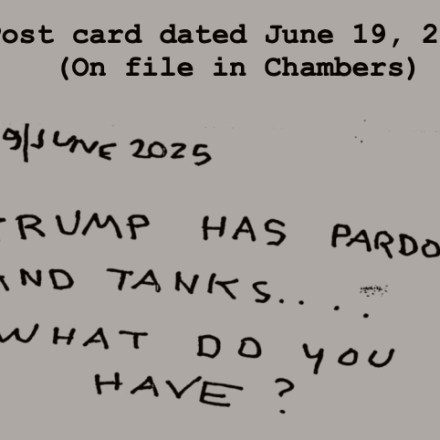
The phrase is “economic sabotage.” It appears alongside more familiar counterterrorism language — blocking people who have “supported or incited acts of terrorism” or “financed, recruited, or provided logistical support for violent or criminal actions.” But “economic sabotage” is a category with no legal definition, no precedent in immigration enforcement, and no limiting principle. It is, as law professor Peter Margulies of Roger Williams University put it, “a term broad enough to get a tank through.”
Rubio announced the policy on July 16 at a gathering of foreign diplomats, framing it as a long-overdue correction to American counterterrorism doctrine. He argued that the focus on right-wing and jihadist violence after September 11 had created a “blind spot” around left-wing extremism. “Even today, the very idea that far-left terrorism could be a serious threat is treated as a right-wing fever dream, or worse, as a dangerous fascist conspiracy,” Rubio told the assembled diplomats. He offered no data, no specific incidents, and no evidence that existing law had failed to address any genuine threat from the left.
The State Department has since gone silent. More than three weeks after the announcement, it has not issued a single visa denial under the new policy, offered no definitions of what constitutes a “far-left terrorist group” or an “aligned” organization, and refused to answer questions about how officials would make those determinations. That silence is itself telling. When Rubio announced a similar visa restriction policy targeting misinformation researchers last May, the State Department waited seven months before naming five specific individuals. Advocates expect the same pattern here — a slow build toward targeted enforcement, announced on social media with little accountability.
Carrie DeCell, a senior staff attorney at the Knight First Amendment Institute, is direct about what the ambiguity accomplishes. “The message is to the public at large and particularly to anybody who would disagree with the government’s policies that they should tread carefully, lest they be considered a member or aligned with what the government considers to be a far-left terrorist group,” she said. Her organization recently won a court injunction blocking the State Department from implementing the misinformation-researcher visa policy — a sign that legal challenges to this one may succeed as well, but only after the damage is done.
Margulies raises a further concern that goes beyond foreign nationals abroad. Nothing in the policy restricts its application to people overseas. It could, he argues, be used against foreign students already living in the United States who are applying for visa renewals, or other non-citizens with legal status. “This gives the administration a hammer to go after these people that I think is problematic under the First Amendment, and also exceeds the authority that Secretary Rubio has,” he said.
The policy cites two legal authorities: Trump’s National Security Presidential Memorandum-7, and the same provision of the Immigration and Nationality Act used in the Khalil case. That second citation is significant. Courts have already begun scrutinizing the Khalil deportation effort, and the administration’s legal theory — that the Secretary of State can unilaterally designate someone a national security threat based on their political associations — remains deeply contested. Applying that same logic to a new class of people, defined by terms as elastic as “far-left” and “economic sabotage,” would extend that contested authority dramatically.
Baher Azmy, legal director at the Center for Constitutional Rights, sees the policy in a broader political context. It arrives alongside the revival of a terrorism court that had been largely dormant, public statements labeling journalist Amy Goodman a “far-left enemy of the state,” and a State Department report on Cuba’s influence network that named — without apparent irony — Amazon Labor Union founder Christian Smalls, streamer Hasan Piker, the National Lawyers Guild, and the Democratic Socialists of America. “This is coming all at once,” Azmy said. “It might be a midterm strategy.”
Whether it is electoral posturing or genuine enforcement infrastructure, the effect is the same. Naming mainstream labor organizers and socialist political organizations in a government terrorism report, while simultaneously creating a new visa restriction category defined by vague language about economic disruption, constructs a legal and rhetorical architecture for treating left-wing dissent as a national security threat. That architecture does not need to be used aggressively to work. The threat of use is enough.
Margulies, for his part, is watching closely. “Watch this space,” he said. “They may have particular people in mind. Then we may see some developments very quickly in how they intend to apply this.” The First Amendment protects the right of people in the United States — citizens and non-citizens alike — to criticize corporations and governments. A visa policy that treats that criticism as potential “economic sabotage” does not merely push legal boundaries. It redraws them.