
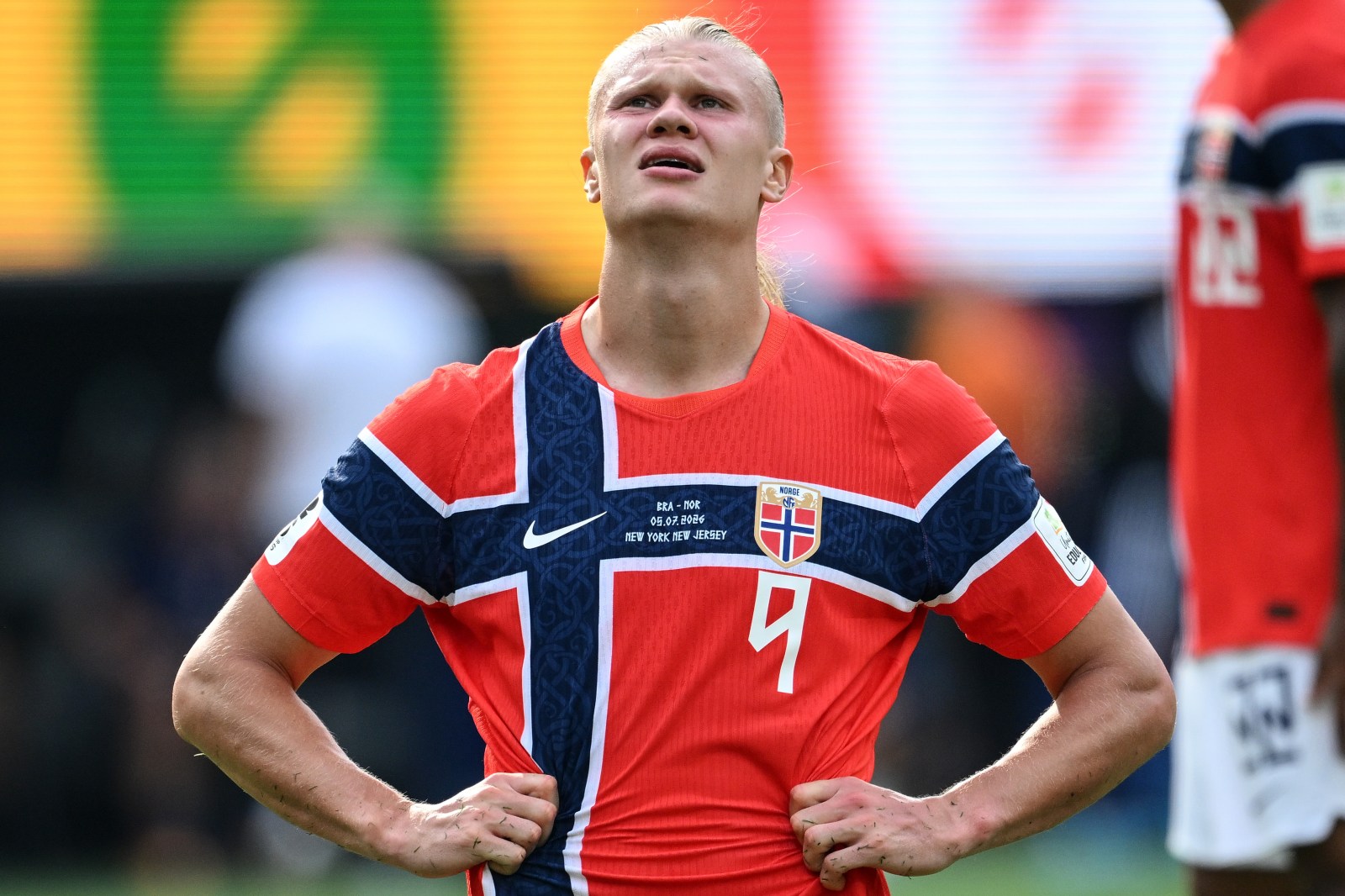
A Three-Minute Wait That Changed the Game
Erling Haaland has never been shy about speaking his mind, and on Thursday he turned his attention to one of football’s most contentious ongoing debates: the role of VAR in disrupting the natural rhythm of the game. Watching France face Morocco in a 2026 FIFA World Cup quarterfinal, Haaland took to his official Snapchat to post a pointed critique after witnessing Kylian Mbappe forced to wait more than three minutes before taking an early penalty. “Need to wait 5 min to take a penalty is way too long,” Haaland wrote — blunt, direct, and hard to argue with.
The penalty itself had been awarded following a foul by Morocco’s Noussair Mazraoui, a decision that required a VAR review to confirm before Mbappe could step up. That delay forced the French superstar to repeatedly reset his mental and physical routine, the kind of psychological disruption that even elite penalty-takers struggle to absorb. Morocco goalkeeper Yassine Bounou made the most of it, producing a commanding save to keep the scoreline at 0-0. It was a moment that crystallised the tension between technological oversight and the human demands of elite sport.
The VAR Problem Is Structural, Not Incidental
VAR was introduced to eliminate clear and obvious errors, a goal that is, on its face, entirely reasonable. But the system’s implementation has consistently undermined the very flow and drama that makes football compelling to watch. The Mbappe incident is not an isolated case — it is symptomatic of a broader failure to design VAR protocols with the athlete’s experience in mind. Penalty-taking is one of the most psychologically demanding acts in sport, requiring sustained focus and a precise pre-shot routine; a three-minute interruption doesn’t just delay the kick, it fundamentally alters the conditions under which it is taken.
Mbappe himself made his frustration visible immediately after the miss, confronting the nearby referee over the length of the wait. His complaint was legitimate. The governing bodies responsible for VAR — FIFA and UEFA chief among them — have faced sustained criticism from players, coaches, and supporters for years over the system’s sluggishness and inconsistency. Haaland’s public intervention, coming from one of the sport’s biggest stars rather than a pundit or a losing manager, adds meaningful weight to that criticism. When the players most affected start calling it out by name, the pressure to reform becomes harder to dismiss.
France Find a Way — Again
Mbappe Delivers When It Matters
Whatever the psychological toll of the missed penalty, Mbappe ultimately answered with his feet. He scored in the second half to give France the lead — his eighth goal of the tournament — demonstrating the kind of resilience that separates generational players from merely excellent ones. The goal silenced any lingering doubts about whether the miss had rattled him, and it reinforced France’s status as the overwhelming favourites to lift the trophy.
Ousmane Dembélé added a second shortly after, extending France’s advantage to 2-0 and effectively ending Morocco’s brave run in the competition. Morocco had threatened an extraordinary upset, and for long stretches of the match they gave France genuine problems. That France prevailed despite the early setback speaks to the depth and tactical maturity of Didier Deschamps’ squad — a team that has learned, over multiple tournament cycles, how to grind through adversity rather than buckle under it.
The Road to the Final
France now become the first side to secure a place in the semifinals, where they will face the winner of Friday’s clash between Spain and Belgium. It is the kind of fixture that rewards patience — France have the squad depth, the experience, and the individual brilliance to adapt to almost any opponent. Mbappe, with eight goals, sits at the top of the Golden Boot race alongside Lionel Messi, and his form shows no signs of slowing.
Haaland and Norway: The Tournament’s Sentimental Story
While France consolidate their position as favourites, Haaland’s Norway continue to capture the imagination of fans who relish an underdog narrative built on genuine quality rather than mere sentiment. Norway face England in a quarterfinal this weekend, and Haaland enters the match with seven goals — one behind Mbappe and level with Messi in what has become one of the most compelling Golden Boot races in recent World Cup memory. His output has been extraordinary, and it has dragged a Norwegian side not traditionally associated with deep tournament runs to the brink of a semifinal berth.
The contrast between Haaland’s role in this tournament — scorer, leader, now public critic of football’s governing structures — and his position as a spectator watching France dismantle Morocco says something about the breadth of his engagement with the game. He is not simply accumulating goals; he is watching, thinking, and pushing back against systems he believes are failing the sport. Whether FIFA acts on that criticism is another matter entirely. But the conversation, at least, is getting louder.