
A Federal Agent, a Gas Station, and a Question of Accountability
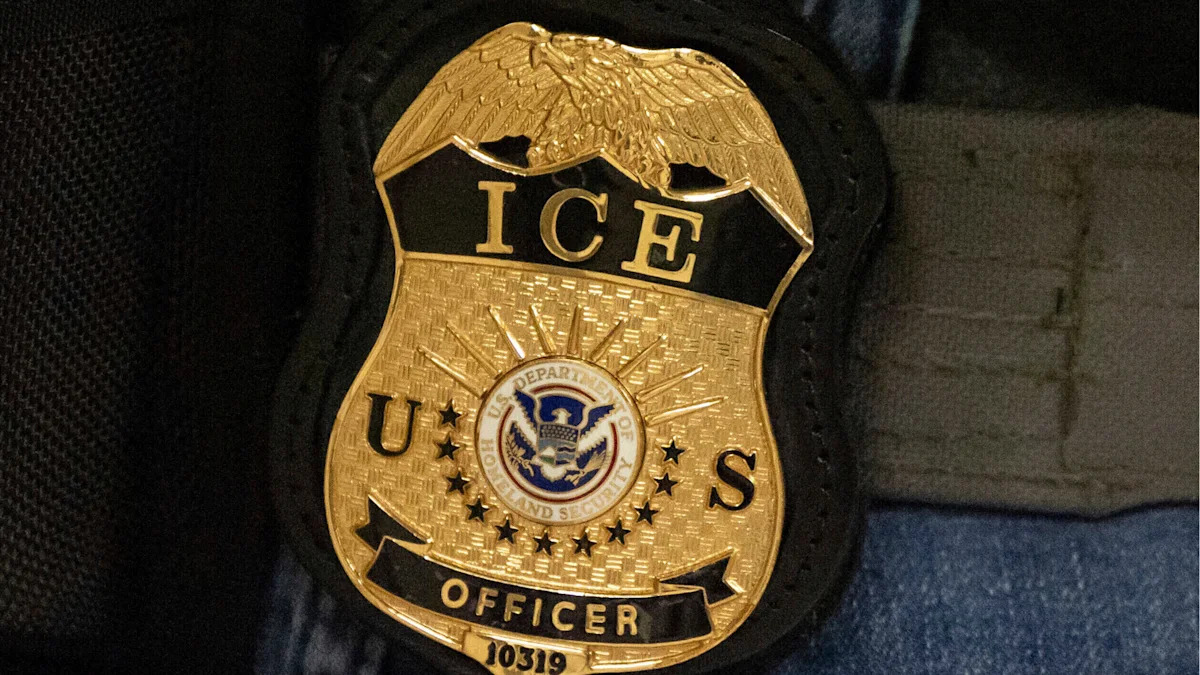
It was the day after Christmas, and a confrontation at a Brookfield gas station would soon test whether a federal immigration enforcement officer could be held to the same legal standards as any other resident of Cook County. On December 27, 2025, Adam Saracco — an off-duty agent with U.S. Immigration and Customs Enforcement — threw a protester to the ground. He has now pleaded guilty to battery for doing so.
The case is modest in scale but significant in principle. Saracco was sentenced Wednesday to one year of court supervision on a misdemeanor battery count. He was also ordered to have no contact with the victim and to pay all applicable fines, fees, and costs.
What Happened, and What Followed
The incident unfolded during a period of heightened immigration enforcement activity in the Chicago region, a context that has put federal agents and local communities on a collision course with increasing frequency. Saracco was off duty at the time of the confrontation, meaning he was acting not in any official law enforcement capacity but as a private individual — one who nonetheless held a federal badge and the authority that comes with it.
Cook County prosecutors pursued the case under what they identified as Operation Midway Blitz, a broader accountability effort examining unlawful conduct connected to immigration enforcement actions in the area. The guilty plea represents the first known criminal conviction to emerge from that effort.
Prosecutors Draw a Clear Line
Cook County State’s Attorney Eileen O’Neill Burke did not mince words in her response to the outcome. “No one is above the law — and that includes ICE agents,” she said in a statement released Wednesday. “My office is committed to seeking justice on behalf of anyone harmed during Operation Midway Blitz when the evidence and the law allow us to prosecute.”
O’Neill Burke framed the resolution explicitly as an accountability milestone. “This resolution represents an important step for accountability and shows that Cook County will not turn a blind eye to unlawful conduct, no matter who you are,” she said. That framing matters: it signals that local prosecutors intend to scrutinize federal agents operating within their jurisdiction, regardless of the political pressures that surround immigration enforcement right now.
Why This Case Carries Weight Beyond the Courtroom
A misdemeanor conviction and a year of supervision may seem like a limited outcome, but the precedent it sets is worth examining carefully. Federal law enforcement agents have long operated in an environment where accountability for off-duty or excessive conduct is inconsistent at best. The willingness of a state prosecutor’s office to charge, pursue, and convict an ICE agent — even on a misdemeanor — pushes back against the assumption of impunity that has surrounded immigration enforcement in the current political climate.
The protester who was thrown to the ground was a person exercising a constitutional right. That a federal agent, even while off duty, felt entitled to respond with physical force is a symptom of a broader culture within enforcement agencies that demands examination. Cook County’s prosecution does not fix that culture, but it insists, at minimum, that the law applies to everyone within its borders.
The Larger Context of Federal Enforcement and Local Pushback
Illinois and Cook County have been flashpoints in the national conflict between aggressive federal immigration enforcement and local governments committed to protecting residents’ rights. The tension has produced legal battles, policy standoffs, and, as this case illustrates, physical confrontations on the ground. Local prosecutors pursuing accountability in those confrontations are doing exactly what the public interest demands.
The outcome here is narrow but real. One agent has been convicted. One victim has received at least a measure of legal recognition. And one county prosecutor’s office has made clear that federal employment is not a shield against criminal accountability. Whether that message reaches beyond Cook County — and whether it influences how ICE agents conduct themselves, on duty or off — remains an open and urgent question.