
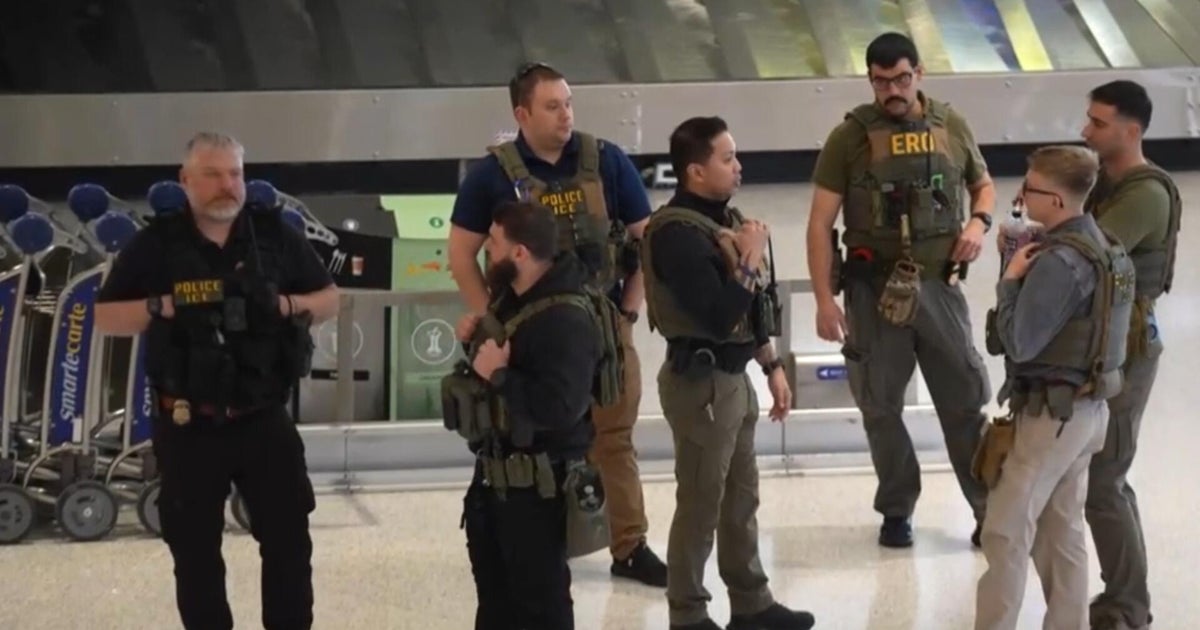
Something has shifted in the atmosphere of American airports — and it is not turbulence. Across the country, airline carriers are raising their voices against a growing pattern of immigration enforcement operations conducted by U.S. Immigration and Customs Enforcement directly inside airport terminals, a trend that has accelerated sharply under the Trump administration’s expansive deportation agenda.
The airline industry, not historically known for wading into immigration politics, has found itself in an uncomfortable position as ICE agents increasingly use airports — spaces the carriers regard as their operational domain — as sites for detaining travelers. The arrests, which have been multiplying in frequency, have drawn formal objections from airlines who argue that the enforcement actions disrupt operations, alarm passengers, and create an environment of fear that is fundamentally incompatible with commercial air travel.
What makes this moment significant is not simply the logistical friction. Airports are among the most visible public spaces in America, and the choice to conduct immigration arrests there carries a deliberate symbolic weight. The Trump administration has made no secret of its intent to maximize the visibility of its enforcement apparatus — to signal, loudly and publicly, that no space is beyond the reach of its deportation machinery. Airlines, caught in the crossfire, are now confronting what it means to be complicit by proximity, even when they have not consented to serve as staging grounds for federal immigration operations.
The pushback from carriers reflects a broader unease spreading through industries and institutions that have been forced to reckon with the human consequences of mass enforcement. Flight crews, gate agents, and airport staff are being placed in situations they were never trained to navigate — witnessing detentions, managing frightened passengers, and fielding questions they cannot answer. The operational disruption is real, but the moral disruption runs deeper, and the airlines’ public objections suggest that even corporate actors are finding the administration’s approach difficult to absorb without comment.
It is worth being precise about what is happening here. These are not arrests of individuals flagged through standard security screening. ICE operations at airports have targeted people who are traveling domestically, people who have passed through TSA checkpoints, and in some cases people who hold valid documentation but whose immigration status is under dispute. The administration’s enforcement posture has grown broad enough that the distinction between a traveler and a target has become alarmingly thin for many communities — particularly Latino travelers, who report heightened anxiety about moving through airports at all.
The Trump administration’s defenders frame these operations as straightforward law enforcement, a neutral application of existing immigration statutes. That framing deserves scrutiny. Enforcement is never purely neutral — it reflects choices about priorities, targets, and methods. The decision to conduct immigration arrests in airports, rather than through less disruptive administrative processes, is a choice that prioritizes spectacle and deterrence over due process and proportionality. When one side of a policy debate is making empirically verifiable claims about the chilling effects on travel, on civil liberties, and on communities of color, those claims cannot simply be balanced against political talking points as though they carry equal evidentiary weight.
The airlines’ objections, whatever their ultimate motivation — whether rooted in genuine principle or in the practical calculus of protecting their customer base — add a significant institutional voice to the resistance against unchecked immigration enforcement. They join a growing chorus of local governments, legal advocates, and civil liberties organizations who have argued that the administration’s approach trades the rule of law for the performance of power. That chorus is getting harder to dismiss, and the airports where these arrests are unfolding have become, unexpectedly, one of the most contested frontiers in the ongoing struggle over what kind of country the United States intends to be.