
Flesh-Eating Screwworm Returns to U.S. Soil: Four Cases Confirmed as USDA Scrambles to Contain Outbreak
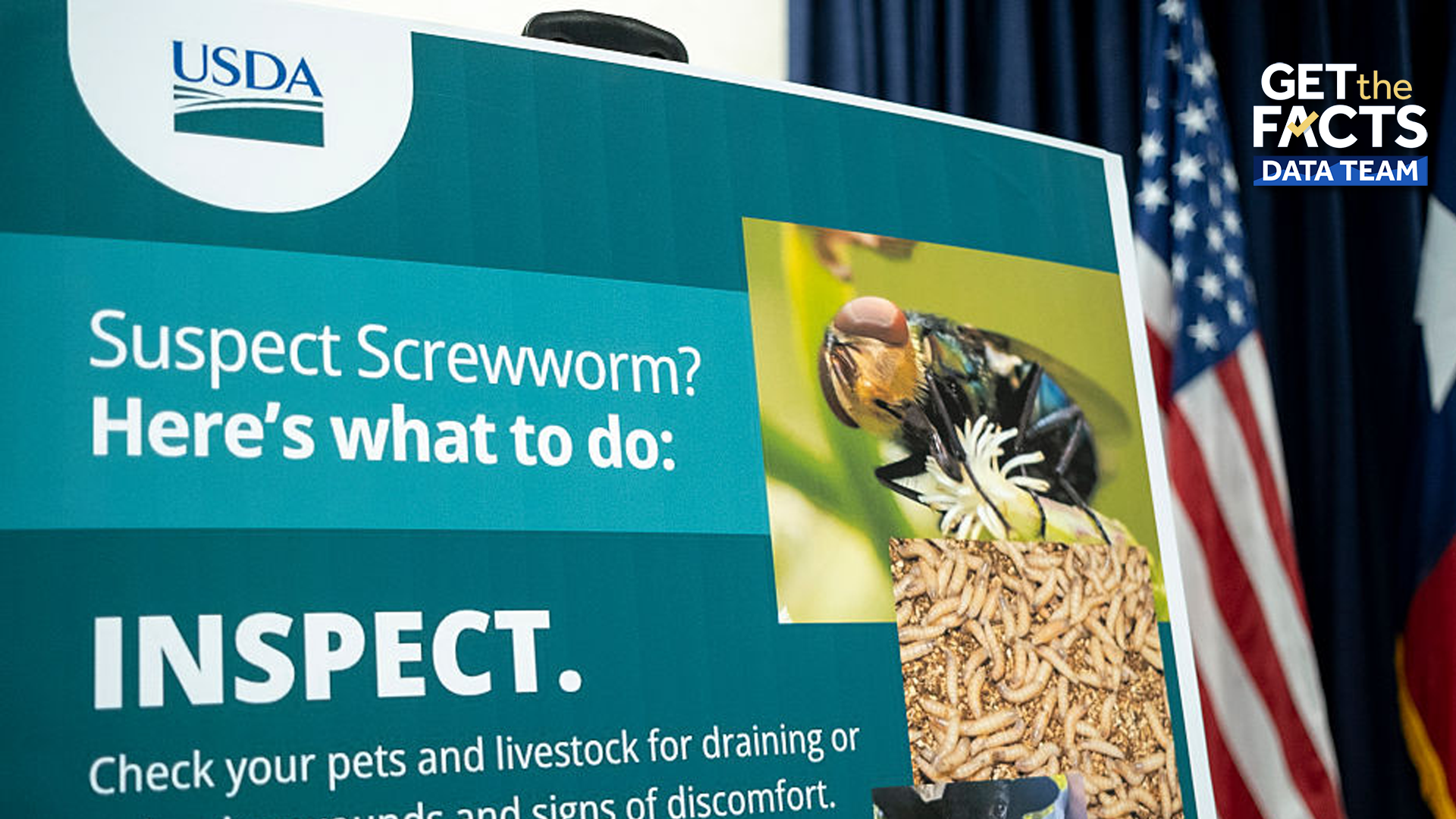
The New World screwworm — a parasitic fly whose larvae burrow into the living flesh of warm-blooded animals — has returned to the United States for the first time since the 1960s, with four confirmed cases now spread across Texas and New Mexico. USDA Secretary Brooke Rollins sought to reassure the public Monday, insisting the food supply faces no immediate threat, even as federal officials race to prevent the pest from spreading further.
“This is not a virus, it’s not a disease, it’s just a little pest,” Rollins said in a Monday appearance on CNBC’s Squawk Box. “A larva that lands in a calf’s wound, for example, and it can be treated.”
What We Know About the Cases
The USDA confirmed two new cases Monday — one in a calf in La Salle County, Texas, and another in a dog in Andrews County that was classified as a New Mexico case because the animal resides there. The first confirmed U.S. case was announced last Wednesday, bringing the total to four.
New Mexico officials have been directed to increase monitoring and outreach in affected areas. President Donald Trump on Monday appointed John Bellinger, a longtime food safety and distribution executive, as senior advisor for New World screwworm preparedness.
Why This Matters
The New World screwworm was eradicated from the United States in the 1960s through a sustained federal campaign involving the mass release of sterile insects to suppress the pest’s reproductive cycle. Its return marks a significant agricultural biosecurity failure — and raises pointed questions about how it was allowed to cross the border.
The parasite poses a serious risk to livestock, wildlife, and pets, and in rare cases can affect humans. Untreated infestations cause painful, potentially fatal wounds. The USDA notes that screwworms do not infest meat, fruits, or vegetables — a key distinction that underpins Rollins’ food supply reassurances.
Political Friction Over the Federal Response
Texas Agriculture Commissioner Sid Miller has publicly criticized the USDA for what he described as a slow response that failed to stop the screwworm from crossing into the U.S. Rollins pushed back sharply, calling Miller’s comments “disturbing and disruptive and so harmful to what we’re trying to achieve.”
“He knows that we have been moving at Trump speed,” Rollins said — a phrase that will do little to satisfy critics who argue the administration’s broader border and trade policies have complicated agricultural biosecurity coordination with Mexico.
The Federal Playbook: Sterile Flies and a Billion-Dollar Commitment
Rollins said the U.S. is already deploying approximately 10 million sterile flies per week over affected areas — both by air and on the ground — mirroring the eradication strategy used in the late 1950s. The USDA has pledged over $1 billion to push the pest back into Mexico and ultimately eliminate it.
“We’ve beaten it before, we’ve got to beat it again,” Rollins said.
Whether the federal government can replicate that decades-old success — in a more politically fractured environment, with a leaner regulatory apparatus, and amid ongoing tensions with Mexico — remains an open and urgent question.