
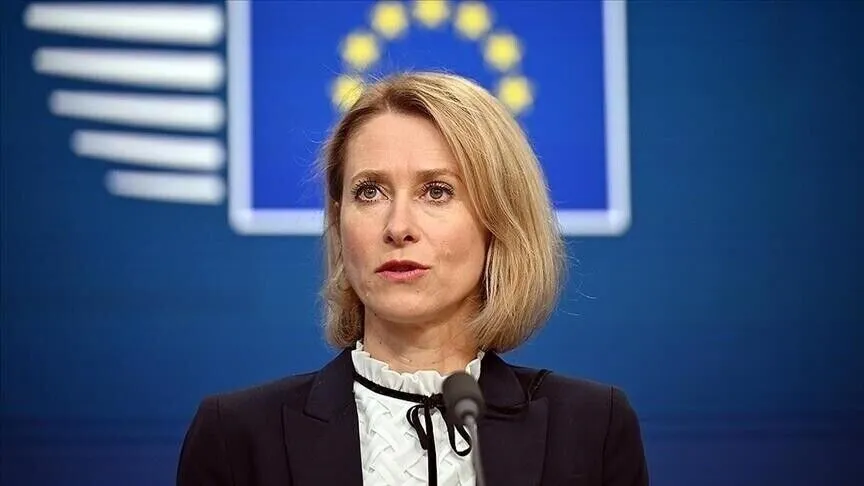
The European Union’s foreign policy chief, Kaja Kallas, publicly challenged the Trump administration’s justification for a new wave of tariffs on European goods Friday, calling the underlying rationale factually baseless and describing the move as a breach of an existing transatlantic trade agreement. Speaking on the sidelines of ASEAN meetings in Manila, Kallas told Reuters that allegations of weak forced labour enforcement simply do not apply to the EU — and that Brussels intends to seek formal clarification from Washington.
“You can’t say that for the European Union,” Kallas said bluntly. She pointed to the bloc’s robust labour standards — including mandatory paid vacation and strong worker protections — as direct evidence that the American accusation lacks grounding. The contrast with U.S. labour law, where no federal paid leave guarantee exists, is not incidental; it undercuts the Trump administration’s stated rationale at its foundation.
The tariffs in question, set at 10% and 12.5% on goods from 60 trading partners including the EU, took effect Friday as a temporary global 10% tariff expired. The Trump administration framed them as a response to lax enforcement of forced labour bans — a claim that, in the EU’s case, runs against the bloc’s extensive regulatory framework governing supply chains and labour rights, including its landmark Corporate Sustainability Due Diligence Directive.
Kallas made clear that the timing compounded the affront. A transatlantic trade deal reached last year had appeared to provide a degree of stability, and the EU had, by her account, held up its end. “We had a deal with America and we have kept to that deal, that side of the deal,” she said. The new tariffs, in her framing, represent a unilateral departure from a binding commitment — a pattern that has become a defining feature of Trump-era trade policy.
When asked whether the EU had anticipated being swept up in Friday’s action, Kallas offered a response that captured the broader exhaustion of allied governments trying to navigate Washington’s erratic tariff regime: “Who can keep track of the tariffs going on and off?” The remark was sardonic, but the frustration it reflects is substantive. Unpredictability in trade policy imposes real costs on businesses and supply chains, and it erodes the trust that multilateral economic relationships depend on.
The episode fits a broader pattern in which the Trump administration has deployed tariff mechanisms — nominally tied to specific policy concerns — in ways that appear disconnected from the stated justification. Applying a forced labour rationale to the European Union, which operates some of the world’s most stringent labour regulations, stretches credibility. It also risks obscuring legitimate global concerns about forced labour by instrumentalising the issue for leverage rather than accountability.
Kallas also addressed the EU’s latest sanctions package against Russia, framing it as a direct effort to constrain Moscow’s capacity to finance its war in Ukraine. “It is to deprive them of the financing of this war,” she said. She noted that existing sanctions have already made it harder for Russia to raise capital on international markets — a concrete measure of effect, even if the war continues. The EU’s dual challenge of managing economic pressure on Russia while absorbing pressure from Washington illustrates the increasingly complex position European governments occupy in the current geopolitical moment.
Brussels has not yet announced a formal retaliatory response to Friday’s tariffs, but Kallas’s public challenge signals that the EU is not prepared to absorb the measure quietly. The bloc’s next move — whether diplomatic, legal, or economic — will carry significant weight for the future of transatlantic trade relations.