
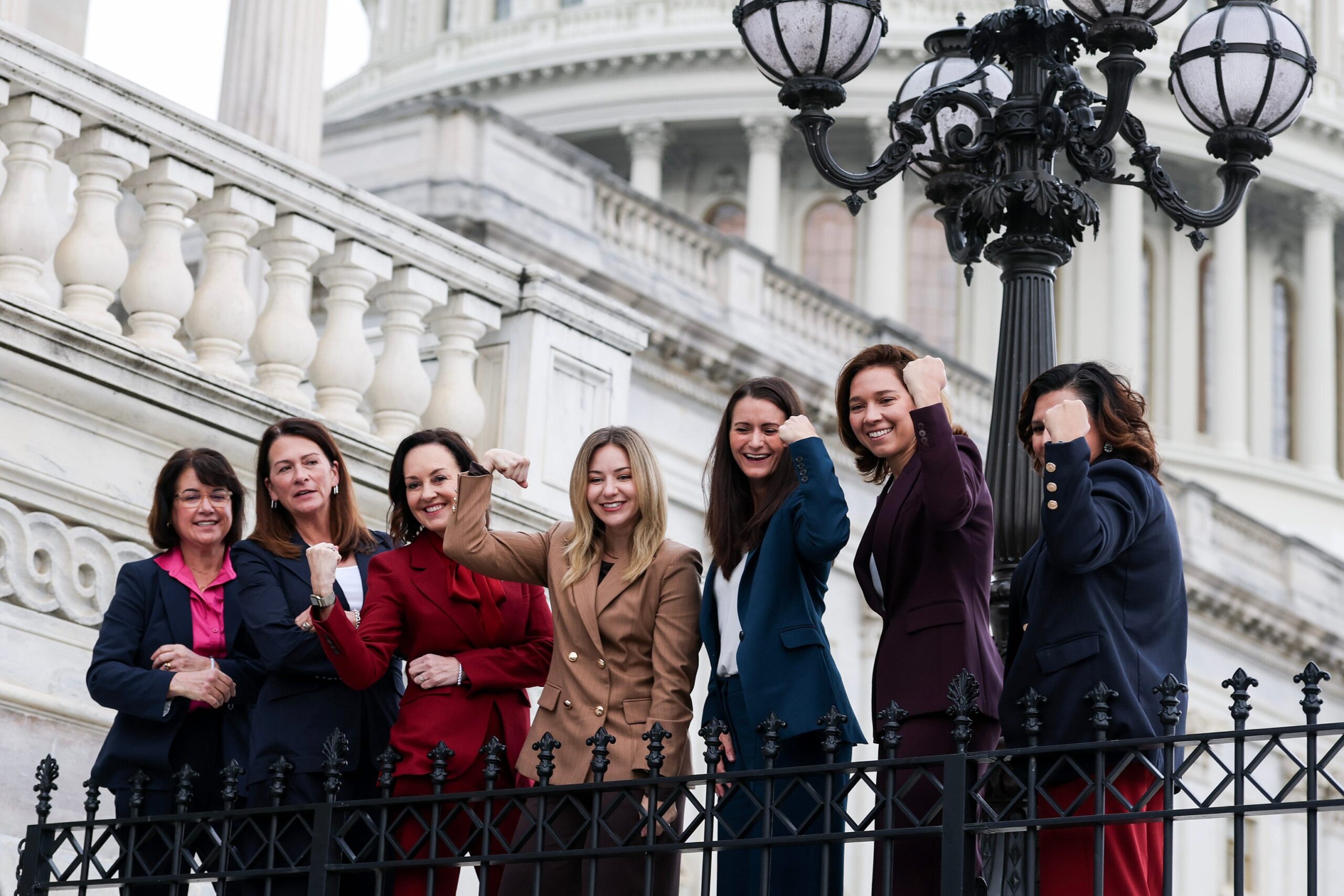
There is something genuinely historic unfolding in the halls of the U.S. Capitol, and it did not happen by accident. Eight Democratic women with military or national security backgrounds won Republican-held House seats in the 2026 midterm cycle, pushing the total number of women veterans serving in Congress to at least twelve, the highest figure in American history. That number alone deserves to be held still for a moment before the analysis begins, because it reflects a deliberate, organized political strategy built on real grievances, real service records, and a Defense Department that handed these candidates a ready-made campaign issue.
The catalyst was Pete Hegseth. The Secretary of Defense disbanded a committee that provided recommendations for the well-being and treatment of female military members, and separately canceled a program designed to expand the role of women in national security sectors. For candidates who had spent years or decades in uniform, these were not abstract policy disputes. They were personal provocations, and they responded accordingly. As one candidate, Williams, put it directly: “Despite everything Pete Hegseth wants you to believe, women are on the front lines of defending America every day around the world and, like myself, have been deployed to war.” That kind of statement, grounded in lived experience, is nearly impossible for a Republican opponent to credibly counter.
The women organized themselves into a formation they called the “Hell Cats,” a name that carries its own pointed energy. Rebecca Bennett, a former Navy helicopter pilot running in New Jersey, Arizona’s JoAnna Mendoza, who retired from the Marine Corps as a gunnery sergeant after service stretching from 1994 to 2016, and New York’s Cait Conley, a military veteran and former national security official, formed the core of the group alongside Maura Sullivan, a former Marine captain who had competed in the New Hampshire primary. They shared a Signal group chat, coordinated strategy, and campaigned as a visible bloc, a tactic borrowed directly from the so-called “badass caucus” of five Democratic women with national security credentials who flipped Republican-held seats in 2018. Michigan Democratic Senator Elissa Slotkin, herself a product of that earlier wave, captured the mood in a November 9 social media post that read simply: “Meet the badass service women heading to Congress.”
The individual victories tell the story of a party finding its footing in competitive terrain. In New York’s 17th District, a Hudson Valley swing seat that sits in the category of blue-state suburban districts that shifted rightward in 2024, Cait Conley defeated Republican incumbent Mike Lawler. The district is one of only three Republican-held House seats in the country that voted for President Kamala Harris, making Lawler’s loss a signal worth noting. Conley’s background gave her a credibility on national security that is genuinely difficult for a challenger to manufacture. In South Carolina, Nancy Lacore, a former Navy Vice Admiral with 35 years of service who was fired by Hegseth, flipped outgoing Republican Representative Nancy Mace’s Charleston district. In Colorado, retired Navy Rear Admiral Eileen Laubacher declared victory in her race. These are not soft targets; these are districts where a candidate’s biography had to do real political work.
Democratic Congressman Jason Crow of Colorado, a veteran who co-chairs the Democratic Congressional Campaign Committee’s recruitment efforts, described the candidates as “fierce fighters” well-suited to resist pressure from the Trump administration. That framing matters because it points to something the party has understood for several cycles now: voters in competitive suburban and exurban districts are not simply looking for ideological purity. They are looking for candidates who project competence, toughness, and a willingness to serve something larger than themselves. Women veterans, it turns out, check all of those boxes in ways that are visible and verifiable. One analyst tracking the trend noted that close to half of the new veterans entering the House from the Democratic side have been women, a shift that would have seemed implausible not long ago.
VoteVets, the organization that works to amplify veterans’ voices in politics and supports Democratic veteran candidates, backed the women running in the 2026 cycle, providing infrastructure and validation to campaigns that might otherwise have struggled to break through. The group’s involvement reflects a broader understanding that veteran identity, long treated as Republican political property, is genuinely contested ground. The Hell Cats understood that Hegseth’s hostility toward women in the military was not just a policy failure but a political vulnerability, and they pressed it hard. They were right.
None of this should be mistaken for a comfortable majority. The new members flipped their seats by often-tight margins, which means those same districts could swing back in a more favorable Republican environment. At least twelve women veterans will serve in Congress beginning in January, including Army veteran Senator Tammy Duckworth of Illinois, who was not up for reelection this cycle. The historic milestone is real. So is the fragility. What the Hell Cats and their allies have demonstrated is that a coordinated, unapologetic progressive candidacy rooted in genuine service can win in places where Democrats have struggled. Sustaining those gains will require the same discipline that earned them in the first place.